



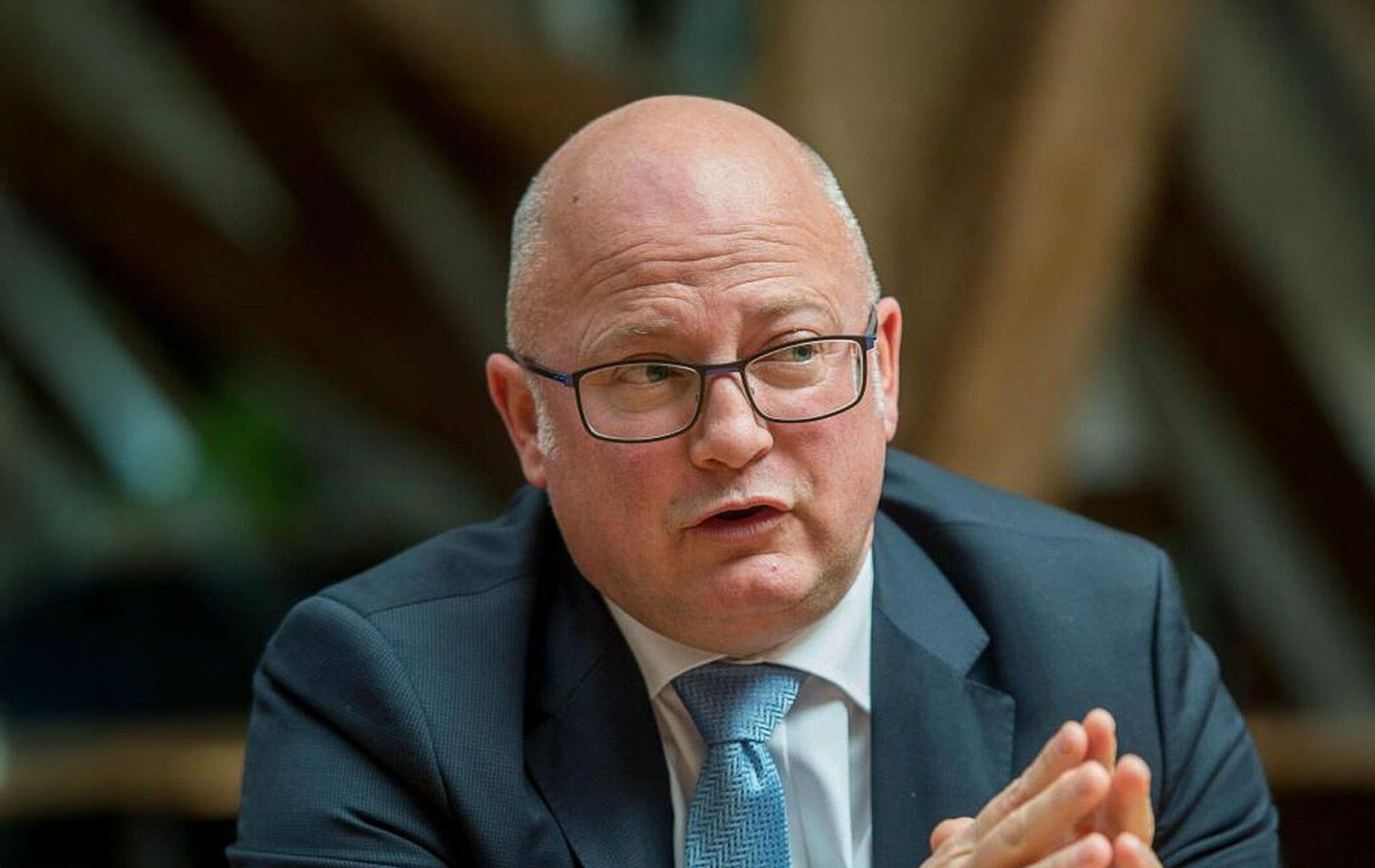
Caspian Energy (CE): What are the top priorities of Belgium’s federal government in advancing the ecological transition over the next five years, particularly in sectors with the highest emissions?
Jean-Luc Crucke, Minister of Mobility, Climate and Ecological Transition of Belgium: Allow me to indicate first that, as Belgium is a federal state, the regional governments have important competences when it comes to the ecological transition.
At the federal level, we will play a leading role in circular economy, in biodiversity protection and restoration, in norms and products (chemicals), and in climate change mitigation and adaptation.
The main carbon emitting sectors are energy generation, industry, buildings, and mobility/transport.
Firstly, the decarbonization of the energy system has been ongoing for two decades now, with the deployment of renewable energy and other zero carbon energy sources. Our goal is to continue promoting the production of renewable energy, especially offshore wind, given the strategic position and configuration of the North Sea.
Secondly, our industrial base has also been progressively decarbonizing in the past two decades, within the framework of the EU Emission Trading Scheme (carbon market operating across the European Union). We need to expand the scheme and accompanying efforts to support the decarbonization of smaller businesses, which will be done through various instruments such as fiscal advantages to invest in clean technologies (industrial processes, mobility or building). Hard to abate industries will require alternative low carbon fuels, such as bio-based and RFNBOs. We work on both in a transversal way, considering their possible use in all sectors, trying to find the balanced approach between energy efficiency (to reduce the demand), direct electrification and these alternative fuels considering the importance to ensure sustainability, the limitation of the resource, and technological constraints. Given the density of population in Belgium, and consequently the limited resources, we also need to seriously consider importing these fuels, especially renewable hydrogen and its derivative.
Thirdly, the building stock needs to deeply renovate, to significantly increase its performance and therefore reduce its energy consumption, and switch to renewable energies, with renewable electricity at the forefront. Most of the competences are at regional level, but the federal government supports the regional strategies to decarbonize the stock through fiscal incentives, and by mainstreaming progressively the use of low carbon materials, to tackle the carbon life cycle of buildings. Belgium also applies a high recycling rate of construction material.
Globally, electrification is a key pillar for all sectors, and the progressive phasing out of fossil fuels is another one, building on existing alternatives.
CE: How is your ministry aligning national mobility policies with climate goals, and what innovations are being prioritized to ensure cleaner and more efficient transport systems?
Jean-Luc Crucke: In order to build a truly sustainable mobility in Belgium, it is essential to promote the modal shift toward multimodal and low-carbon mobility and support the development of autonomous mobility. The objective is to set up an integrated transport system, accessible to all, and respectful of the environment. Enhanced cooperation between the different modes of transport is important to achieve efficient service-based mobility. By facilitating connections between public transport and active modes, we can provide citizens with a flexible and inclusive travel experience. Autonomous mobility represents a major step forward for the future of the sector. It offers promising prospects in terms of accessibility, particularly for people with reduced mobility, who could thus benefit from greater autonomy in their travels. However, autonomous vehicles should not be considered an end in themselves. They must be considered as a lever for shared, inclusive and low-carbon mobility. For this technology to fully contribute to the environmental transition of the transport sector and then reducing the congestion problems, it is necessary to define a clear, ambitious and coherent regulatory framework.
Public transport needs to be reinforced across the country. The rail, under my own competences, should take an increasing role, also in freight transport, reducing, where feasible, truck from the road, or providing alternatives to short haul flights. Train can be considered as the public transport backbone, while buses, trams or undergrounds will supply local “needs” and be connected to the train to broaden the coverage as much as possible.
CE: What role does sustainable development play in shaping Belgium’s climate and environmental strategies, especially when it comes to balancing economic growth and ecological preservation?
Jean-Luc Crucke: As flagged above, sustainability is a key parameter to consider in developing low/zero carbon options. Environmental and social concerns are clearly major ones when it comes to biofuels, considering the conflict of use with food, feed and fiber, and the environmental and social impacts of feedstock production. The balance with economic considerations also remains very high. The transition to decarbonizing industry is a priority. To achieve this, we must deploy available levers (energy efficiency, renewable energy, low-carbon energy and technologies, energy carriers, etc.) in a proactive, flexible, efficient, cost-effective, and technologically neutral manner. The role of the authorities is to set clear objectives and monitor results, while concrete implementation is the responsibility of the industry. A permanent dialogue between industry and the authorities is therefore essential. Ensuring competitiveness of our companies within the framework of the green transition is key. We advocate a complementary (Industrial) Competitiveness Deal, i.e. a competitiveness pact for all companies in the industrial and service sectors, which are facing increasing international competition. But we also believe that European industrial policy encourages cooperation between EU member states, businesses and research institutions in order to promote technological progress and innovation.
CE: Belgium is part of the EU Green Deal framework. How is your ministry contributing to achieving EU-wide climate neutrality targets, and what challenges do you see ahead?
Jean-Luc Crucke: Belgium, as an EU Member State, actively contributes to the realization of the European Green Deal and to achieving the objective of climate neutrality by 2050. Our approach is twofold: on the one hand, we ensure the transposition and implementation of European legislation at the national level, while on the other hand, we develop initiatives that respond to Belgium’s specific context.
In practice, we are focusing strongly on reducing greenhouse gas emissions in hard-to- abate sectors, including through the deployment of carbon capture technologies. We are also advancing climate adaptation solutions, restoring biodiversity and nature, phasing out toxic products, developing sustainable alternatives (products), and preventing and tackling pollution.
Mobility is another priority. We are accelerating the electrification of transport to support its decarbonization. Belgium, for instance, will be a co-signatory of an upcoming EU ministerial declaration aimed at boosting the development of (heavy-duty) vehicle recharging infrastructure across member states.
We see direct electrification as the priority option for all transport means, with road applications as priority. Other means of transport, like navigation and aviation will require alternative fuels, like biofuels, hydrogen, e-ammonia, e-kerosene, and other e-fuels.
We cautiously blend these fuels into fossil fuels in transport application, considering technological, sustainability and availability constraints. Bio-based fuels are currently the most obvious option, but we believe that RFNBO will ramp up and achieve cost efficiency on the short-middle run.
Beyond electrification, we firmly believe in the transformative power of modal shift. Achieving this vision requires a well-coordinated and integrated transport offering, which we are actively working on in close collaboration with our regional partners.
At the same time, we are embedding circular economy practices and promoting sustainable agriculture more deeply across our economy.
The main challenge lies in facing the societal and economic challenges of ensuring a just transition for citizens and businesses, while maintaining the competitiveness of our industry in a rapidly evolving international setting, while not losing out environmental and climate objectives out of sight.
At the same time, the Green Deal presents Belgium with opportunities: by stimulating innovation, creating green jobs, and positioning our companies at the forefront of sustainable technologies, we can both contribute to a climate-neutral Europe and strengthen our economy.
CE: What are your expectations from the upcoming COP30 summit, and how can it accelerate global action on climate and sustainable development goals?
Jean-Luc Crucke: What we need most of all is a COP that delivers on climate ambition. We know what this means: limiting global warming to 1.5°C. We also know what we need to achieve this: at the COP28 in Dubai in 2023 we collectively agreed to triple renewable energy capacity globally, double the global average annual rate of energy efficiency improvements by 2030, phase-down unabated coal power, transition away from fossil fuels, and so forth. Now is the time for all countries to implement this into action. This starts before the actual conference, with the timely submission by all countries of ambitious, economy-wide nationally determined contributions (NDCs).
The EU has an ambitious 2030 target, and the European Commission has proposed a 90% emissions reduction target by 2040, which will form the basis from which the EU 2035 NDC will be derived. We expect all countries to do the same, with a special responsibility for the major economies. The challenge is real, but there is no way out. With the current climate plans, we are heading for 2.6°C global warming. Lowering ambition is negligence towards the current and future generations.
At COP we expect there to be a dedicated political space and negotiated outcome to address the collective level of ambition and implementation. This includes clear discussions on the how: finance flows need to be redirected from fossil fuels to renewables and governments should provide the necessary incentives and disincentives in this regard. And it also requires a global level playing field for the green economy – every country has to be on board, with the highest possible ambition.
Next to this, I am obviously hopeful that we finally adopt the framework of indicators for the Global Goal on Adaptation, to answer the crucial question: are we adapting and are we resilient against climate change? How are we dealing with water scarcity? How about our food systems? Our health systems? Infrastructure and cities? Our biodiversity? And our poverty eradication plans? Are they ready? It is crucial that we measure this at the national and global level to plan accordingly and prepare our societies for what is already happening and what is to come.
Also just transition, disinformation and tropical forests are on my priority list.
Thank you for the interview.
