


Caspian Energy (CE): Mr. Gadirov, Caspian Energy Club Czechia is actively building business bridges between Azerbaijan and the Czech Republic. How would you describe the current dynamics of economic and investment cooperation between the two countries?
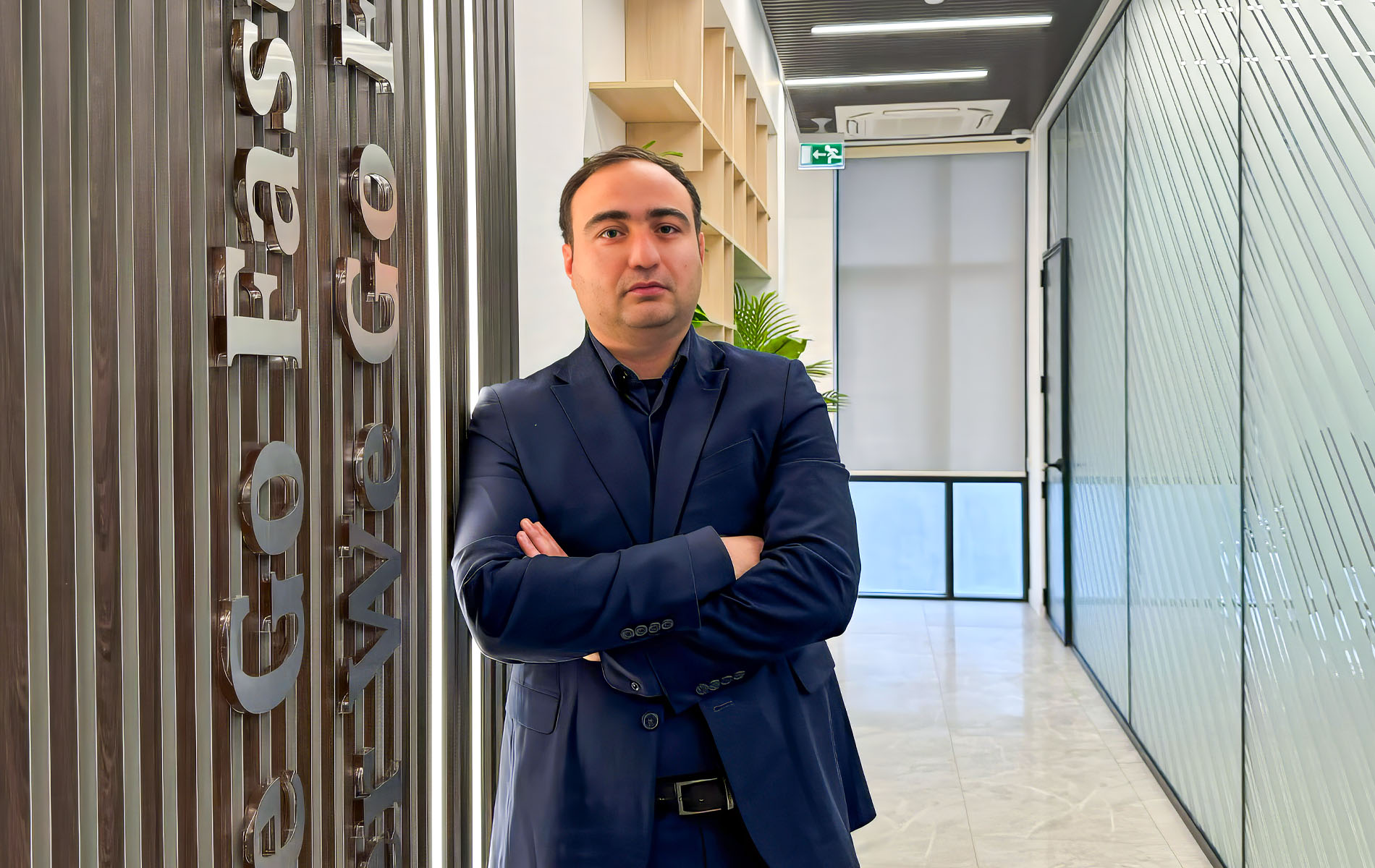
Zaur Gadirov, Chairman of Caspian Energy Club Czechia: Today, we are seeing a very positive and rapidly accelerating dynamic in Azerbaijani–Czech economic cooperation. Both countries show strong interest in expanding trade and investment ties, and this is entirely natural: the Czech Republic brings robust industrial expertise and advanced technological solutions, while Azerbaijan is a key energy player and a regional logistics hub with significant growth potential.
In recent years, we have witnessed a significant strengthening of cooperation in sectors such as energy, infrastructure, transport, industry, IT, and agribusiness. Czech companies are actively exploring opportunities to enter the Azerbaijani market, particularly in modernizing industrial systems, implementing innovative technologies, and participating in reconstruction projects in Karabakh. At the same time, Azerbaijani investors are showing growing interest in the Czech Republic as a stable European hub, offering strong investment protection and expanding export potential.
Caspian Energy Club Czechia acts as a connecting link, creating the conditions for direct business dialogue, building trust, and launching new projects. From our observations, the potential for cooperation is far from exhausted. On the contrary, we are just entering a period where mutual investments and joint initiatives will grow at an accelerated pace.
CE: In your opinion, which sectors of the Czech economy are the most attractive for Azerbaijani investors, and in which areas of Azerbaijan, conversely, do you see the greatest potential for Czech investments?
Zaur Gadirov: The Czech economy has traditionally stood out for its high level of technological advancement, industrial maturity, and the quality of its production processes, making it attractive to Azerbaijani investors who are focused on long-term and sustainable projects. The areas that attract the most interest include mechanical engineering, industrial automation, medical equipment, pharmaceuticals, as well as logistics and renewable energy projects. These sectors provide investors with access to modern technologies, European supply chains, and a stable regulatory environment.
At the same time, Azerbaijan offers significant potential for Czech businesses to expand their presence. The country is actively diversifying its economy, implementing large-scale infrastructure and energy projects, and creating favorable conditions for international investment. The most promising areas include transport and logistics initiatives, energy (including renewables), the petrochemical sector, agro-industry, construction, and tourism, as well as the rapidly growing fields of IT and digital solutions.
Particular attention should be given to projects focused on the reconstruction of Azerbaijan’s liberated territories. These areas offer vast opportunities for modern engineering technologies, innovations, and comprehensive infrastructure solutions, where Czech companies can effectively leverage their expertise.
Overall, the economic models of both countries are largely complementary. Czechia offers technology and industrial expertise, while Azerbaijan provides a growing market, a strategic location, and large-scale development projects. It is precisely the synergy of these advantages that forms the foundation for further growth in mutual investments and the deepening of partnership. Caspian Energy Club Czechia is consistently working to turn this potential into real business initiatives and new avenues for economic cooperation.
CE: Caspian Energy Club has established itself as an effective B2G and B2B platform. How does the activity of the Czech branch contribute to strengthening the dialogue between government institutions and the business communities of both countries?
Zaur Gadirov: Caspian Energy Club has indeed become one of the most effective platforms in the region, bringing together government institutions and business communities. The Czech branch continues this mission by creating sustainable channels of communication between Azerbaijan and the Czech Republic. Our goal is to ensure a regular, constructive, and practical dialogue that helps turn ambitious ideas into real economic projects.
The Club’s activities include organizing business forums, industry panels, private meetings, and expert roundtables, where representatives of government bodies from both countries can interact directly with entrepreneurs and investors. This format allows for the timely discussion of regulatory issues, clarification of legal requirements, identification of barriers, and the development of solutions that promote mutual trade and investment activity.
In addition, the Czech branch acts as a catalyst for business initiatives, helping companies find partners, assess market opportunities, and develop investment strategies. We pay special attention to industry segments where cooperation is most promising: energy, logistics, industry, innovative technologies, and the agricultural sector.
Thus, Caspian Energy Club Czechia does more than simply connect the two business communities — it creates a space of trust, predictability, and shared interest. This strengthens institutional ties between our countries and lays a solid foundation for long-term economic and investment cooperation.
CE: In recent years, economic diversification and the development of “green” energy have become priority areas for both Azerbaijan and the Czech Republic. How does Caspian Energy Club Czechia contribute to the exchange of experience and the development of cooperation in these fields?
Zaur Gadirov: In recent years, both Azerbaijan and the Czech Republic have been steadily moving toward economic diversification and the development of “green” energy, opening up a wide field for international cooperation. Caspian Energy Club Czechia plays an active intermediary role in this process, providing a platform for the exchange of experience among government bodies, experts, and business communities from both countries.
By organizing specialized forums, expert panels, and B2B meetings, the Club facilitates discussions on the latest technologies in renewable energy, energy efficiency, infrastructure modernization, and sustainable industrial solutions. We support dialogue between companies interested in joint projects — from deploying solar and wind power systems to digitalizing energy processes and integrating ESG approaches into corporate governance.
Special attention is given to the practical exchange of knowledge: Czech companies share their experience in deploying “smart” technologies and sustainable production models, while Azerbaijani partners present large-scale national programs for developing green energy, including projects in liberated territories and initiatives to create “green zones.”
Thus, Caspian Energy Club Czechia creates an ecosystem where ideas, technologies, and investments intersect freely, laying the foundation for long-term partnerships and joint initiatives.
CE: Your company, Financial Chain Corporation, has long been represented in Prague and several other European countries. How does this professional experience help you better understand and connect the business environments of Azerbaijan and the Czech Republic?
Zaur Gadirov: The international presence of Financial Chain Corporation, including our long and successful work in Prague, provides us with a unique understanding of both the European and Azerbaijani business environments. This experience allows us to act as a natural bridge between the two markets, fostering deeper mutual understanding and trust among companies.
Working in the Czech Republic and other EU countries, we have a strong understanding of transparency standards, regulatory requirements, corporate culture, and the expectations of European partners. At the same time, our Azerbaijani team possesses deep knowledge of local economic priorities, the specifics of doing business, and the market dynamics of the region. This combination makes us effective interpreters — we know how to adapt projects, communications, and business approaches so that they succeed equally well in both environments.
In practice, this is reflected in our ability to establish clear and realistic expectations between parties, assist companies in navigating different legal and financial systems, and quickly identify points of convergence for joint projects. We understand which tools and solutions are in demand in Europe and can propose their adaptation in Azerbaijan — and vice versa, opening opportunities for Czech companies in Azerbaijan’s rapidly growing markets.
CE: Could you please tell us about the key achievements or the most successful projects implemented by Caspian Energy Club Czechia since its establishment in 2023?
Zaur Gadirov: Since its founding in 2023, Caspian Energy Club Czechia has established a stable platform for dialogue and cooperation between the business communities of the Czech Republic and Azerbaijan, through the implementation of a series of significant projects and initiatives.
One of the key achievements has been organizing regular business forums and sector-specific meetings that bring together representatives from government bodies, investors, and private companies of both countries. These events have become an important platform for discussing energy policy, investment opportunities, logistics, innovation, and digitalization—areas where the interests of the Czech Republic and Azerbaijan intersect most actively.
Another major success has been establishing a robust communication network among companies operating in the energy, industrial, financial, and IT sectors. Through this platform, Club members find partners for joint projects, gain access to expert analysis, and receive practical support when entering new markets.
Particular attention is given to promoting green energy and ESG approaches. The Club has initiated a series of meetings focused on sustainable development, where specific projects were discussed: the deployment of renewable energy sources, infrastructure modernization, improving energy efficiency, and technology transfer. These events have enabled companies to exchange experiences and launch the first joint initiatives in the field of sustainable energy.
Caspian Energy Club Czechia has not only succeeded in bringing the business community together around pressing economic and investment issues, but has also created tangible mechanisms for developing bilateral cooperation, which stands as the main indicator of the organization’s successful work.
CE: It is known that the Club actively organizes international forums, CEO meetings, and networking events. What upcoming initiatives or events are planned in Prague or Baku to further strengthen bilateral cooperation?
Zaur Gadirov: Caspian Energy Club continues to strengthen business ties between the Czech Republic and Azerbaijan, and in the coming months, a series of events is planned that will serve as important milestones for bilateral cooperation.
In Prague, a CEO Lunch Meeting is being organized, which has proven to be an effective platform for direct dialogue between company executives, diplomats, and investors. The main topics of the meeting will be energy transformation, the investment climate, and new mechanisms for cooperation between businesses of the two countries.
At the same time, the Club is planning a CEO Meetup - a less formal but dynamic format focused on sharing practical experience, engaging in lively discussions of business cases, and forging new partnerships. This format is particularly popular among representatives of the technology sector, financial companies, and energy startups.
In addition, a bilateral forum is planned, which will become one of the central events of the year. Its program will include panel discussions, presentations of investment projects, and B2B meetings, allowing participants to find new partners and develop joint roadmaps for the advancement of energy, infrastructure, and industrial cooperation.
In Baku, large-scale networking events and meetings are also being prepared, involving companies from the Czech Republic that are interested in entering the Azerbaijani market. The program will include B2B negotiations, sector-specific panels, and project presentations.
CE: And finally, how do you see the prospects for economic relations between Azerbaijan and the Czech Republic in the coming years, and what role, in your opinion, will Caspian Energy Club Czechia play in this process?
Zaur Gadirov: The prospects for economic relations between Azerbaijan and the Czech Republic over the coming years look particularly promising. Both countries are actively developing their priority sectors - energy, transport and logistics infrastructure, industry, agriculture, and digitalization. This parallel progress creates natural points of convergence, which will strengthen as mutual investments increase and trade flows expand.
Azerbaijan continues to strengthen its role as a key energy partner for Europe, including the Czech Republic - not only in traditional energy resources but also in the development of green energy and hydrogen infrastructure projects. The Czech Republic, in turn, possesses significant industrial and technological potential that is in demand in Azerbaijan - from machine building and innovative manufacturing to solutions in energy efficiency, ESG, and digital management systems.
Against this backdrop, the role of Caspian Energy Club Czechia will only continue to grow. We see our mission as creating a sustainable platform for dialogue, knowledge exchange, and partner search, providing businesses with access to reliable analysis, expert networks, and practical tools for entering new markets. The Club will continue to act as a bridge between the two economic environments - helping companies navigate regulatory systems, build trust-based relationships, and initiate joint projects.
In addition, Caspian Energy Club Czechia will strengthen its involvement in advancing the green agenda, cross-border energy initiatives, and infrastructure modernization, which are key areas of long-term cooperation between the two countries. We plan to expand international connections, engage new companies, and further develop formats of CEO meetings, forums, and strategic panels, creating a tangible ecosystem for economic growth.
CE: Your first acquaintance with the Czech Republic began during your studies at the University of Finance and Management, and York University Prague. How has your perception of the country evolved over the years, and does your educational experience here contribute to your professional activities and business development?
Zaur Gadirov: My first acquaintance with Czechia began back in 2010, when I was studying at the First Slavic Gymnasium in Prague. Nearly 15 years have passed since then, and over this time, Czechia has become for me not just a country of education, but an important part of my life and professional development. Later, I continued my studies at the University of Finance and Management and York University Prague, which further strengthened my connection with the country and its business environment.
At an early stage, as a schoolboy and later as a student, I perceived Czechia primarily as a comfortable European environment, where a high level of education is combined with stability and orderliness. Over time, as I began developing my business, my perception became more multifaceted: Czechia revealed itself as a dynamic, technologically oriented economy with strong industrial traditions and a high level of trust in business relationships.
My experience of studying and working here has played a key role in my professional activities. It has taught me the European style of management, communication, systematic thinking, and a disciplined approach to corporate processes. Knowledge of the language, cultural nuances, and academic standards of Czechia enables me to interact effectively with both local partners and international companies, creating bridges between the business environments of Europe and Azerbaijan.
In addition, the years I have spent in the Czech Republic have provided me with extensive professional and personal connections - from university professors to colleagues who today hold significant positions in business and government. These connections, along with a deep understanding of the country, have become an important support in developing Financial Chain Corporation in Europe and in building long-term international projects.
Thank you for the interview.
