



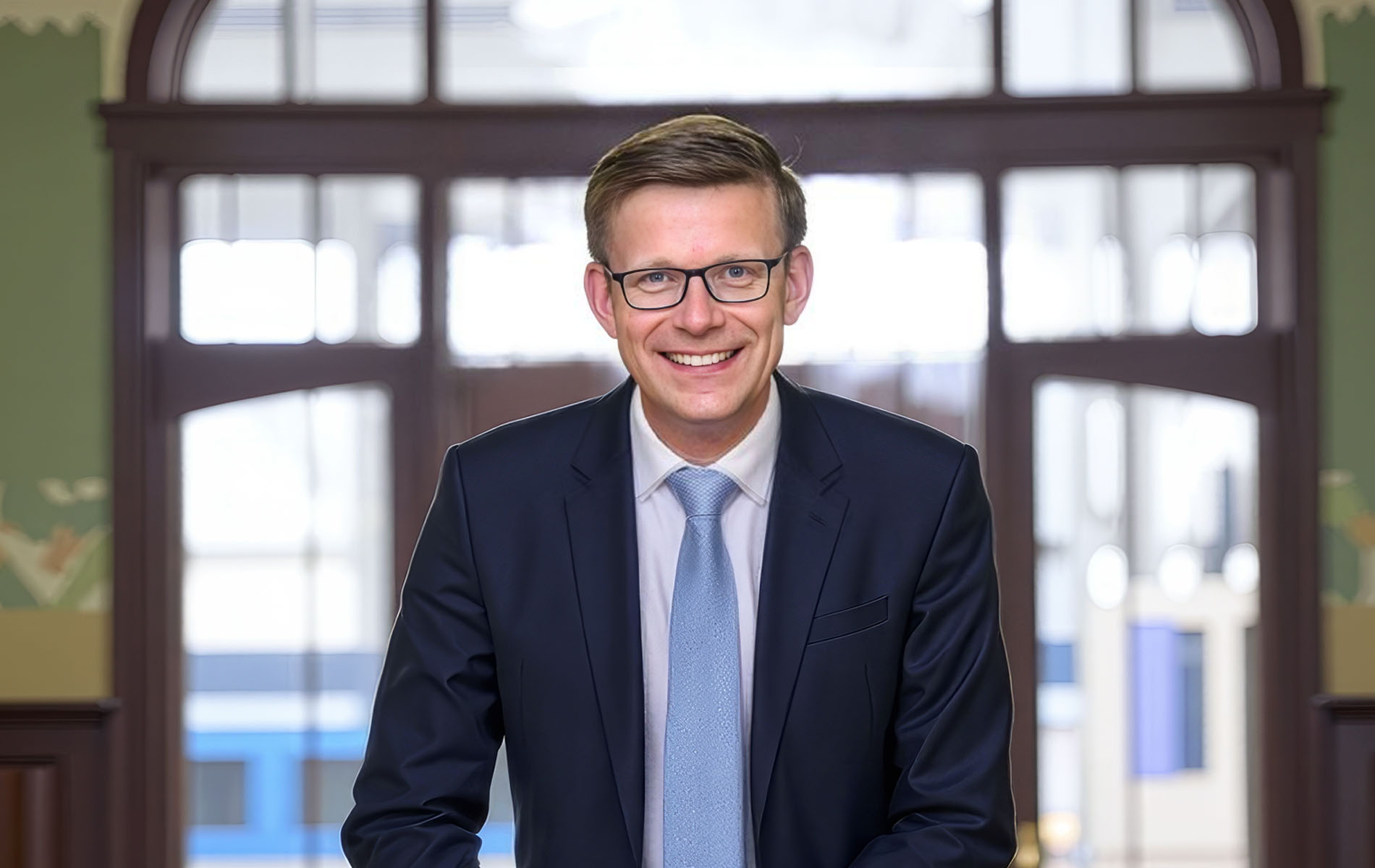
Caspian Energy (CE): What are some of the current priorities guiding the development of Czechia’s transport sector?
Martin Kupka, Minister of Transport of the Czech Republic: The priorities of the Ministry of Transport are modernising transport infrastructure, improving safety, digitalisation and sustainable mobility. We seek to complete the “basic motorway network” and connect it to the networks of our neighbouring countries. This is our big debt from the past decades.
In rail transport we want to complete the modernisation of our network and rolling stock, increase operational safety (thanks to the introduction of the European signalling system), the capacity of corridors and prepare high-speed rail lines. The interconnection of different modes of transport is another big thing: for example multimodal terminals, new parking systems and digital journey planning tools for more efficient and environmentally friendly transport of people and goods.
CE: How is your ministry addressing the energy transition within the transport system?
Martin Kupka: Energy transformation is as a fundamental prerequisite for further development of the Czech Republic. We cooperate closely with the Ministry of Industry and Trade and the Ministry of the Environment on this matter. As part of the National Clean Mobility Action Plan, we support the development of electromobility, hydrogen technologies and alternative fuels.
We have been long investing in building charging infrastructure and currently have almost 3,200 public charging stations in operation in the Czech Republic. Most of them are concentrated in bigger cities, but all regions are covered. We also support electric public transport. Our goal is to make transport in the Czech Republic not only efficient but also sustainable and built on low-emission systems.
We believe that the energy transformation of transport is more than an ecological necessity: it is an opportunity for innovation, competitiveness and modernisation of the Czech economy. We have been introducing incentives for businesses and municipalities to invest in alternative fuel fleets and modernise public transport. Under the Operational Programme Transport and the Modernisation Fund, billions of Czech crowns have been allocated for clean mobility projects between 2021 and 2024.
CE: What steps are being taken to make transport in Czechia more sustainable and environmentally friendly?
Martin Kupka: Sustainability is a key element of all our strategic documents and projects. We support the shift of freight transport from road to rail because significant reductions in CO₂ emissions and noise pollution can be achieved here. We are investing in fleet modernisation, both in passenger and freight transport, support the purchase of low- and zero-emission vehicles including electric buses, trolleybuses and battery- or hydrogen-powered trains.
In urban transport we place emphasis on integrated transport systems for easy transfers between different modes of transport. We support the development of good conditions for cyclists and pedestrians for healthy and ecological mobility. We already have great experience with the introduction of shared zones where pedestrians, cyclists, drivers and public transport respect each other without restrictions.
Thanks to European funds such as the Modernisation Fund, the Operational Programme Transport or the National Recovery Plan, we can implement projects with a direct impact on air quality, noise reduction and the overall ecological footprint of transport.
We believe that sustainable transport is more than a technical thing – it is a challenge that requires cooperation between the state, local governments, experts and citizens. In addition to investing in infrastructure, we have been targeting public education and awareness, for example through campaigns to promote public transport, shared mobility and safe cycling.
CE: How do you see Czechia’s role as a transport and logistics hub evolving within the European Union?
Martin Kupka: Thanks to our geographical location, the Czech Republic has an exceptional opportunity to become a key logistics hub in Europe. We are located at the very crossroads of several trans-European transport corridors, so we can efficiently connect Western, Eastern and Southern Europe. We have been actively cooperating within the EU on the development of the TEN-T network, promoting multimodal transport and building logistics terminals combining different modes of transport.
The transport and logistics sector is an essential part of the Czech economy with opportunities for innovation and international cooperation. We want the Czech Republic to remain a transit country and act as an innovative and sustainable transport hub with added value for the European economy.
CE: Could you share a few key projects or innovations that reflect your vision for the future of transport in Czechia?
Martin Kupka: The construction of high-speed rail lines that will enable travel speeds of up to 320 km/h is one of our most ambitious projects. It will significantly reduce transport times and make the railway more competitive with air and road transport. We are planning 768 km of new rail lines that will connect large Czech cities in the regions with Prague and the Czech Republic with neighbouring countries. The transport of goods and commuting for work, study or culture will be significantly faster. Planning and design work on 483 km of lines is now under way. We are already working on the first section.
Digitalisation and smart traffic management are another two big topics. We are introducing intelligent transport systems (ITS) for real-time traffic monitoring, prediction of traffic complications and efficient traffic light control. We are testing smart traffic lights and mobile applications in such urban environments as shared transport or parking, which is a pressing problem for most Czech cities.
We introduced the Czech Journey to Space project in 2024, a major milestone in the Czech Republic’s involvement in the European space industry. We have selected 14 experiments to be carried out on board the International Space Station (ISS) by Czech astronaut Aleš Svoboda, a member of the European Space Agency (ESA) backup team.
But the project goes far beyond the support of Czech science, industry, technology companies and start-ups. The Czech Journey to Space has a strong mission in education and motivation as well. Through competitions, workshops and popularisation activities, it inspires the young generation to study engineering and science. This way, the project brings together the country’s strategic objectives in innovation, education and international cooperation while building the national identity in space research.
CE: What is the Czech Republic’s position on the Zangezur transport corridor project? Is it viewed as a factor that could influence Eurasian logistics and the European Union’s transport policy?
Martin Kupka: The Czech Republic supports initiatives that contribute to regional connectivity and stability. We are closely monitoring the development of the Zangezur transport corridor, especially in light of recent events and ongoing trilateral discussions between Azerbaijan, Armenia, and the United States.
Thank you for the interview.
