



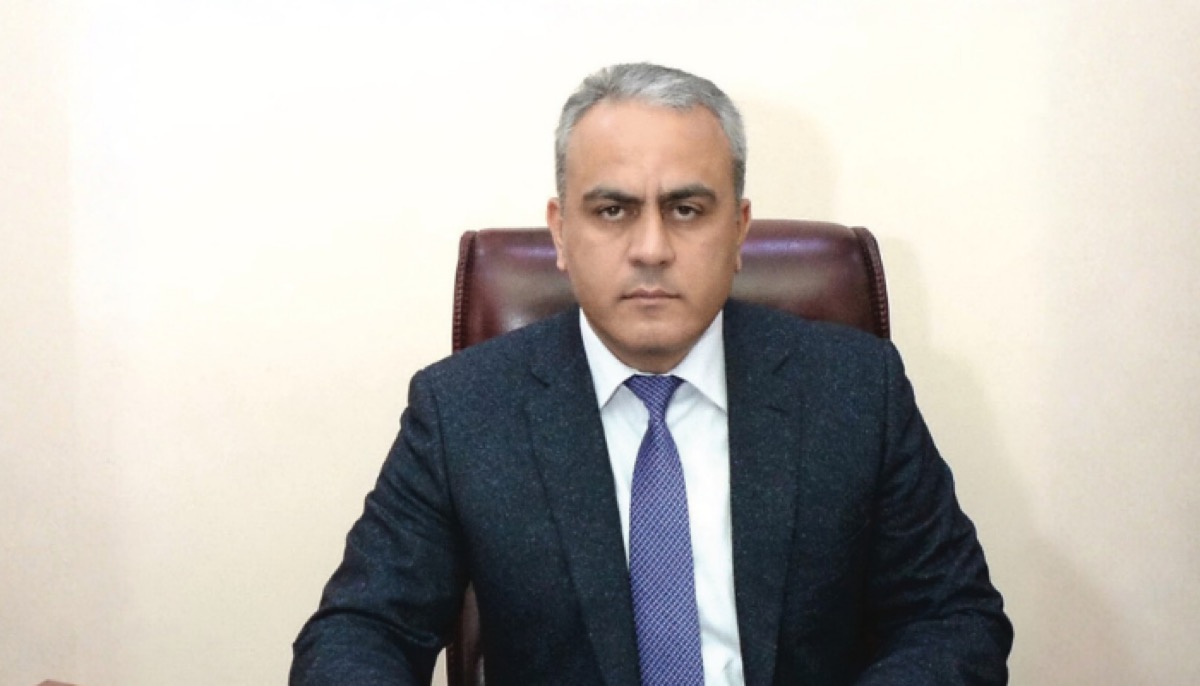
Caspian Energy (CE): Mr. Jafarov, what is the major activity of the International Relations and Accounting Center (IR&AC) under the Ministry of Communications and High Technologies (MCHT) of the Republic of Azerbaijan?
Jalil Jafarov, Director, International Relations and Accounting Center (IR&AC), Ministry of Communications and High Technologies of the Republic of Azerbaijan (MCHT): International Relations and Accounting Center mainly deals with control over the international incoming and outgoing traffic as well as over inter-carrier settlements for telecommunication services. It mainly involves a control over voice traffic, including the one that goes through IP-technologies. We cooperate with international operators in this aspect, do interstate telephone traffic exchange via our international phone station.
The world is constantly developing. The telecommunication sphere is developing particularly rapidly. Considering the growth of voice and data-traffic, a decision to slightly expand the line of our activity was made. An issue to create the first TIER III data center in the country has been raised. TIER III certificate guarantees high security standards. The reliability of the level totals 99.982%. Unlike proposals of other service providers creating data-centers simply in compliance with the similar standards, it is a real guarantee. Systems are periodically duplicated. A six-stage security system, starting from a biometric access control systems up to security sensors and sensors of physical control over access, has been provided. Meanwhile, two powerful generators ensure an uninterrupted operation of the data-center. It is noteworthy that the privacy of the data of clients is guaranteed in accordance with the requirements of the Azerbaijani legislation on the data protection.
CE: Could you please provide detailed information about the data-center creation project? What stage has the project reached and what dividends is Azerbaijan to gain from it?
Jalil Jafarov: As the data-traffic volumes are growing all over the world, we have set the task to build a data-center. You will ask why? The thing is that we are applying resources of international traffic centers when exchanging traffic with international operators. In this regard we would like to create a data-center for expanding traffic exchange, which in turn could be used by international operators as well. It would let them enter the Azerbaijani market and offer their services by means of our data-center both in Azerbaijan and beyond it.
The second reason was to ensure the growth of our data-traffic. We will be able to broadly increase our traffic by creating a data-center. Practically it is a data center (DC) for information storage and processing. Moreover, creation of the data center may turn Azerbaijan into a transit hub between West and East. The global data-traffic has increased high so that its volumes are nowadays measured not in terabyte and petabyte but in zettabyte.
As MCHT’s IR&AC we started implementing a project under guidance of the United Nations Development Program (UNDP). UNDP announced a tender which both system integrators and different vendors participated in. Specialists of the German company, that became a tender winner, started working on creation of the data-center in Baku right after signing the corresponding contract.
According to our plans, the data center is to be commissioned at the beginning of spring of 2015, which shall be an important event in the field of information technologies of Azerbaijan. It will help to open new working places and arouse an interest of big IT-service providers of the world to create their infrastructure in our data center.
CE: What advantages does TIER III provide?
Jalil Jafarov: TIER levels have been set by Uptime Institute (USA). This institute has worked them out especially for data centers (DC). After a long analysis we chose TIER III. Considering the present rate of the traffic, this level lets us reserve all building subsystems simultaneously and create a parallel infrastructure.
It means that if one of the systems fails the other one will be able to replace it. In addition to a parallel operation, a possibility of automatic launching redundant components instead of stalled ones is the key difference of this level.
This level lets creating two self-contained power supply systems from different stations. One is active, the latter is passive. This reservation is called N+1. In case one of them stops power supply, the second turns on automatically. In case both lines stop operating, a diesel generator, which can maintain operation of the data-center for another 72 hours, is launched.
Apart from this, a standby cooling system (if the first cooling system breaks down, the station switches to the second one) and standby telecommunication infrastructure (an emergency fiber-optic cable is being laid).
There is also a level TIER IV, but the reliability of TIER III level makes 99.982%. As you know, there is no technology with a 100% coefficient performance existing in the world. The reliability of TIER III means that no long-term standstill can occur in the system.
The fact that the data centre has been certified with Tier III fault tolerance level proves its capability to back-up all engineering systems and service them without interruption. According to TIER III, the accessibility indicator of the data-center is estimated, as we have already mentioned, at 99.982%. It means that the total unplanned standstill of systems cannot exceed, on average, 96 minutes per year. Apart from this, materials applied in the system are able to resist fire at least for an hour. The data-center has high reliability and security parameters. Fiber-optic lines have been laid through different routes, which guarantees fail-safe transmission of data, high carrying capacity, stable operation of own network and infrastructure of clients.
CE: What are the technical specifications, storage and transmission capacities of the under-construction data-center?
Jalil Jafarov: Power consumption of the whole data-center totals 2 MW. Total area of the data center covers 1000 m2. However, the design of the infrastructure enables to expand it and install new telecommunication closets. The storage capacity makes 30 petabytes. The data transmission speed is 10-100GE.
CE: Which services will the data center provide? To what extent is it beneficial for local and foreign clients who place content?
Jalil Jafarov: There are conventional services that a data-center provides. The first type of service we are going to provide is called Colocation. It means placement of a client’s server at a data-center site for a certain fee. The fee depends on power consumption and heat generation of the installed equipment, carrying capacity of the data transmission channel, connected to the equipment, as well as on the size and weight of the closet.
This service also includes provision of a rack for assembling client’s equipment (servers, etc). In some cases we can offer our server as well. It involves another service called Dedicated.
As a rule, in such cases data-center owners provide part of technological sites to special clients, financial companies which follow strict internal safety standards. In this case, a data-center provides a zone supplied with communication lines, power, cooling and safety systems while a client creates own data-center inside of this area.
In addition to conventional, there are also specific services. Our goal is to introduce cloud technologies. In this case we are virtualizing all physical servers.
Virtualizing servers we provide services to end-users by means of cloud technologies. It is a global trend of all data-centers. Besides, the most advanced technologies will be deployed in the data-center.
Services are provided by means of cloud technologies, depending on the chosen model (IAAS, SAAS, PAAS). I.e. depending on the model, a client can buy an application, server for data storage or transmission, etc.
Hereafter the whole work within the network will be based on cloud technologies. Cloud technologies are also divided into public and private. The whole world now attaches particular importance to the safety of data. Our objective is to build a data-center in accordance with ISO 27001 standards in order to prevent data leakage.
A PCI DSS standard designed for use by banks and financial institutions will also be deployed in the data-center. Not every data-center can conform with these requirements which are necessary for successful performance of financial transactions.
CE: Whom is the data-center designed for?
Jalil Jafarov: We count on the domestic market and international telecommunication operators which wish to have their point of presence in Azerbaijan (PoP). Business-structures, operating considerable amount of data and attaching high importance to privacy of data and speed of data exchange, are the main targeted audience of our data center. Among them noteworthy are banks, insurance companies, retail trade enterprises, providers of logistics and other services. We want to create a competitive data-center. It is the first time the project of such level being implemented in the republic. The major objective is to provide qualitative services to end users on basis of latest innovative technologies. In this way, we aim at turning Azerbaijan into a regional ICT leader by building this infrastructure.
This large scale project will be one of the drivers of the economic growth in the region and important contribution to the modernization of the country.
