


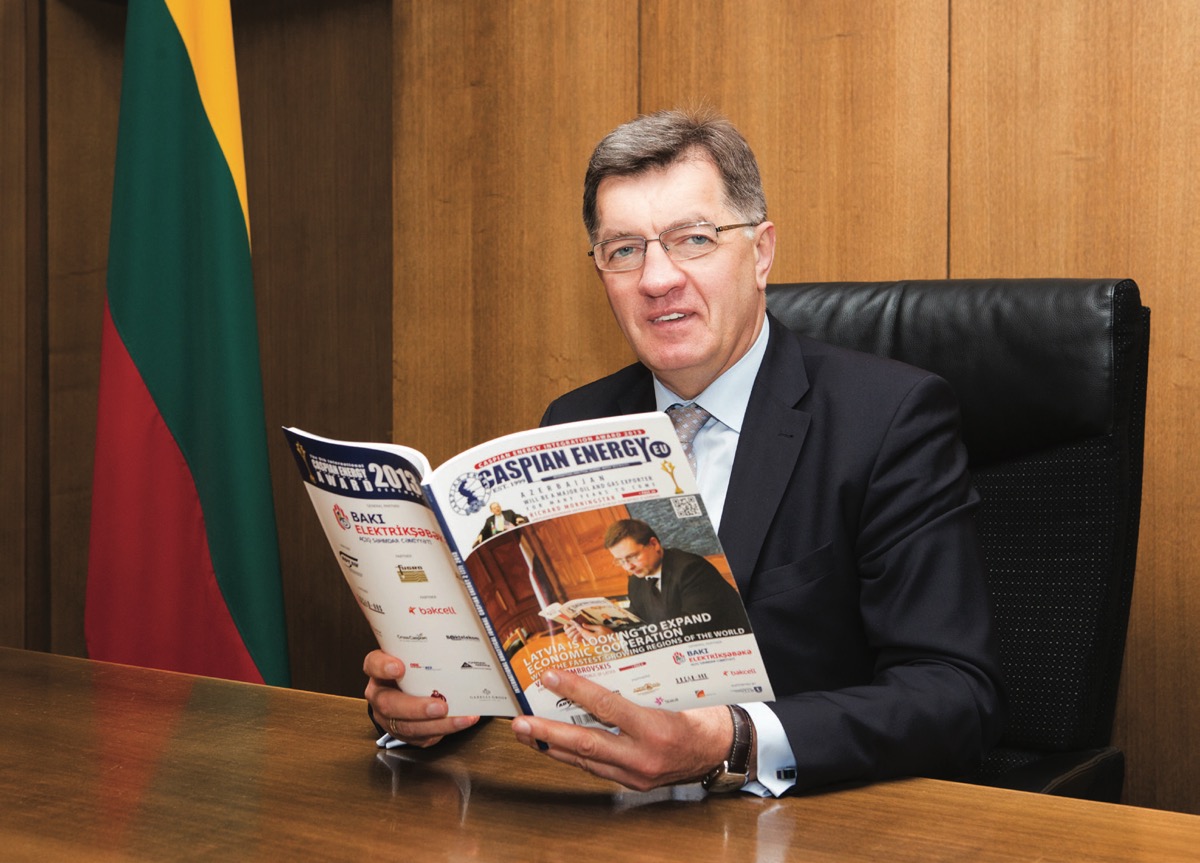
Caspian Energy (CE): Your Excellency, Lithuania is one of the most active members of the Eurozone which faces crises – migration, probable Brexit, recession of some economies of the Eurozone. How do these problems reflect upon common economic conditions of the EU and Lithuania, in particular? What a positive scenario of the way out of the crises do you see?
Algirdas Butkevičius, Prime Minister of the Republic of Lithuania: The EU and the euro area have proven their ability to reform and adapt to the challenges in recent years. According to the latest data, the economic situation in the euro area is gradually improving, although investment remains quite weak and the recovery is still vulnerable to turbulence in the global economy. Continued efforts of fiscal consolidation have brought down government deficits in the euro area and the aggregate debt level has also started to decline. The European Commission forecasts a broadly neutral fiscal stance for the euro area as a whole in 2016.
The Lithuanian economy was able to quickly recover after the 2008–2009 crisis: fiscal policy framework has been continuously strengthened and that has finally led us towards successful introduction of the euro as of the 1st of January 2015. As a member of the euro area, Lithuania will continue responsible fiscal policy in order to keep sustainable public finances in the long-term period. According to the latest forecast economic growth in Lithuania is expected to rise from 1.6% in 2015 to around 3 % in 2016.
Close coordination of Member States’ fiscal policies significantly contributes to the strength and coherence of the euro zone. However such common challenges as migration crisis and possible Brexit is a matter of importance for the whole European Union rather than euro area. Therefore the European Union as a whole should be at the centre of solutions.
Please login or subscribe to read the full article.
Login / Subscribe