


Caspian Energy (CE): What are major investment priorities of SOFAZ for 2016-2018?
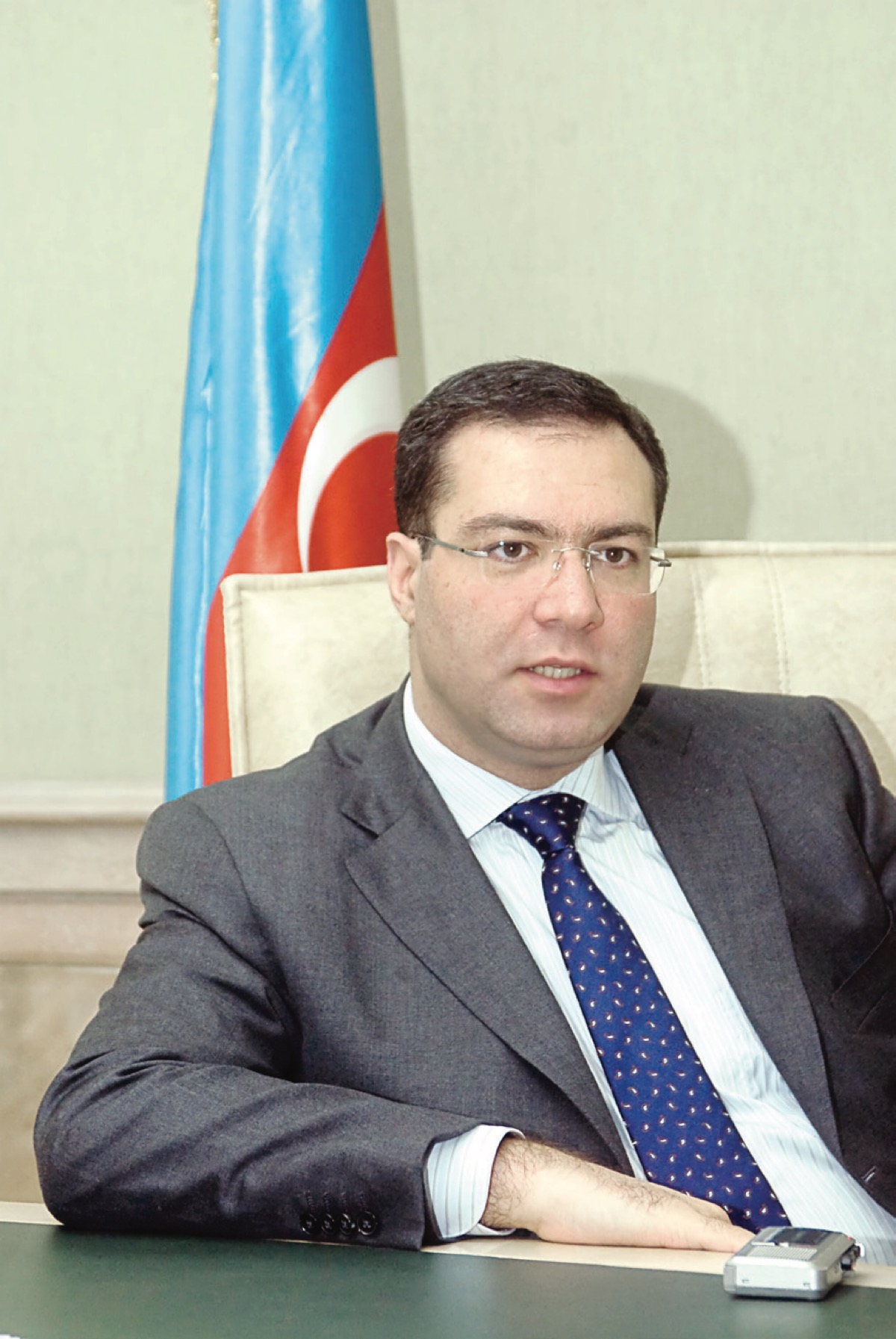
Shahmar Movsumov, Executive Director of SOFAZ: The main objective of SOFAZ’s investment policy has always been to achieve the highest possible long-term profitability from asset management within the limitations reflected in the regulations governing our activity. Considering the Azerbaijani society’s readiness to take financial risks, such types of assets as shares (including private investments), property and gold have been gradually included into the investment portfolio of the Fund since 2012. Since then, there has been a tendency towards increase of the share of high-yielding assets in our investment portfolio. For instance, immediate changes have been introduced within the investment policy of the Fund. As a result, the rate of property and shares has been increased from 5% to 10% and from 10% to 15% respectively. We think that such tendency can continue but decision making will depend on many factors including the developments in the global economy.
CE: Does SOFAZ plan to invest into profitable securities at global stock markets just like the way Norges Bank Investment Management does it?
Shahmar Movsumov: As is known, the main factor, impacting the long-term profitability of asset management, is the ratio of the share of high (for example, shares) and low-risk (such as bonds with high credit ratings) instruments in the investment portfolio. In its turn it depends on the level of the risk that an investor is ready to take. NBIM’s investment strategy, aimed at profits increase, implies a sufficiently high rate of medium-term riskness/volatility of the investment portfolio. According to this strategy, share investment account for 60% of NBIM’s portfolio, the share of less risky fixed income instruments makes 35-40% of the total portfolio while property investments can total up to 5%. As far as SOFAZ is concerned, in addition to providing a long-term profitability it also fulfills the functions of the stabilization fund. We have been traditionally following a more conservative investment policy compared to other world sovereign funds, thus investments we made into shares and similar instruments are rather lower. But as I have already mentioned, we are to continue increasing the share of these assets in the common portfolio.
CE: What has been the size of oil-gas revenues gained by SOFAZ?
Shahmar Movsumov: Total revenues gained by the Fund during 2001-2015 from the sale of profit oil and gas, from bonus and per acre payments, as well as transit of oil across the territory of the republic of Azerbaijan totaled $121.3 bln. This sum totaled 7.24 bln in 2015. Revenues gained from the management of its own funds have totaled about $3.6 bln since its establishment (currency rate change exclusive).
CE: According to the reports, the State Oil Fund of Azerbaijan (SOFAZ) has invested $2-2.5 bln into the Southern Gas Corridor company throughout 5 years. What could you tell about commercial effectiveness of these investments?
Shahmar Movsumov: The Southern Gas Corridor (SGC) is a broad-scale infrastructure and energy project of Europe. Giant gas resources of Azerbaijan, especially, Shah Deniz field, are currently the only source of resources for SGC. It is one of the biggest gas fields in the world. SGC implies implementation of Shah Deniz II project; extension of South Caucasus gas pipeline (Baku-Tbilisi-Erzurum), construction of the Trans Anatolian gas pipeline (TANAP) from the eastern to the western border of Turkey; construction of the Trans Adriatic Gas Pipeline (TAP), which is going to link Greece, Albania and extend across the Adriatic Sea to the south of Italy and further towards Western Europe. The expected length of the corridor is 3500km. Implementation of the SGC project is also aimed at developing Azerbaijan’s economy in the long term. SGC will create additional economic and financial opportunities for Azerbaijan and ensure economic profits and inflow of foreign currency for decades.
According to preliminary calculations, once commissioned, SGC will open opportunities for Azerbaijan to gain at different oil prices, both from sale and transportation of hydrocarbons, from $30 up to $50 bln. In its turn, it will promote development of economy and infrastructure both domestically and across the region.
CE: SOFAZ has recently started participating in currency trade of the Central Bank of Azerbaijan. To what extent did this instrument turn out effective for SOFAZ?
Shahmar Movsumov: According to the tasks and obligations of SOFAZ, making timely payments to the State budget is one of the duties of the Fund. Starting from 2003, SOFAZ has been making transfers into the state budget. Their total sum is set by the Fund budget which is approved by President of the country on a yearly basis.
As is known, all revenues of SOFAZ, including earnings gained from sale of profit oil and gas which is the major source of income flow, are received in foreign currency, mainly in US dollars. The Fund sells dollars in accordance with the schedule, agreed with the Central Bank and Ministry of Finance, solely for covering annual expenditures in manats.
As is known, SOFAZ has been regularly participating in currency trade of CBA since January of 2016. As far as the mechanism of sale is concerned, we think that it is the following important step taken within the framework of structural transformation of the financial market of the country carried out by the government and Central Bank of Azerbaijan. The major objective for SOFAZ is to have timely fulfillment of manat obligations before the state.
CE: What could you tell about the distribution of SOFAZ’s portfolio of assets?
Shahmar Movsumov: According to the major areas of application of SOFAZ investment policy for the year of 2016, intended distribution of the portfolio is as following: the portfolio of financial instruments with a fixed income and instruments of the short-term money market must account for 70% of investments ( with maximum permissible lower point at 5%); portfolio of shares is to total up to 15%; property portfolio is to total up to 10% ( with maximum permissible upper point at 2%); gold portfolio is to comprise up to 5% ( with maximum permissible upper point at 3%). As of the end of the first quarter of 2016, 80.6%, 11% , 4.9% and 3.5% of SOFAZ’s investment portfolio fell to the share of financial instruments with a fixed income and instruments of short-term money markets, shares, property and gold respectively.
CE: Nowadays, such countries like Canada are selling their gold assets. It has been practiced in the USA for a long time. Russia on the contrary is purchasing gold assets. To what extent is the purchase of gold and property abroad efficient for SOCAR?
Shahmar Movsumov: Storing of gold reserves by SOCAR bears a long-term and strategic character. We consider investments, made into gold, not as an element of investment portfolio diversification but as a part of strategic gold exchange reserves of Azerbaijan aimed at insuring both financial and political risks.
Property investments are attractive for us for many reasons. As you know, they have record-low indicators of bond yield in recent years and in these conditions the number of investors paying attention to alternative types of investments is growing. Property investments are also popular among these options. Along with it, these investments are interesting from the standpoint of diversification of the investment portfolio as well as partial hedging of investment risks. Until recently, we have made direct investments into property in cities which have matured markets and stable rental yield. But in the meantime, we have already started expanding indirect investments in Asia and Europe, which implies contributions to the investment funds aimed at raising profitability of our property portfolio.
At present, owing to increase of prices and stable rental yield, we gain sufficiently high profits from investments we have made. Thus, total cumulative return of property portfolio reached 24% since we started making investments in 2013.
CE: Does SOFAZ plan to invest in start-up and technological innovations?
Shahmar Movsumov: According to the fund management rules of SOFAZ, investments into start-up or any other types of private equity can be made only via Private Equity Funds. Since 2010 SOFAZ has for the first time started making investments via investment funds of the International Finance Corporation (IFC) which is a part of WB. Private equities can be classified according to various parameters, including the company’s stage of development (venture capital, growth capital and leveraged buyout), which plays an important role in determining a riskiness of a particular investment. Start-ups, an initial stage of financing of the venture capital, along with high yield in case of success, are associated with a relatively high degree of risk as such investments turn out successful in exceptional cases which makes it attractive for the riskiest market players (hedge funds, mutual funds). SOFAZ, in its turn, just like the majority of institutional investors follows a relatively conservative strategy in the field of private equities and therefore invests into the most matured companies.
Thank you for the interview
