



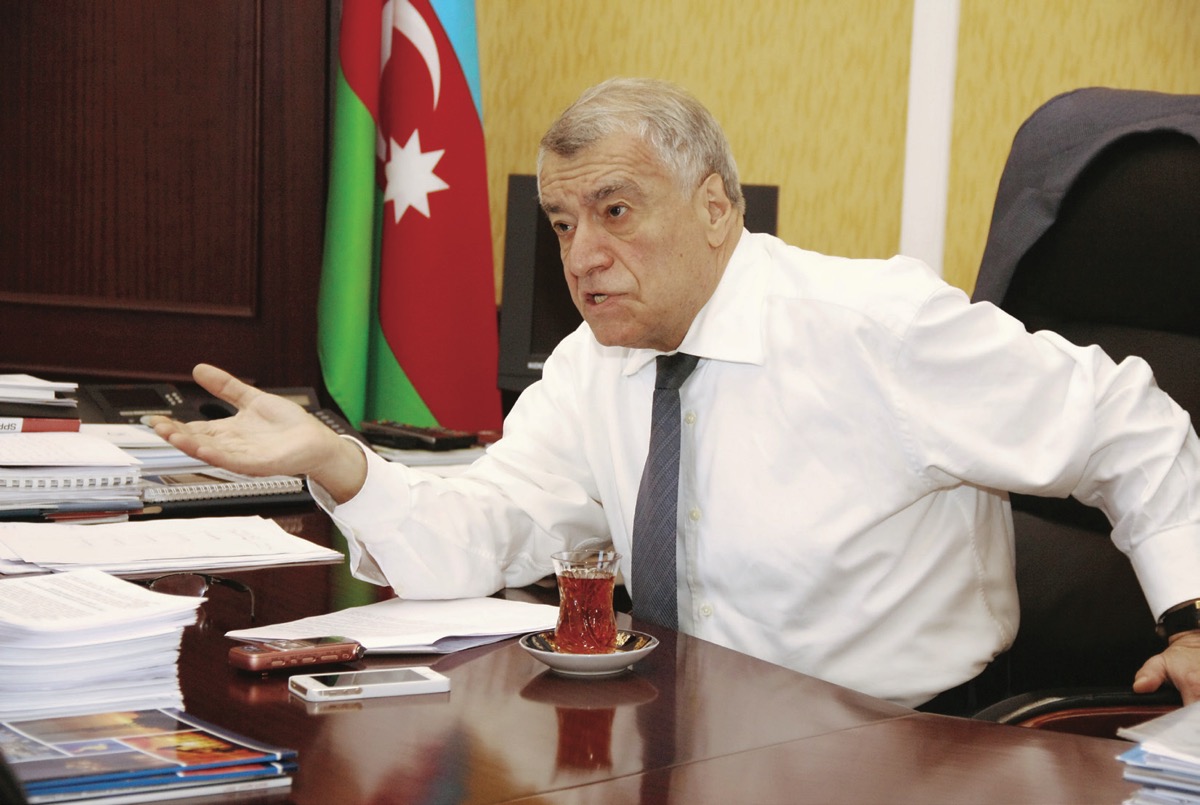
Caspian Energy (CE): Mr. Aliyev, how do you assess the consensus reached between the OPEC and non-OPEC states? Will these agreements be able to help to balance markets?
Natig Aliyev, Minister of Energy of Azerbaijan: I think we should give a little glance back to the history. Ever since 2014 when oil price started rapidly falling at the world market, many experts, politicians, economists and financiers have begun seeking reasons, main factors which caused rapid oil price decline. The opinions were certainly various. Some thought that it is simply a policy while the second group of experts found it to be a speculation that would not last long. In other words, they expected sooner recovery of the market. The third group of experts associated the market situation with a common decline of the economic development rate of such countries as China and India.
Time had passed before everyone realized that it was absolutely another case. Though, the rates of the economic decline remained at a low level, OPEC’s oil production did not respond these challenges adequately. As a result, the price continued falling. Then many experts began to associate the cause of the market situation with the shale oil factor and considered it to be just another game initiated by the USA. Of course, many oil producing countries started facing budget problems because high revenues imply the growth of expenditures. When a crisis occurs, a state is not able to regulate revenues and expenditures moreover long-term obligations play their role. Many countries faced the same situation, including Saudi Arabia. Two years later countries-producers started seriously considering concrete measures because otherwise the financial standing of their economy could become more aggravated. The first meeting took place in Doha late in 2015. Opinions varied there. The participants had to wait four hours, though it was announced that the session would start at 10am. As for explanations, Iran and Saudi Arabia were holding consultations. Though, the preliminary draft agreement was prepared beforehand, Minister Naimi told us that Iran is not among participants while OPEC’s rules state that consensus can be reached only if all OPEC members participate in the meeting and express their consent. As it is said, things don’t work the first time. I think that meeting did more harm than good for the market situation and caused the rise of speculations at the market. If you remember, it was then that the news saying oil price would fall below $30 appeared. There were also pessimists (I would say pessimists for us and optimists for themselves) who assumed that the oil price would even fall down to $20 per barrel.
Once again I want to emphasize that I find it a negative sample when people gather for a certain purpose and cannot reach the consensus. If the parties cannot reach agreement and no preconditions are available, then it is more reasonable not to gather at all. Secondly, you might remember October 2016 when the market was very unstable and there was a meeting held in Algeria with participation of all parties. It was suggested that if OPEC countries assume an obligation to produce no more than 32.5 mln barrels per day, it was considered to have a positive impact on the oil market. An agreement in Vienna was signed on November 30 right after it where 13 OPEC and 11 non OPEC states gathered. Azerbaijan joined this agreement. 24 oil producing countries gathered. The meeting had a big audience and marked an active discussion. As a result, the non OPEC countries assumed an obligation to cut production. Russia was assigned to stick to 300,000 barrels a day. Our position was based on the real average daily oil production figure of 2016 and the forecast for 2017. Compared to average oil production, we assumed an obligation to cut production by 35,000 barrels per day in the first half of the year. The declaration on cooperation was signed on December 10, where all our obligations were written down. I do believe it was the first important joint agreement reached throughout the whole history of OPEC and non OPEC states. The second significant advantage of this meeting was the determination of the method and mechanism of influencing the market by means of consecutive and agreed reduction of oil production. Monitoring and technical committees were established to study and control the market situation. They have already held two sessions this year. They gave positive conclusions about the fulfillment of these agreements and about the influence of undertaken obligations on the market. Thanks to it, the oil price remained practically stable within $50-55 per barrel starting from January.
Please login or subscribe to read the full article.
Login / Subscribe