



We expect big changes in the markets in the 2040s and 50s - Total CEO
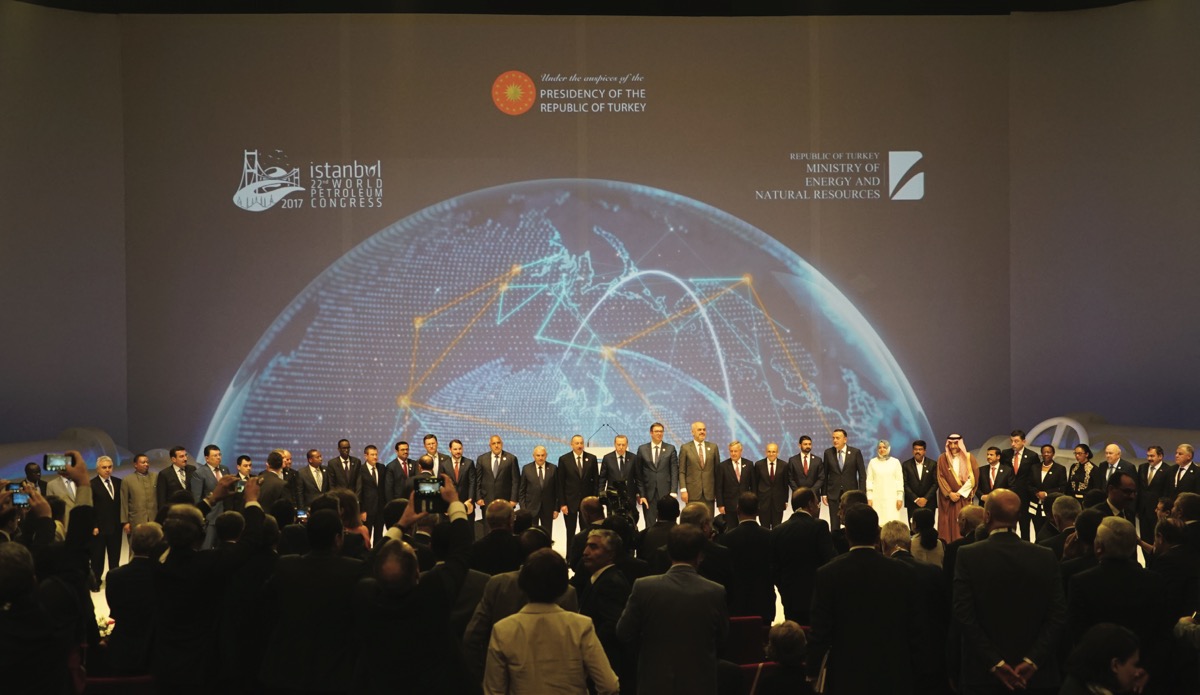
Addressing the 22nd WPC hosted in Istanbul, Total CEO Patrick Pouyanné spoke about the need for changes in the industry. According to him, it is necessary to reduce risks and coordinate investments, volatility, geopolitical challenges, climate change also affects the industry.
-Against the backdrop of today’s conditions of volatility we must address inefficiency by strengthening security, improving operational innovations, revising CAPEX and OPEX projects. In 2015, our projects faced sanctions and we suggest that by 2020 the market will run into a shortage of supplies. We must foresee development of the situation in the markets and properly manage the assets. Deepwater production is not so profitable. In Brazil, for example, in 2017 our expenses were reduced and we combined the CAPEX and OPEX policy.
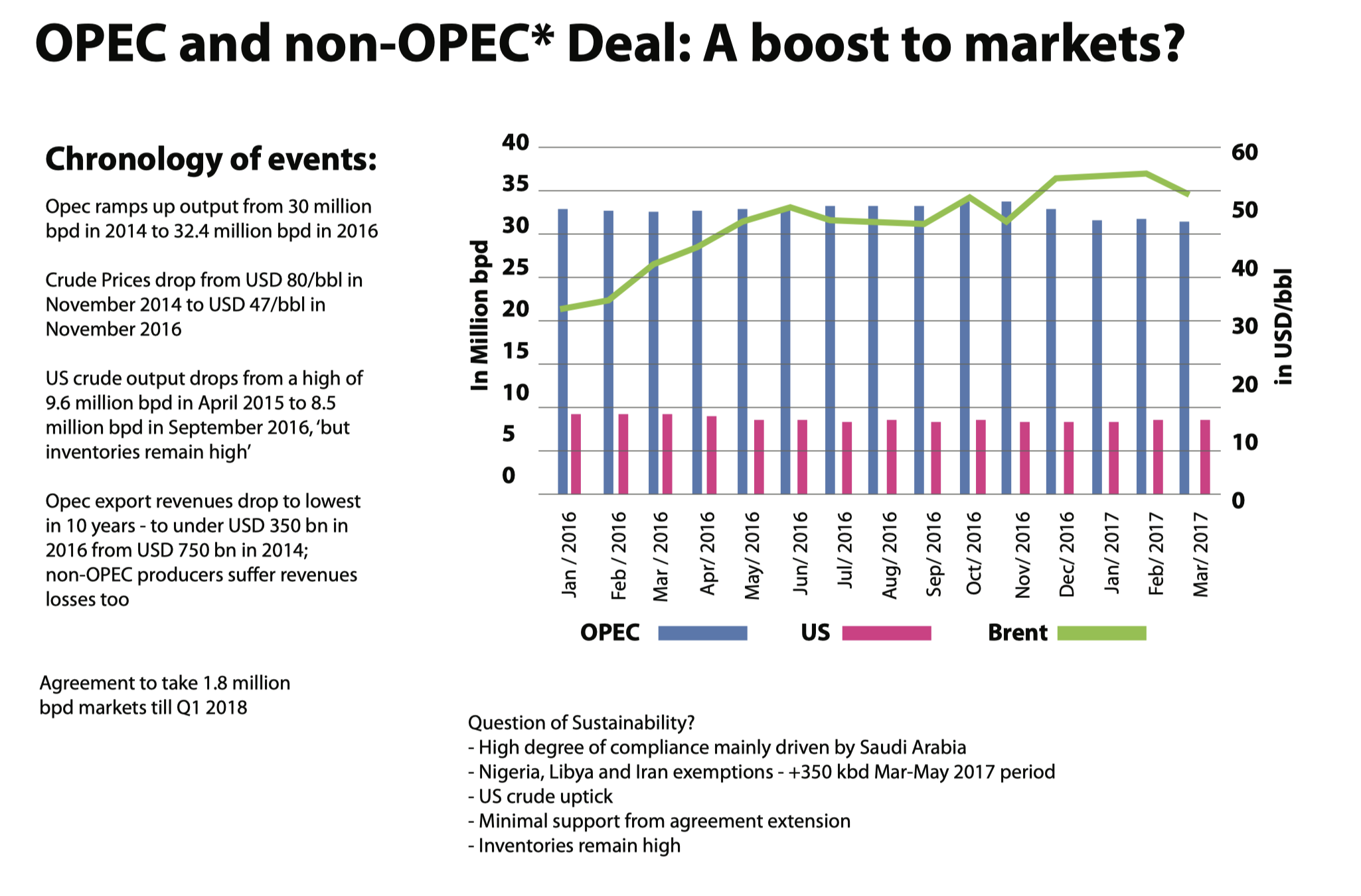
- According to the chief of the French major, nowadays the industry has the potential to adapt to prices up to $50 barrels in the world markets. Geopolitical changes are driven by the conflicts in the turbulent Middle East, Eastern Mediterranean, Russia-Ukraine relations, the situation in the South China Sea. We should also take into account the issues of sanctions related to Russia. Despite all these problems, we must achieve stability, continue to invest, support economic development and a dialogue.
- The climate change testifies to a mission to put in place cheaper and more climate-friendly energy, to deliver resources to as many people as possible, to be a reliable supplier. We expect big changes in the markets in the 2040s and 50s and maybe the situation in the next decade will differ from the today’s one. Shall we continue to use hydrocarbon feedstock as a fuel on ships or gas in combination with renewable energy sources, which will most likely form a basis of the energy mix in the future? To do this, we need to promote gas as an environmentally cleaner source for the purpose of investing in new sources.
Brazil is committed to overcoming resource nationalism - Petrobras
- We are living in the age of progressing technology, rapid development of innovations within the industry with a 150-year long development path. Now we understand that the crucial point related to the volatility of markets has been left behind. Today we are seeing local challenges and risks. The technological progress shows that reserves are not as limited as previously thought. We have entered the era of climate change, the emergence and promotion of electric vehicles is a fact. And, today, when we talk about where to invest, the main players will remain those who better adapt to changes. Traditional sources have remained relevant, but risks remain, while risks within the biofuel concept are declining. The biofuel production is growing in Brazil and it is believed in the Latin region that this is the only industry that will enable the state to manage the industry.
- There is a complex combination of shale oil and traditional production practices in the market nowadays. So, we need to improve efficiency of development in order to make production more competitive. We are prone to nationalizing our resources. Therefore, currently we are trying to change the field where we used to see only one ideology before. In 1993-94 we worked as a monopoly organization. Today we have decided to have a 30% stake in the Brazilian market. We reduced our operations in Brazil and opened a market for cooperation with international companies.
- Currently Brazil is going through a serious period of transformation. We invite foreign companies to cooperate with Petrobras. For the first time in decades of monopolism we enjoyed the opportunity to begin cooperation with international companies. We put up blocks and 258 million barrels of resources for the tender. Brazil has been opened to foreign investment for the first time since 1953.
Development of technology is the main element that will enable us to cope with the situation in the future - Katsuo Nagasaka, Chairman of the Board of Chiyoda Corp.
-Japan’s energy demand is growing, which means we still need stable oil and gas supplies. Investments in the industry have been falling since 2014. Our task nowadays is also to reduce dependence on fossil fuels from 76 to 41%. In this regard, we support the development of technology and this is the main element that will enable us to cope with the situation in the future.
-Chiyoda Corporation currently owns Japan’s oil refineries abroad, particularly in Saudi Arabia. Chiyoda accounts for about 40% involvement in world LNG production capacity. We also use brand new energy saving and pollution prevention technology.
India’s demand for natural gas will triple by 2040 - Dinesh K Sarraf, CMD, ONGC, India
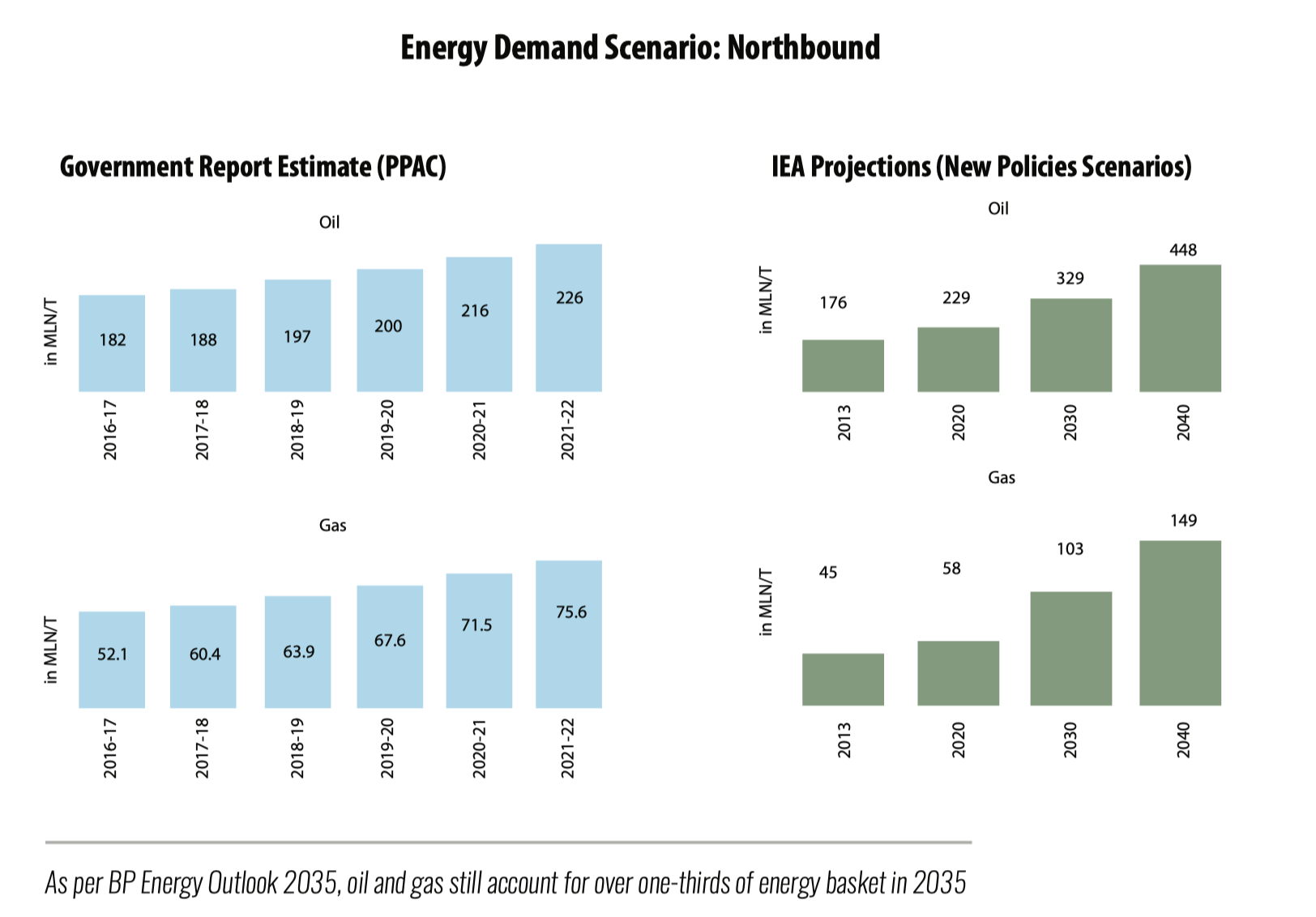
- India’s domestic demand for electricity is growing and India will need additional oil and gas supply. For 10 years the country plans to increase significantly the share of natural gas in its energy mix. Production from renewable sources will be growing, and the number of electric cars will increase. Therefore, the main consuming countries should facilitate ways of obtaining energy sources.
- The main task for ONGC today is to balance investments against the backdrop of the situation with low oil prices since 2014. It is difficult to reduce costs when prices are falling, although on the other hand, when prices were high there was a false sense of stability. Today we need to pay attention to the geographical position and financial framework. We are willing to construct gas pipelines to remote areas of our country and by 2040 the gas demand is expected to triple.
- We have regions rich in natural gas and we have already carried out 18 projects there.
India plans to cut imports by 10% by 2022. To this end, a National Data Repository will be established, and a National Seismic Programme will be approved. It is also necessary to reassess hydrocarbon resources in Indian sedimentary basins, to implement the National Gas Hydrate R&D Expedition 02.
- At the same time a uniform license for exploration and production of all forms of hydrocarbons will be worked out. The Open Acreage policy (continuous bidding for investors to carve out blocks) will be continued. The Easy to Administer Revenue Sharing Model was introduced in India. It envisages no cost recovery; no micro-management by the Government, marketing and pricing freedom for crude oil and natural gas produced.
Saudi Aramco is diversifying portfolio - Amin Nasser, President of Saudi Aramco
-The world energy balance will change. We are going through the transition period which is going to be a hard way. It took oil 80 years to gain a foothold in the energy balances. Electric vehicles nowadays make just o.2% of the entire vehicle fleet which reaches up to 1.2 billion transport facilities. Renewable sources do not meet the economic parameters and it is difficult for new types of fuel to gain foothold in the market. Oil and gas will remain the basis of the energy balance in the foreseeable future. The industry is facing difficulties concerning the investments into the development of conventional sources. Thus, investments worth $1trln have been recently suspended due to the crisis. The number of developed fields reduced. It will be necessary to replace 20 million barrels of reserves per day for 5 years to make up for the capacity lost in 4 years. Investors do not wish to invest in conventional sources, but renewable sources are not able to maintain the balance.
- Saudi Aramco will continue investing $300bln within 10 years in order to strengthen positions and production. The key lesson of the crisis is to support strong balance and paying capacity. We plan to expand and diversify our investment portfolio. In the meantime, we should not forget the Paris agreement and reduce the amount of CO2 emission into the air by 70%. The Company invested $1bln into the use of CO2 capture and storage technologies.
Shell’s bridges - Ben van Beurden, Chief Executive Officer at Shell
- The demand for energy resources will keep growing as the population of the planet is increasing, which is not always the case with ecological measures to reduce the CO2 content in the atmosphere. Shell reduced emissions by 21% compared to 1994. Companies must also actively develop LNG projects. Global changes demand efforts. We are in the period of transition to renewable and more environmentally friendly sources of energy, and it is a challenge. According to the forecasts of the UN, the quantity of the population will rise from current 7.5bln up to 11.5 bln people by 2040. The population in Asia will increase by 750mln by 2100. The population in Africa will increase by 80 mln. There will be 8 countries leading in population growth indicators: India, China, Nigeria, Pakistan, Uganda, Indonesia and USA. Accordingly, the highest growth for energy resources will be in these countries.
Today it is not enough to survey markets of America and Europe only. It is necessary to survey from India to China and we have to establish reliable and firm lines of cooperation with these countries.
Firstly, it is a bridge of perception, overcoming of misunderstanding when different countries and different sectors develop at various rates. Europe should rebuild the infrastructure, while other parts of the world will have limited financial resources and the task for Asia, Africa, where the population is growing, is to build a new infrastructure. The shift to renewable sources will happen, but this process will run gradually. In future the hydrocarbon resources will be used in the heavy industry.
Secondly, it is the bridge of decisions making. There will be many changes happening. It is necessary to solve the problem of weak accumulators, find solution for LNG transport, decide what to do with a nuclear energy, develop bio-fuel technologies. So different sources will face different challenges and be in need of different solutions. For instance, use of renewable sources is growing but it is a seasonal effect. Therefore, natural gas consumption will increase.
What we need is to undertake a number of measures, introduce market mechanisms, dedicated legislation, create working groups for efficient use of energy, quotas trade, stimulate consumption, develop technologies for CO2 capture and storage.
Third bridge comes with the obligations. If all parties move with different speed it is important to move in the single direction and prevent the global warming over 2 degrees compared to 1994.
