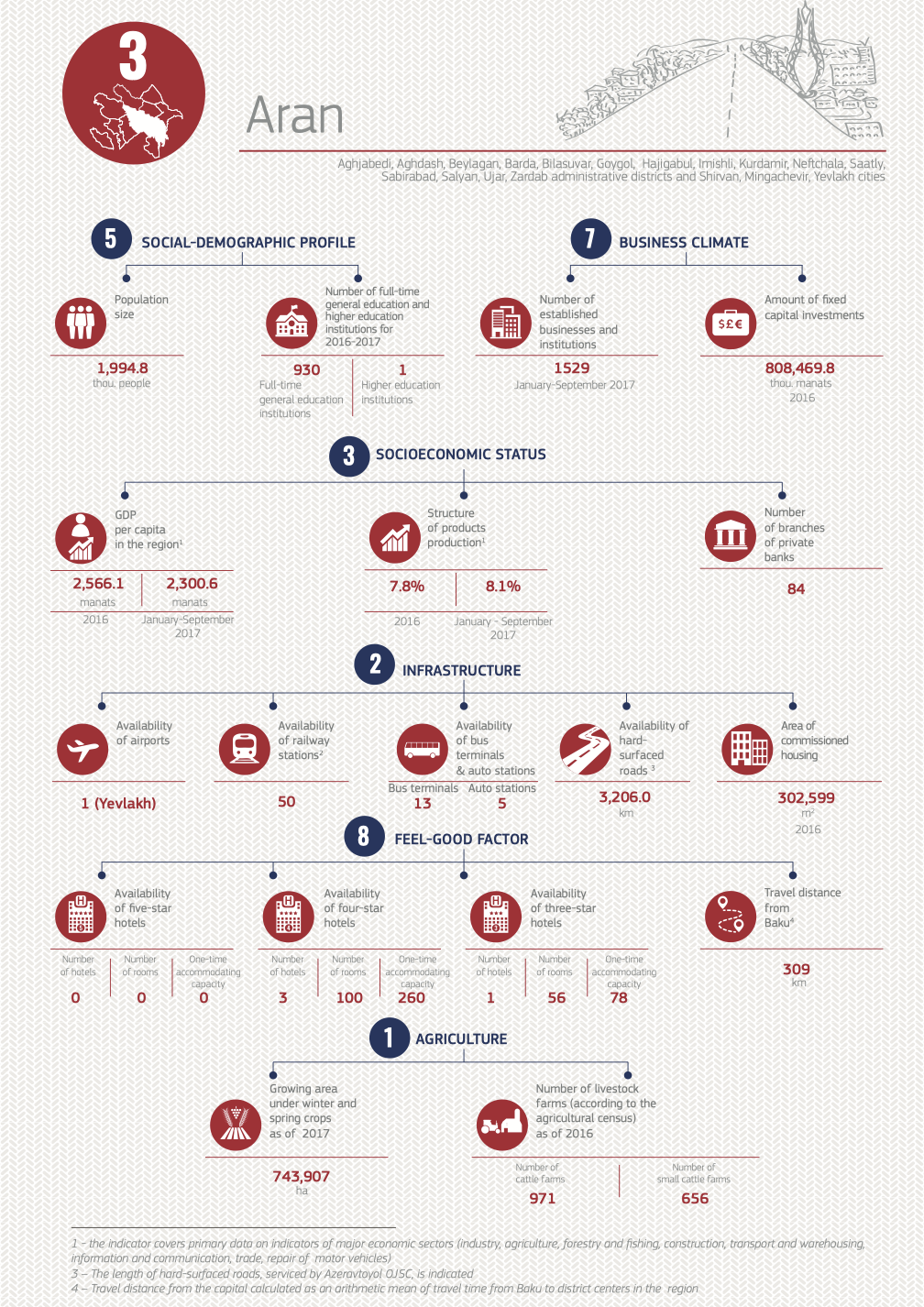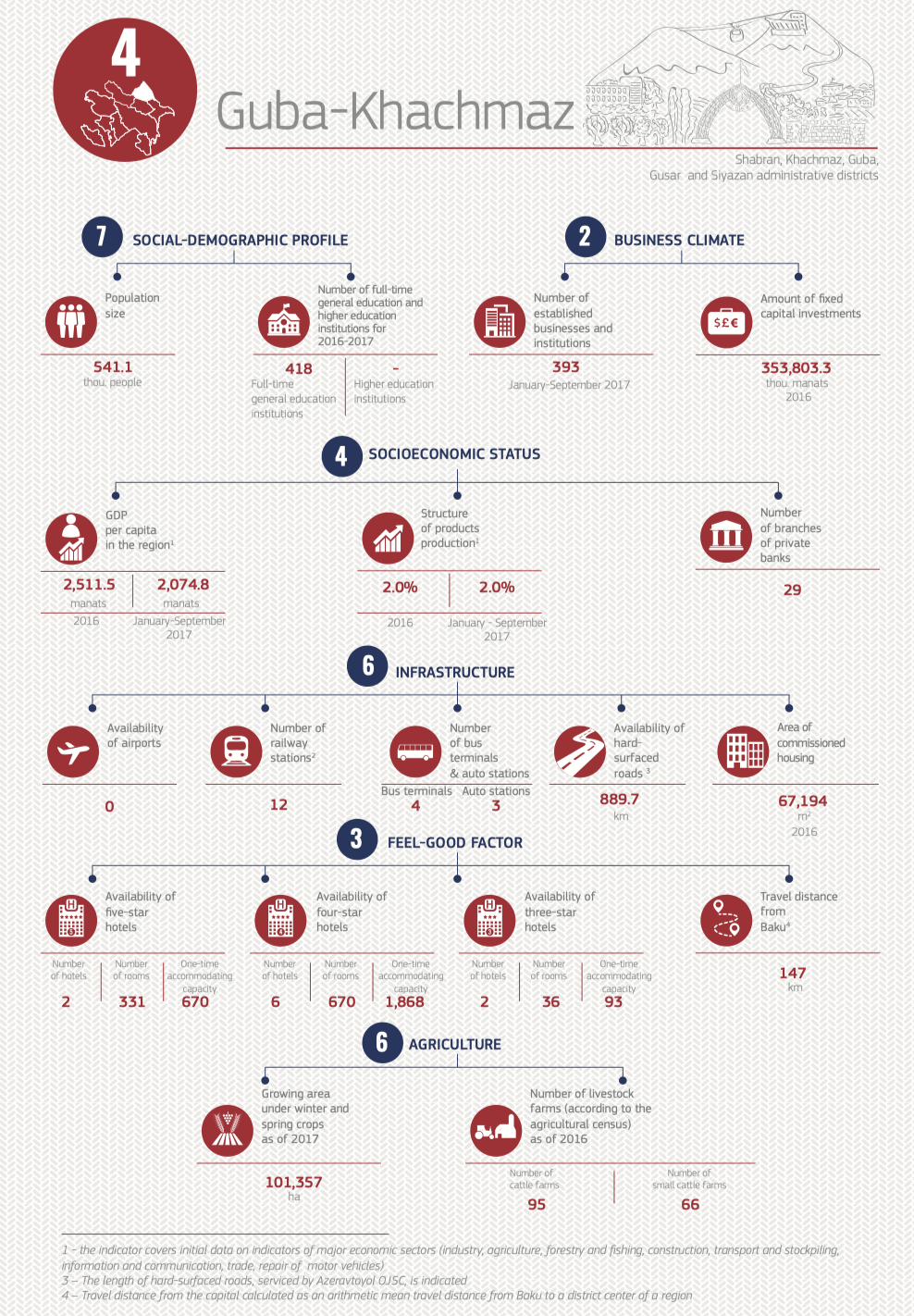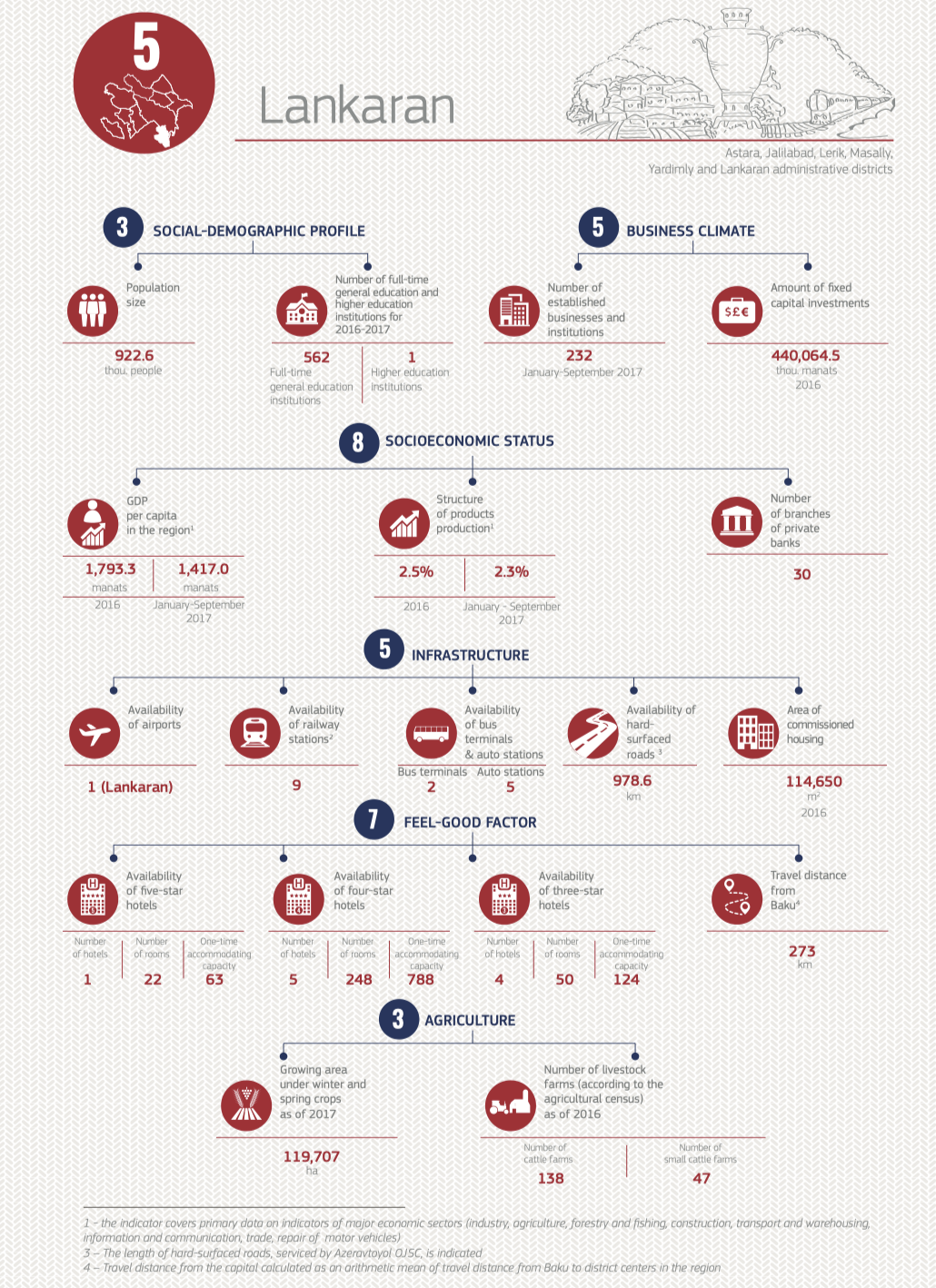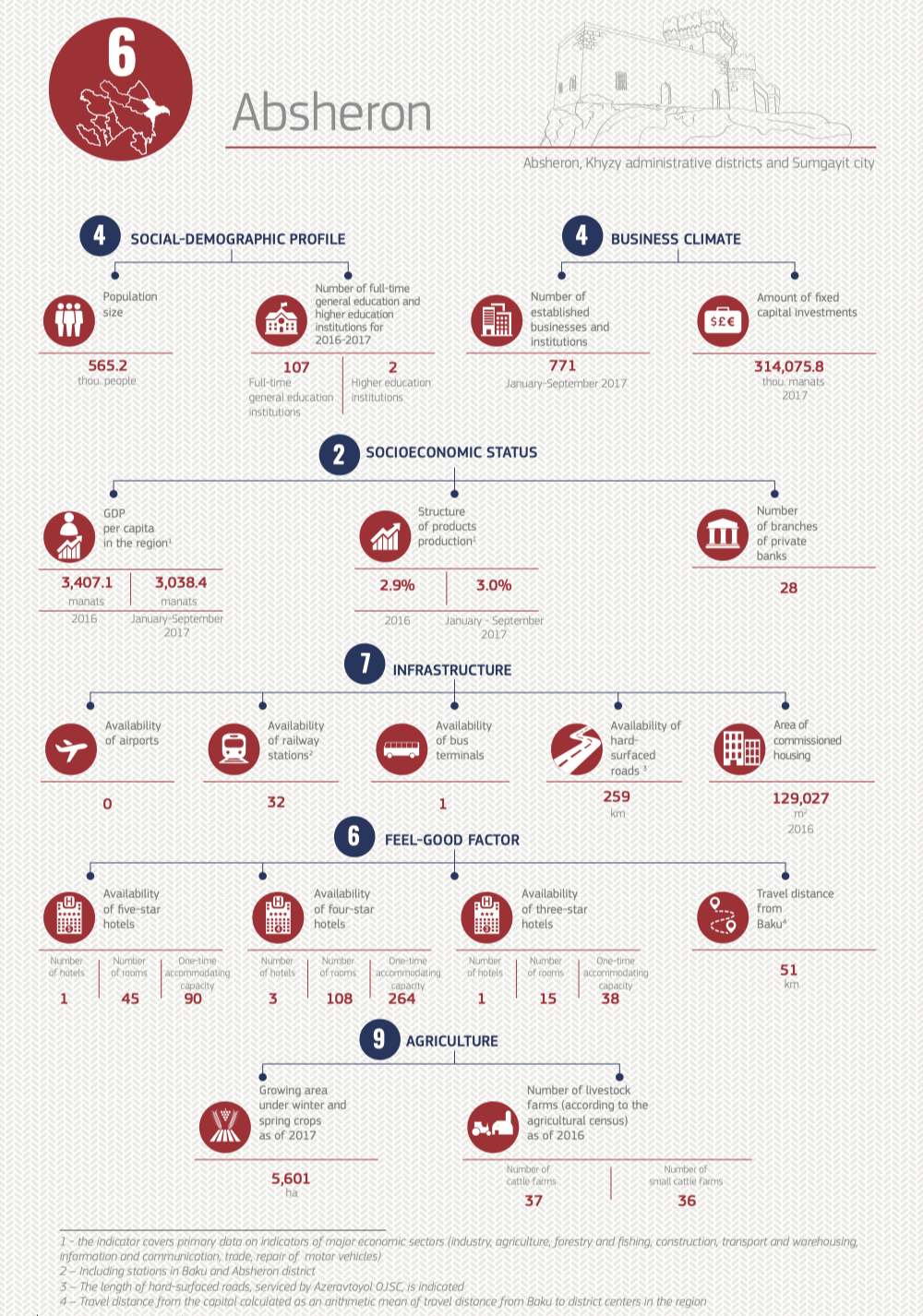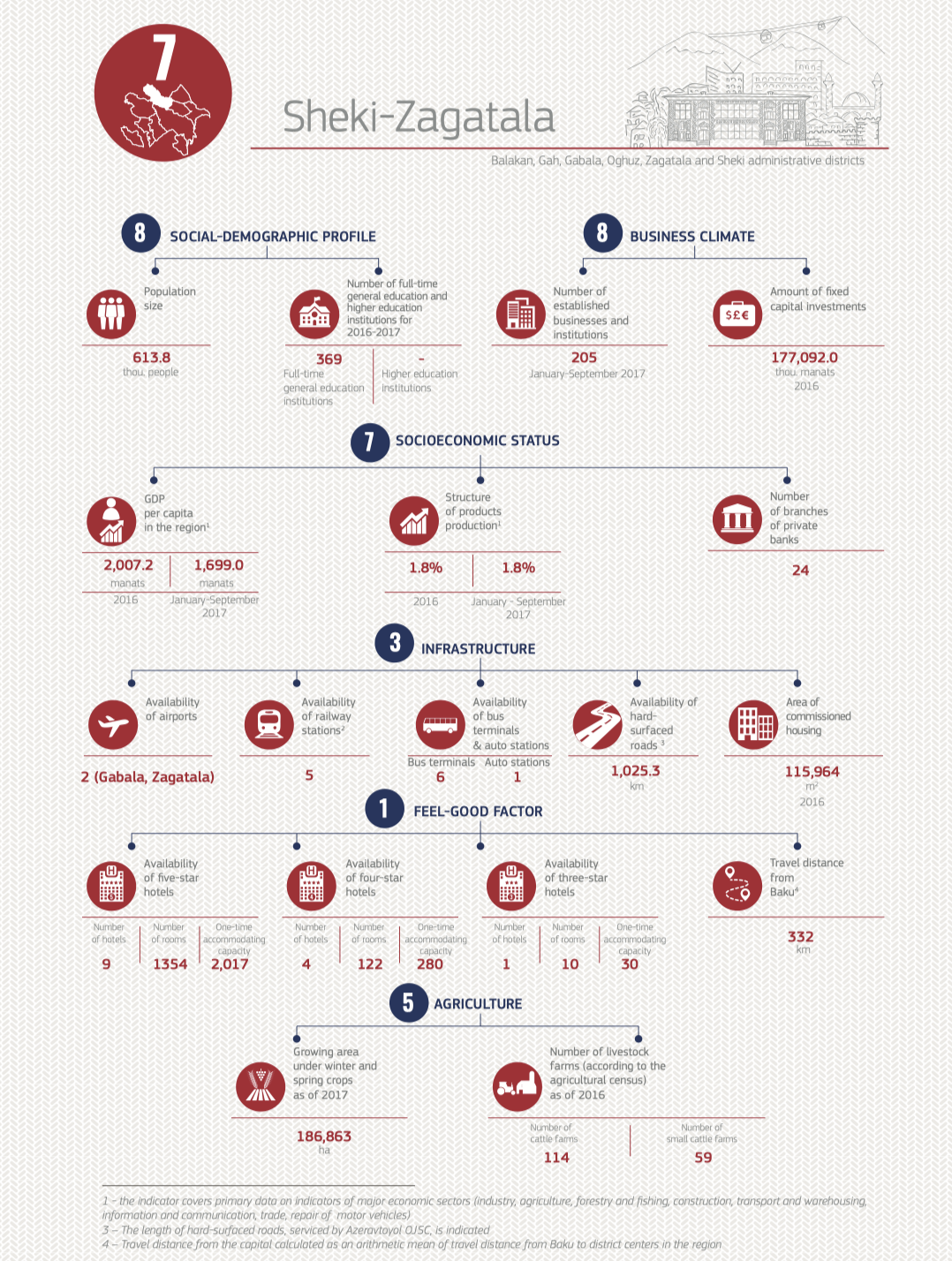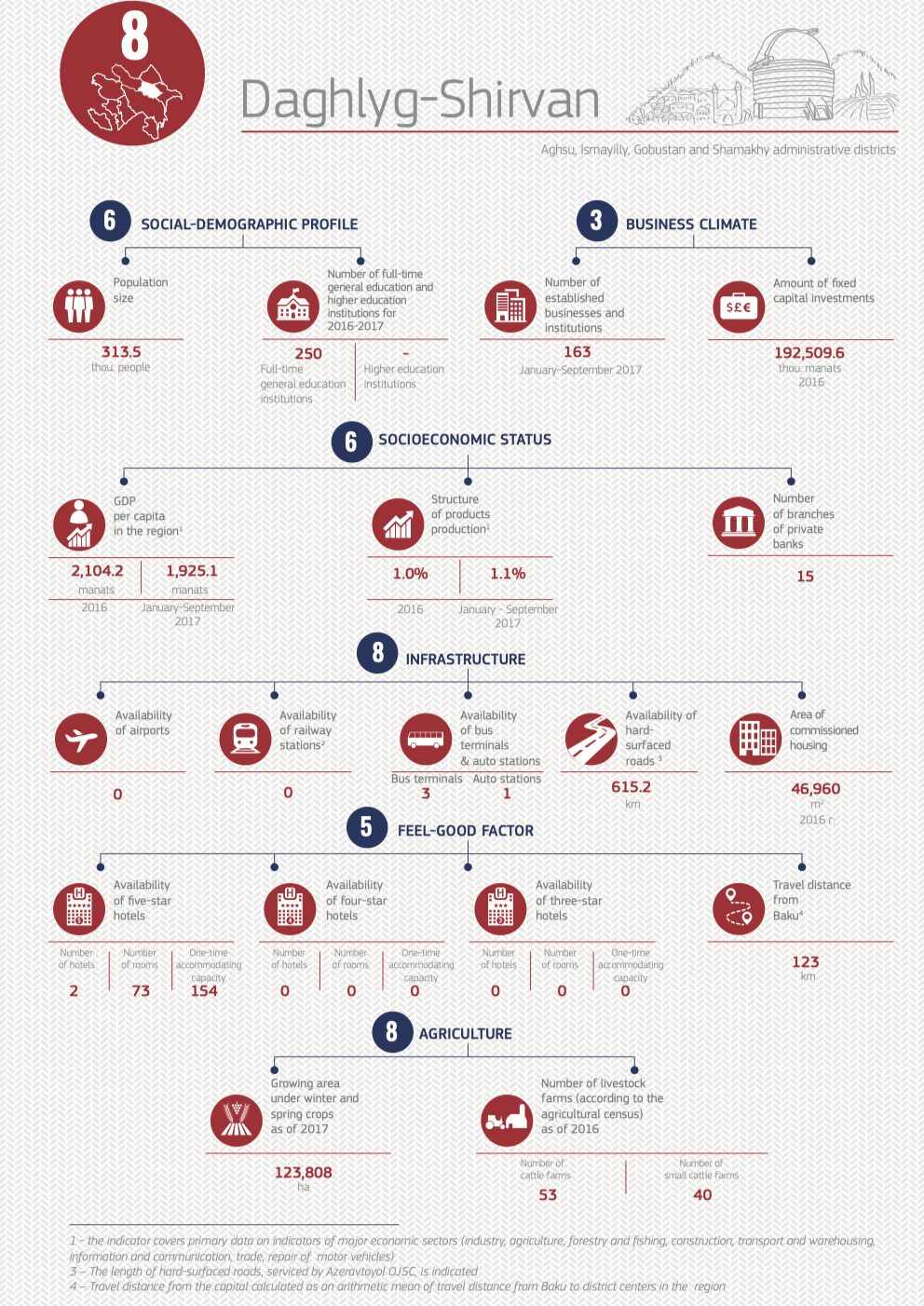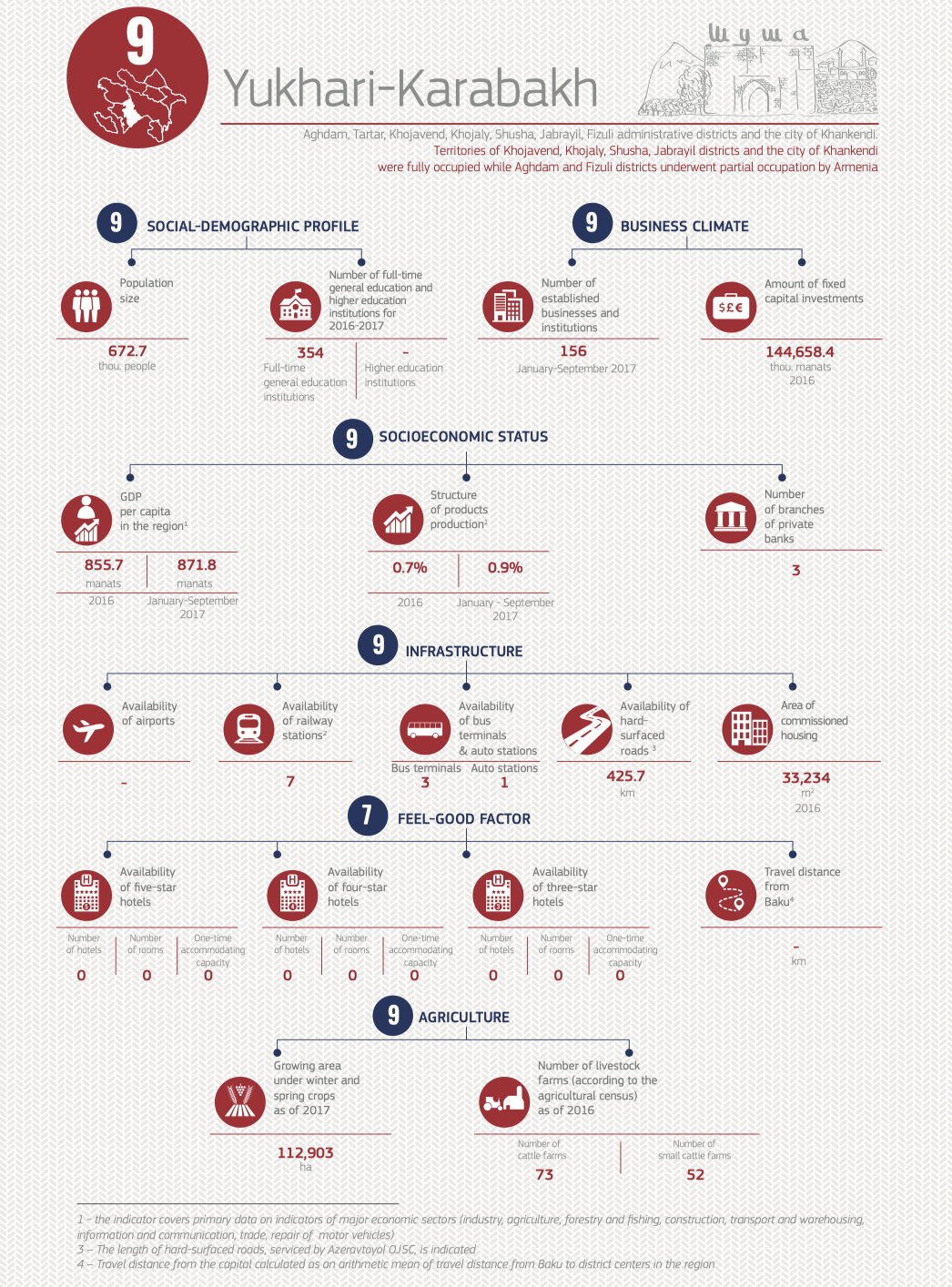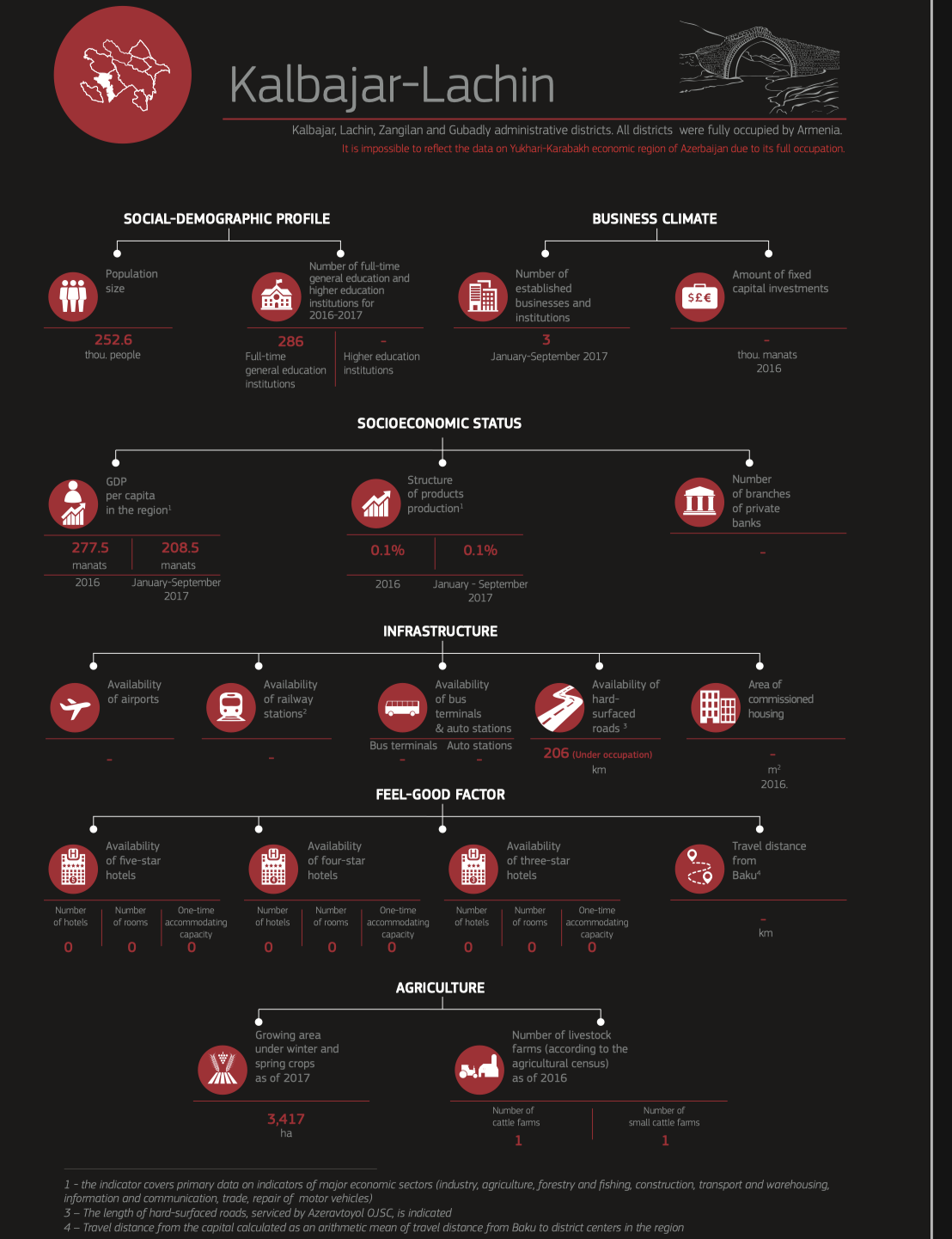



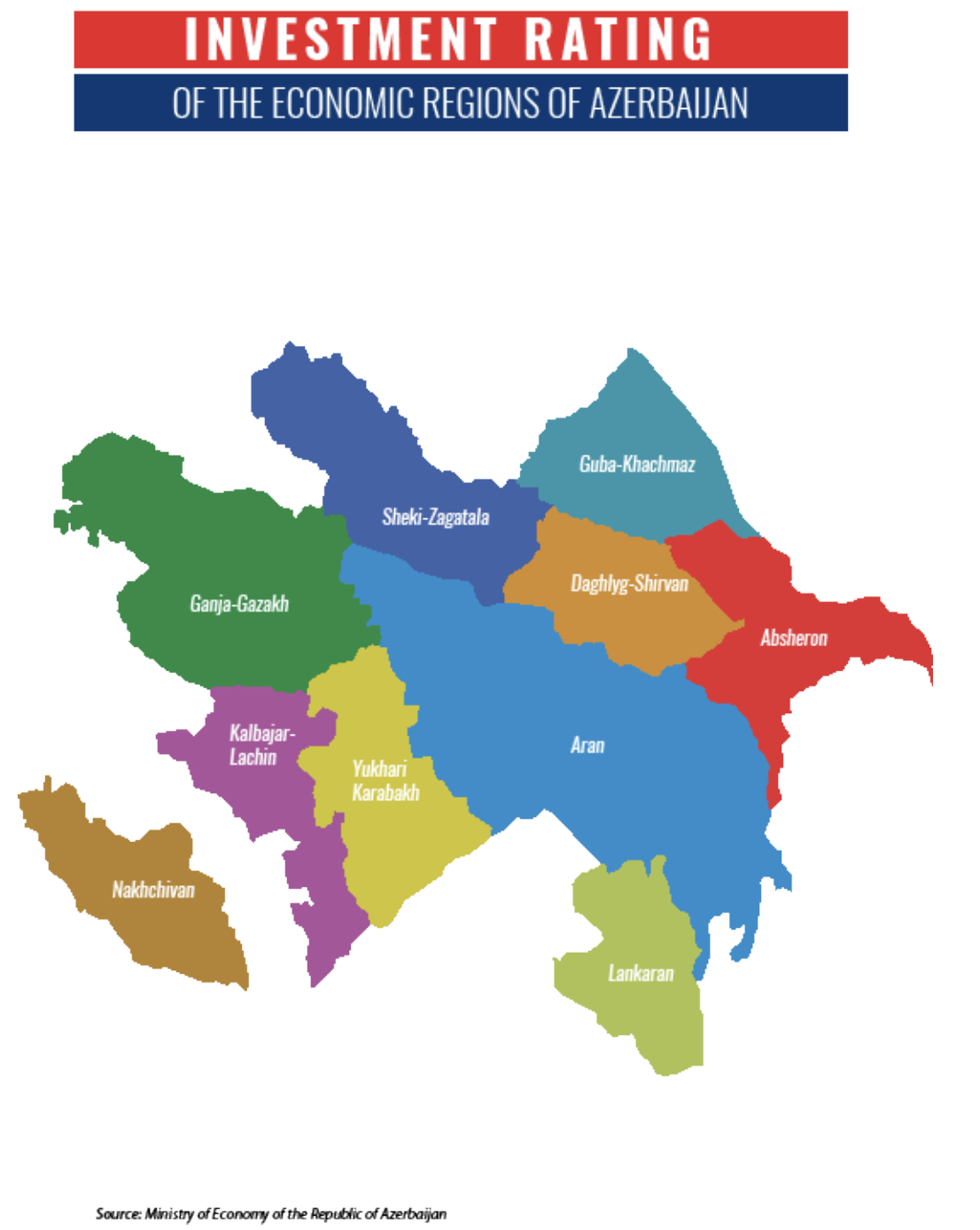
An investment rating of the economic regions has demonstrated the results of the economic reforms and social policy of regions implemented in the country under the leadership of President of Azerbaijan, Chairman of the Caspian European Club Ilham Aliyev.
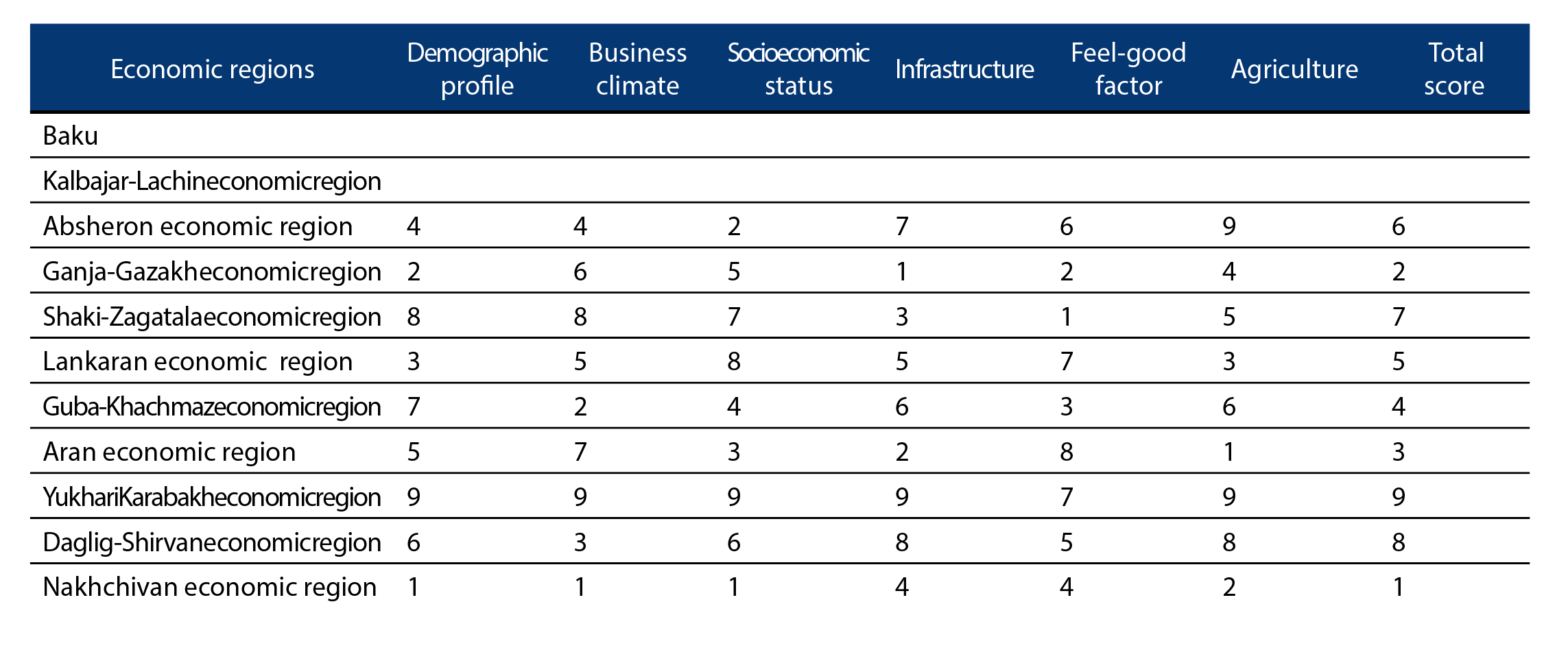
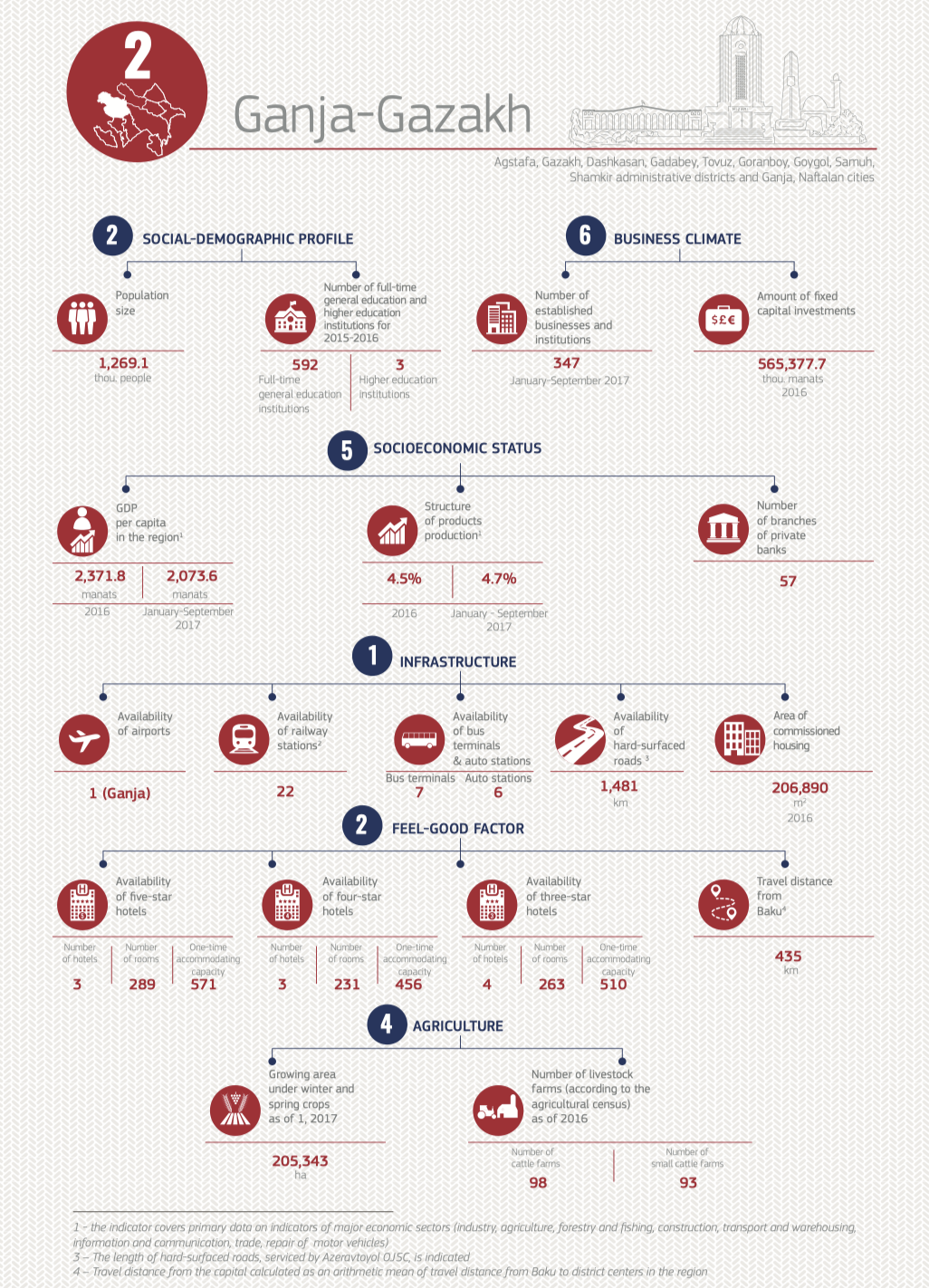
This year’s rating has assessed 11 economic regions of Azerbaijan (Absheron economic region, Ganja-Gazakh economic region, Sheki-Zagatala economic region, Lankaran economic region, Guba-Khachmaz economic region, Aran economic region, Yukhary Karabakh economic region, Kalbajar-Lachin economic region, Daghlyg Shirvan economic region, Nakhchivan economic region). The regions were ranked according to 18 parameters divided into 6 groups – social-demographic profile, socio-economic status, business climate, infrastructure, feel-good factor and agriculture. Ganja-Gazakh economic region, which got the highest total score, took the lead among the regions last year, while the leader of this year’s rating is Nakhchivan.
It is noteworthy that Aran economic region, which took a prime position over all parameters in the ‘Agriculture’ group last year and had a big lead in every indicator, has maintained both its dominant position in this sector and a common position in the rating.
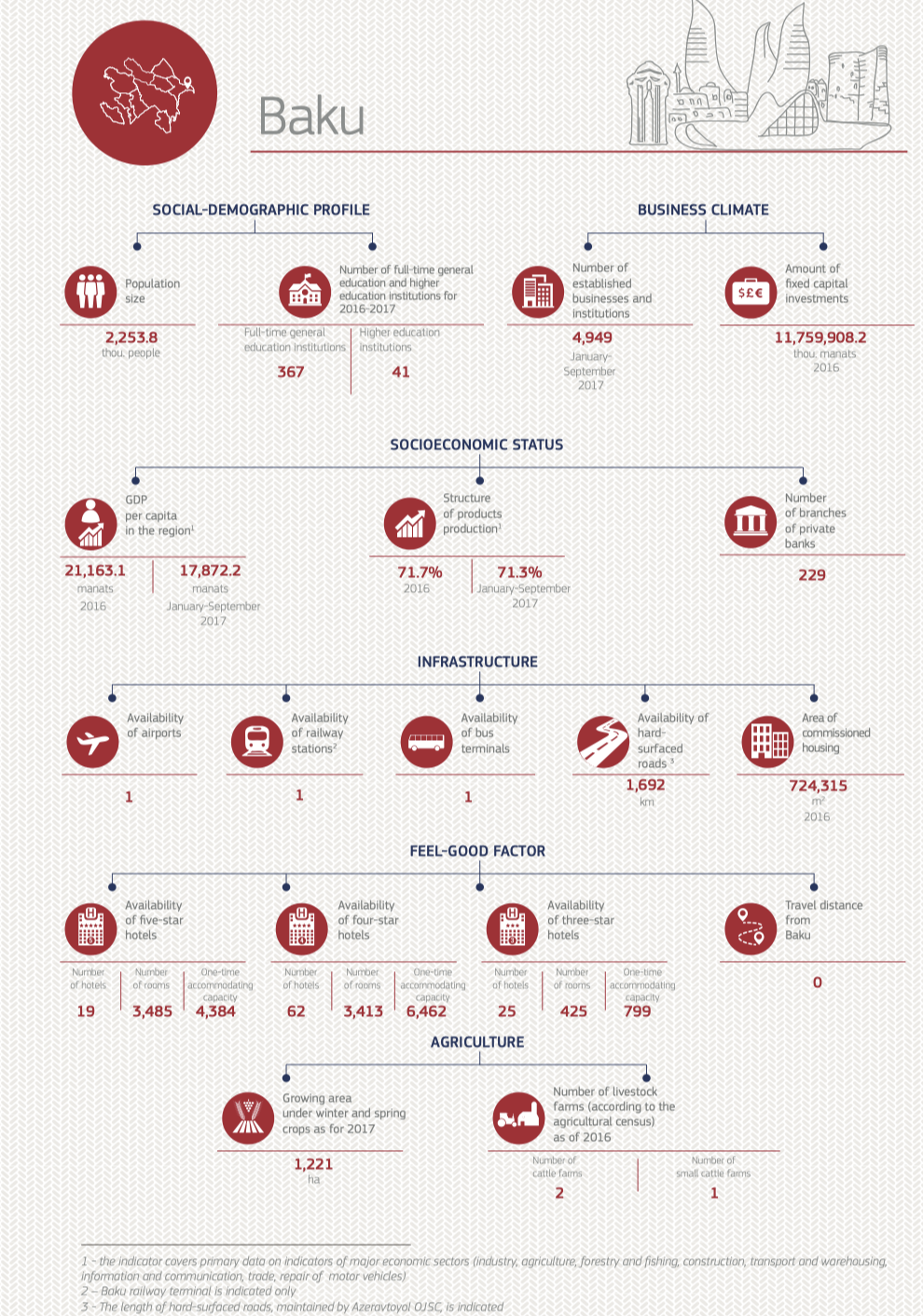
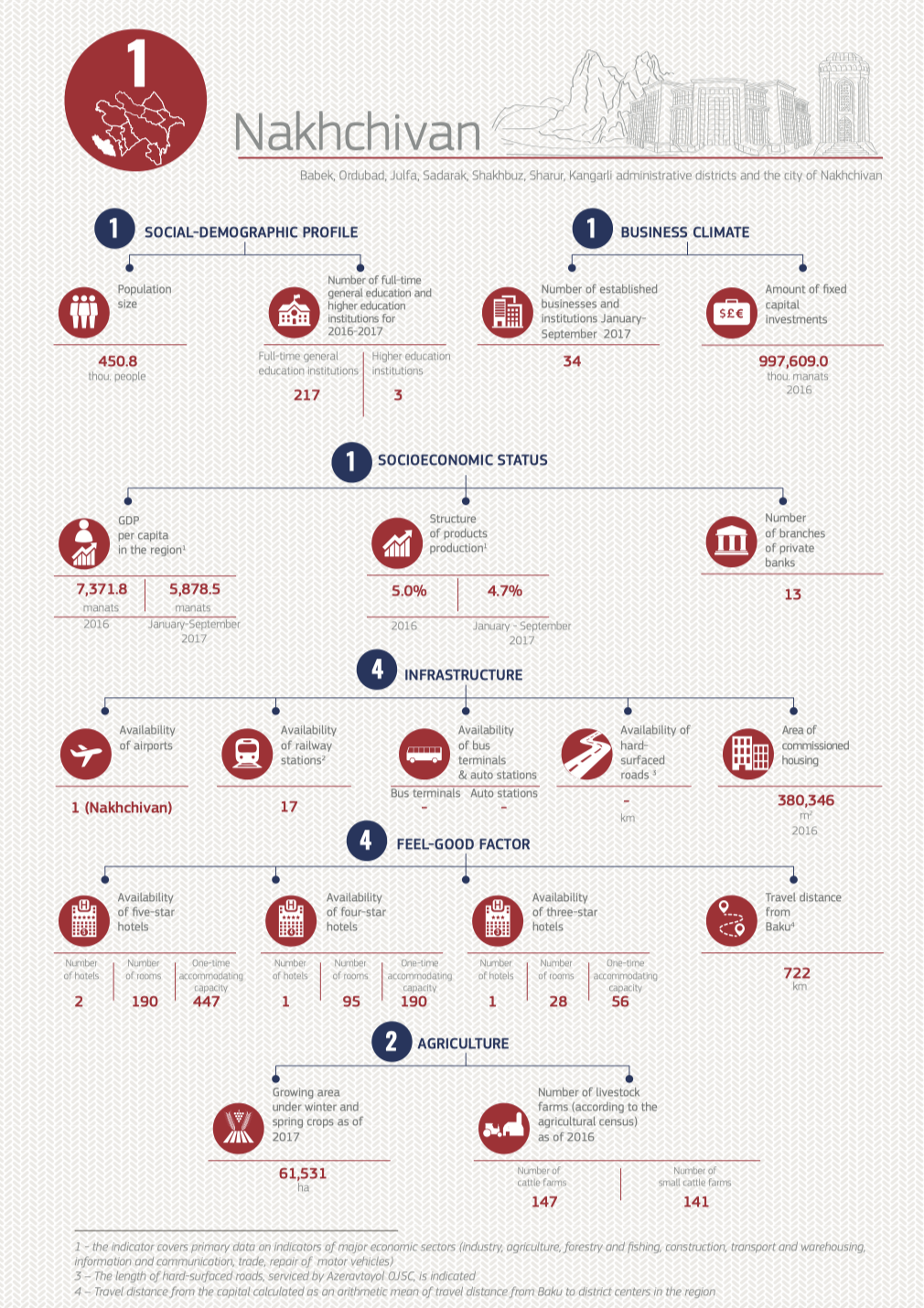
Comparing the country regions’ economic development results for 3 quarters of 2017 with those of the last year, perhaps, an uneven socio-economic development of the country’s regions turned out a main distinctive feature, which is seen in the main figures of the rating. Thus, the GDP per capita in the capital turned out almost 3 times higher than that of the rating leader Nakhchivan, 9 times higher than in Ganja-Gazakh region and 20 times (!) higher than in Yukhary Karabakh which completes the rating. At the same time, the size of the population in Nakhchivan is 4 times lower than in Baku and three times lower than in Ganja-Gazakh region. But the size of the population in Yukhary Karabakh is 1.5 times higher than in the leader-region Nakhchivan.
The distinctive feature of this rating is that we have put Baku into the rating, following the requests of the readers. Baku’s indicators serve as a relative benchmark and an indicator of development of the Azerbaijan regions. However, Baku did not join the final rating due to its dominant position.
Despite Baku takes the last place in terms of the quantity of secondary educational institutions per capita, a high number of higher education institutions compared to other regions made Baku the first in the group “Social-Demographic Profile”. It is noteworthy that there are a total of 3 higher education institutions in the region which comes after Baku, while Baku has 41 higher education institutions. According to the data, the number of secondary schools per capita in Nakhchivan region, which took the second place, is twice lower than in Baku.
Rating under the second criterion, the Business climate, was based on direct investments per capita of population, unlike last year when gross investment was taken as a basis. Therefore the data for the regions may faintly correlate in comparison with the previous year.
Compared to the respective indicators of the last year, this year’s «Business climate»-based rating outcomes revealed an abrupt increase (by 20% on average) in the number of business-enterprises across the country’s regions, with a 30% increase in Baku city. Nonetheless, paradoxically, that the decline of direct investment rates per capita of population across the territory of the republic has decreased by 15 to 30% depending on the region. Investments in Baku dropped by 2%.
Lankaran, where a 30% growth of investments is fixed, has been an exception.
A 300% increase of business facilities in Yukhary Karabakh region was registered, but a 200% decline of investment indicators compared to the last year rating undoubtedly had a negative impact on the general rating of the region. It is noteworthy that the higher was the number of enterprises opened in the regions throughout this year, the higher was an indicator of reduction of the volume of investments.
The only exception here was Nakhchivan where a 20% growth of investments into the region was registered in comparison with the same period of the last year. Besides, the number of business structures here reduced by 25%.
GDP per capita was taken as a basis for calculation under the third criterion, “Social-Economic Status”. It is noteworthy that this indicator in Nakhchivan region, coming second after Baku (229), is three (!) times lower than that of Baku. The number of branches of private banks in Baku is 17.6 (!) times higher than in Nakhchivan (13). The size of population in Yukhary Karabakh region, which closes the rating, is 30% higher than that of Nakhchivan. But there are 3 private banks operating here which is 8.6 times lower than in Nakhchivan.