


State programs on development of regions which have been successfully implemented in the country in recent years created a new basis for effective development of different regions of Azerbaijan. As a result of successful implementation of state programs, the country has made a significant progress in sustainable development of the non-oil sector, in opening of new enterprises and working places, improvement of the quality and volume of delivered public services, provision of social infrastructure in the regions and the capital of the country, improvement of the entrepreneurship area, increase of employment and reduction of poverty.
Owing to significant economic reforms ongoing in Azerbaijan, the country’s economy continues staying highly-integrated with the world markets. Along with the continuing instability of the world oil market, construction of roads, transport routes, and alternative energy developed strongly in Azerbaijan. An investment rating of the economic regions has showcased positive results of the economic reforms and social policy of the regions, which are implemented under the leadership of Azerbaijan President Ilham Aliyev against the background of the oil crisis of the past three years.
This year we have split the rating into two categories. The first one is based on designed capacity of electricity generated out of alternative sources, while the second one is a general rating summing up all the indicators.
The prime feature of the 2018 rating is the fact that the Azerbaijan economy’s dependence on conventional sources of energy has been steadily declining. The share of alternative and renewable sources in the energy balances of the regions is getting bigger. The Absheron economic region is the leader in use of alternative energy. The Nakhchivan Autonomous Republic, where the designed capacity of plants is 4 times lower than that of the leader, comes the second on this indicator.
In terms of economic indicators, as well as owing to a high generation of ecologically clean energy, the Nakhchivan Autonomous Republic has once again moved to the first place of the general rating of Caspian Energy and become an undisputed leader of the rating for the second year in a row. The Nakhchivan Autonomous Republic has made significant progress in social-economic, scientific-cultural, construction, industrial, agricultural spheres, as well as in the field of tourism, transport and communication, infrastructure, growth of production and improvement of the population’s well-being.
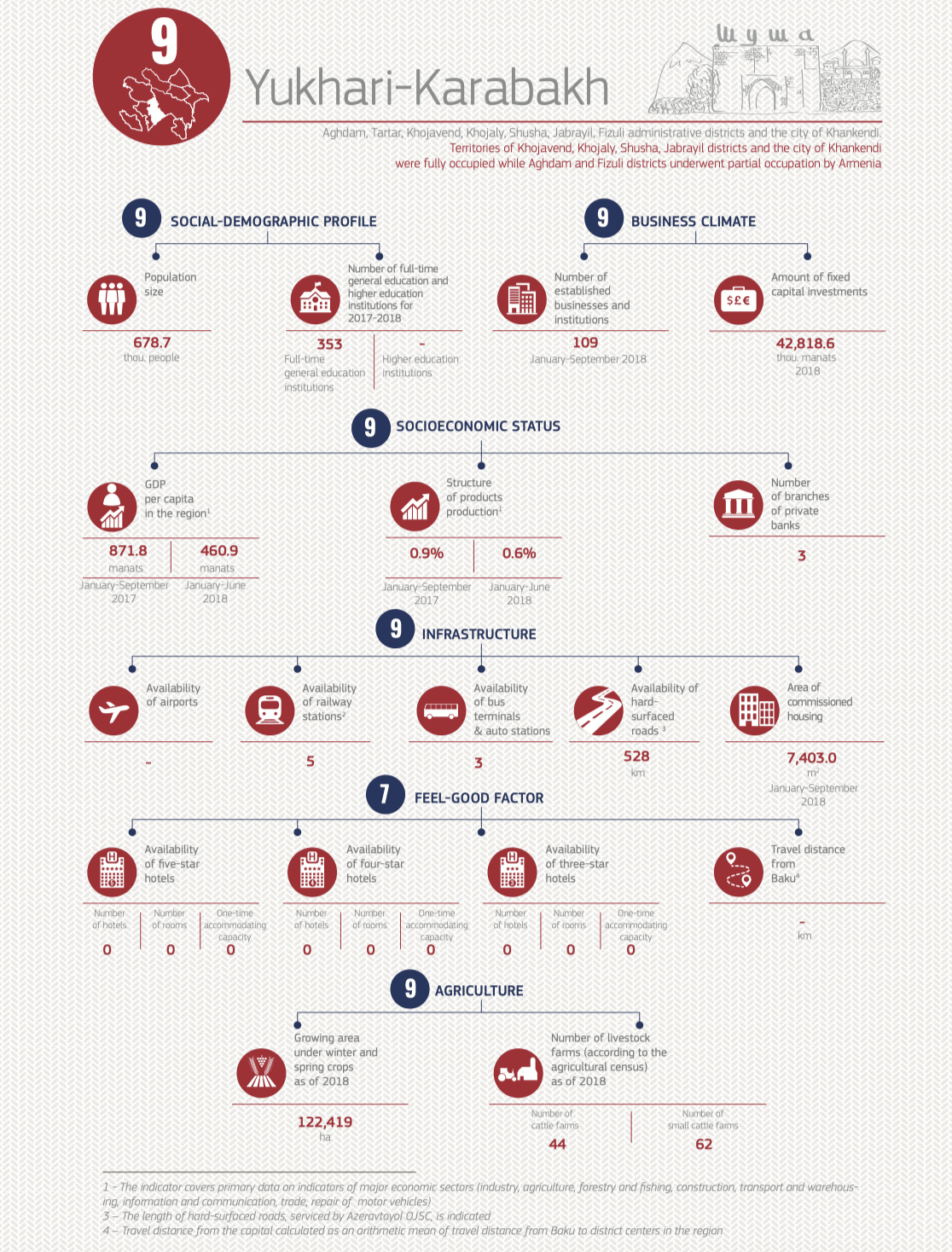
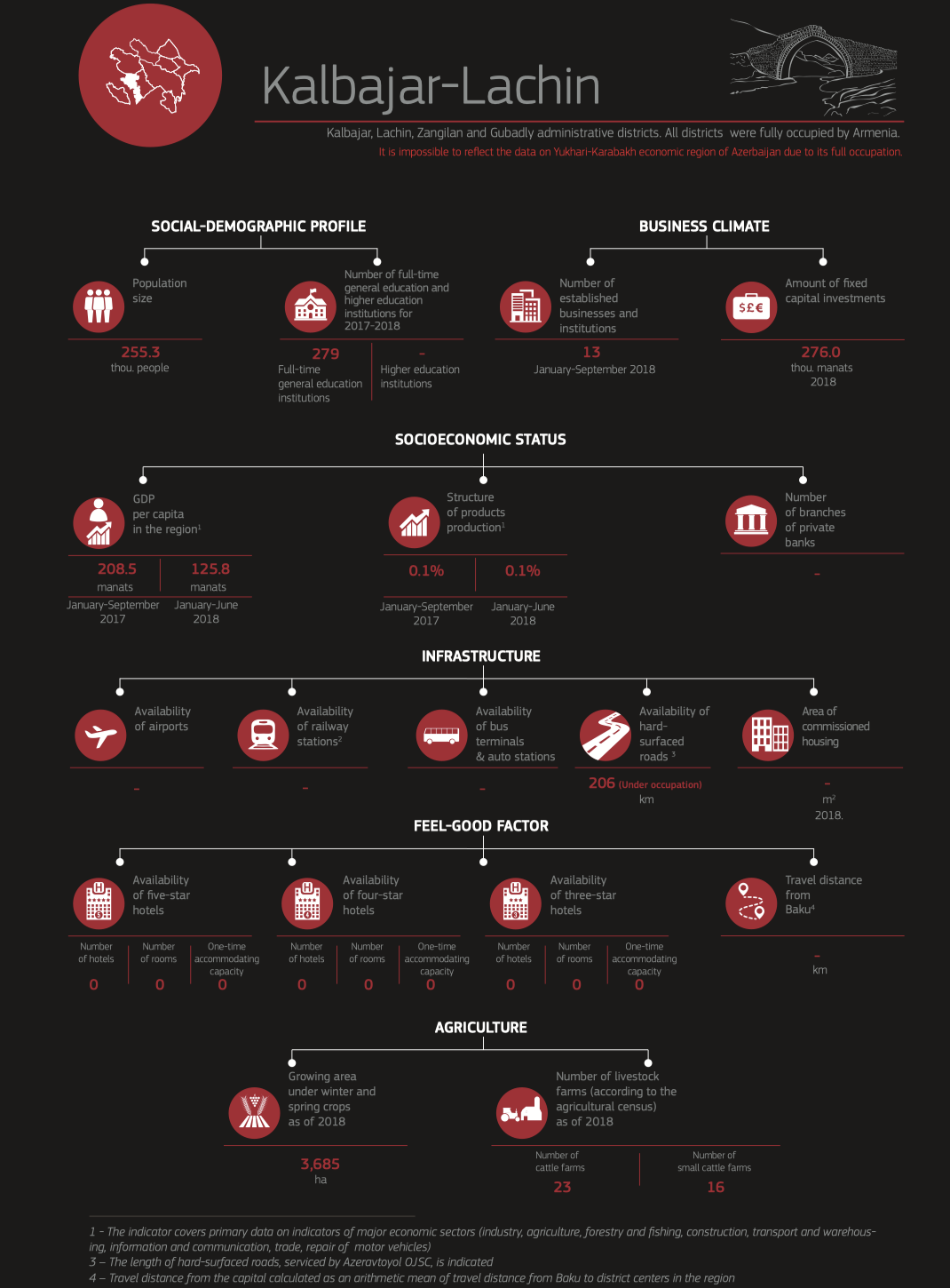
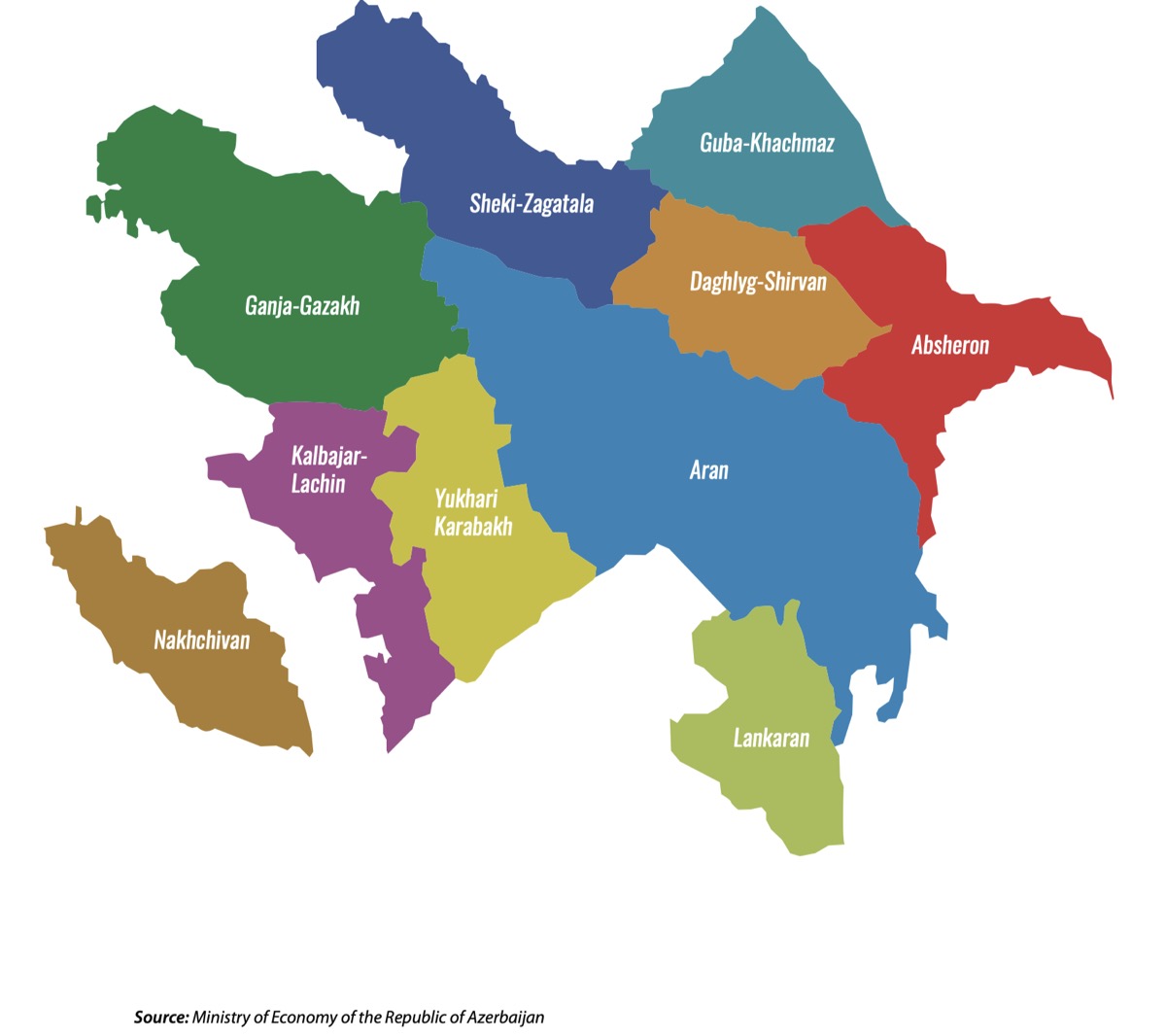
This year’s rating has assessed 11 economic regions of Azerbaijan (Absheron economic region, Ganja-Gazakh economic region, Shaki-Zagatala economic region, Lankaran economic region, Guba-Khachmaz economic region, Aran economic region, Yukhary Karabakh economic region, Kalbajar-Lachin economic region, Daghlyg Shirvan economic region, Nakhchivan economic region and also Baku).The regions were ranked according to 18 parameters classified in 6 groups – social-demographic profile, socio-economic status, business climate, infrastructure, feel-good factor and agriculture.
Ganja-Gazakh economic region, which got the highest total score in 2016, became a leader among the regions. Nakhchivan was the rating leader in 2017. Owing to the active development of the transport and tourism infrastructure, this year Nakhchivan has once again took the first place in the rating. It is noteworthy that Ganja-Gazakh economic region has had a strong growth in its agriculture this year and yielded only to Aran region in this indicator, which has traditionally been the first in this sector.
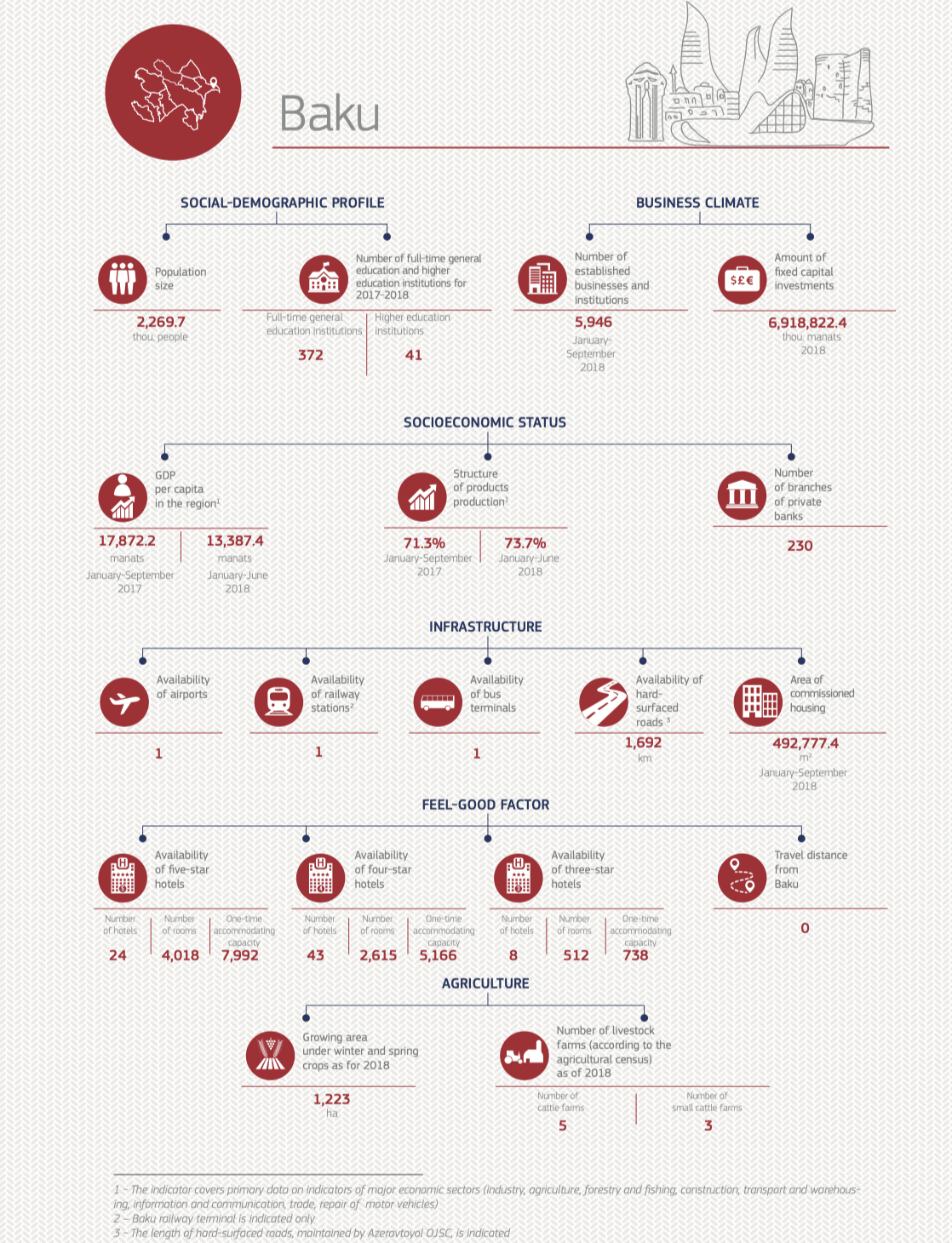
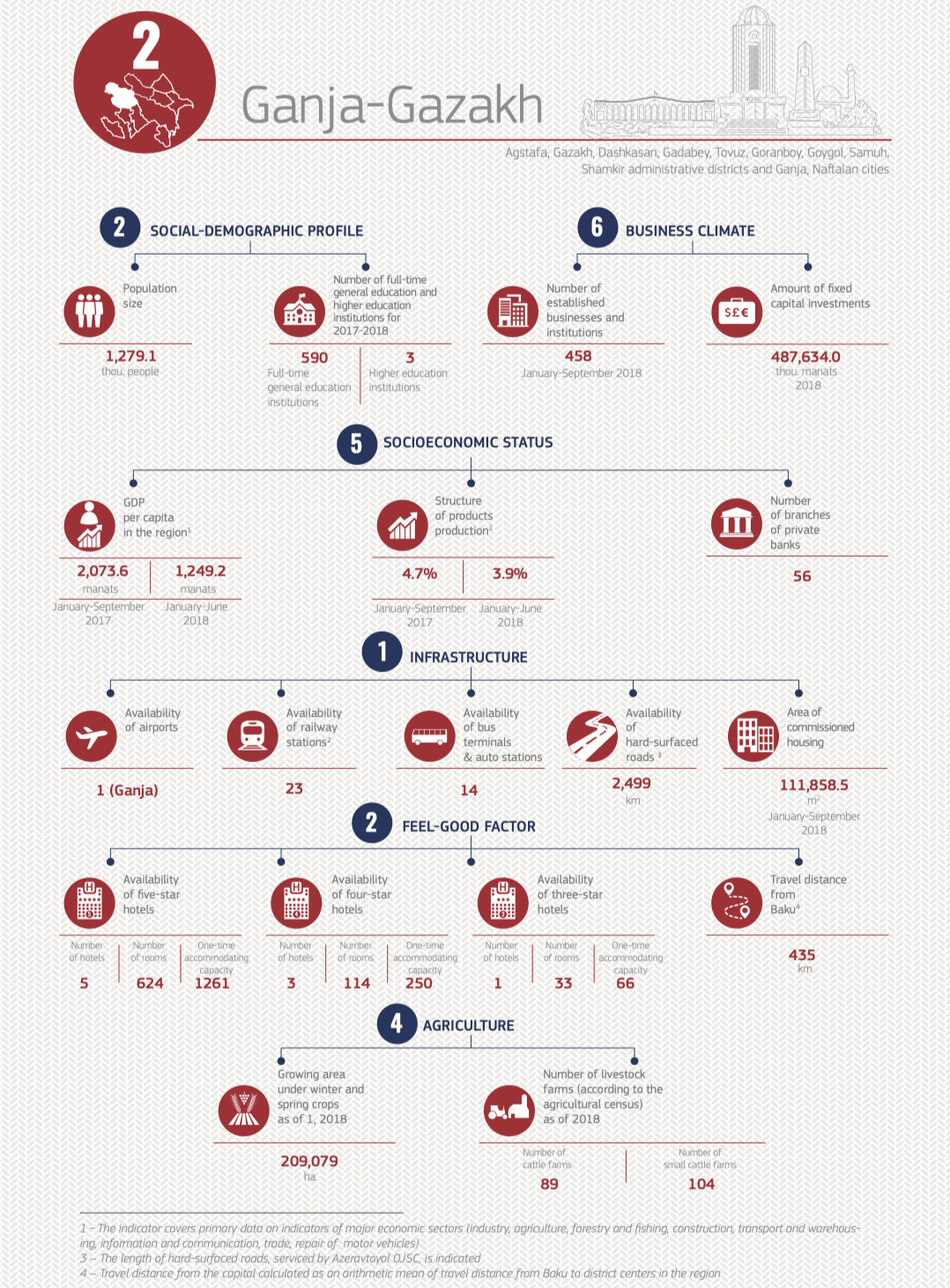
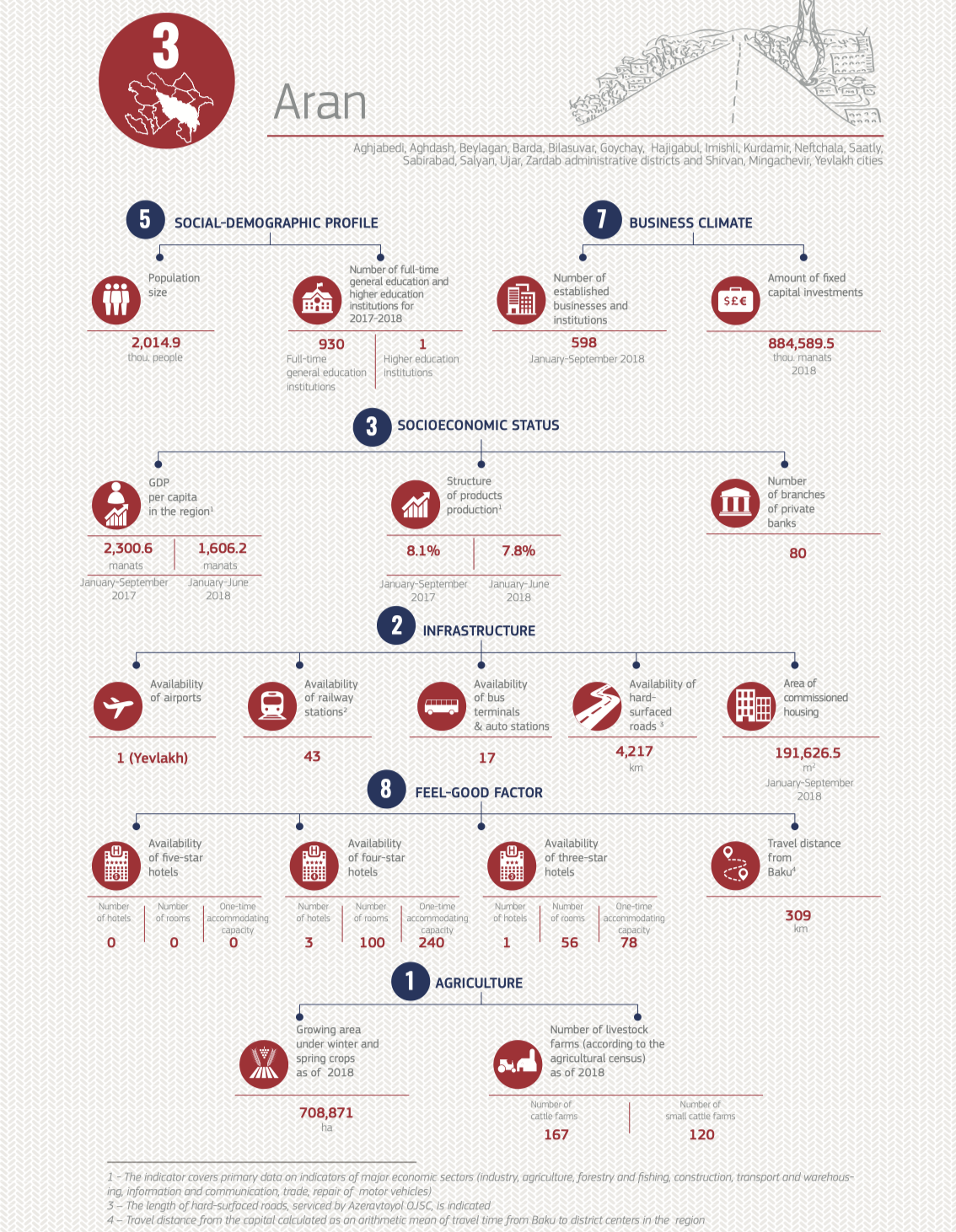
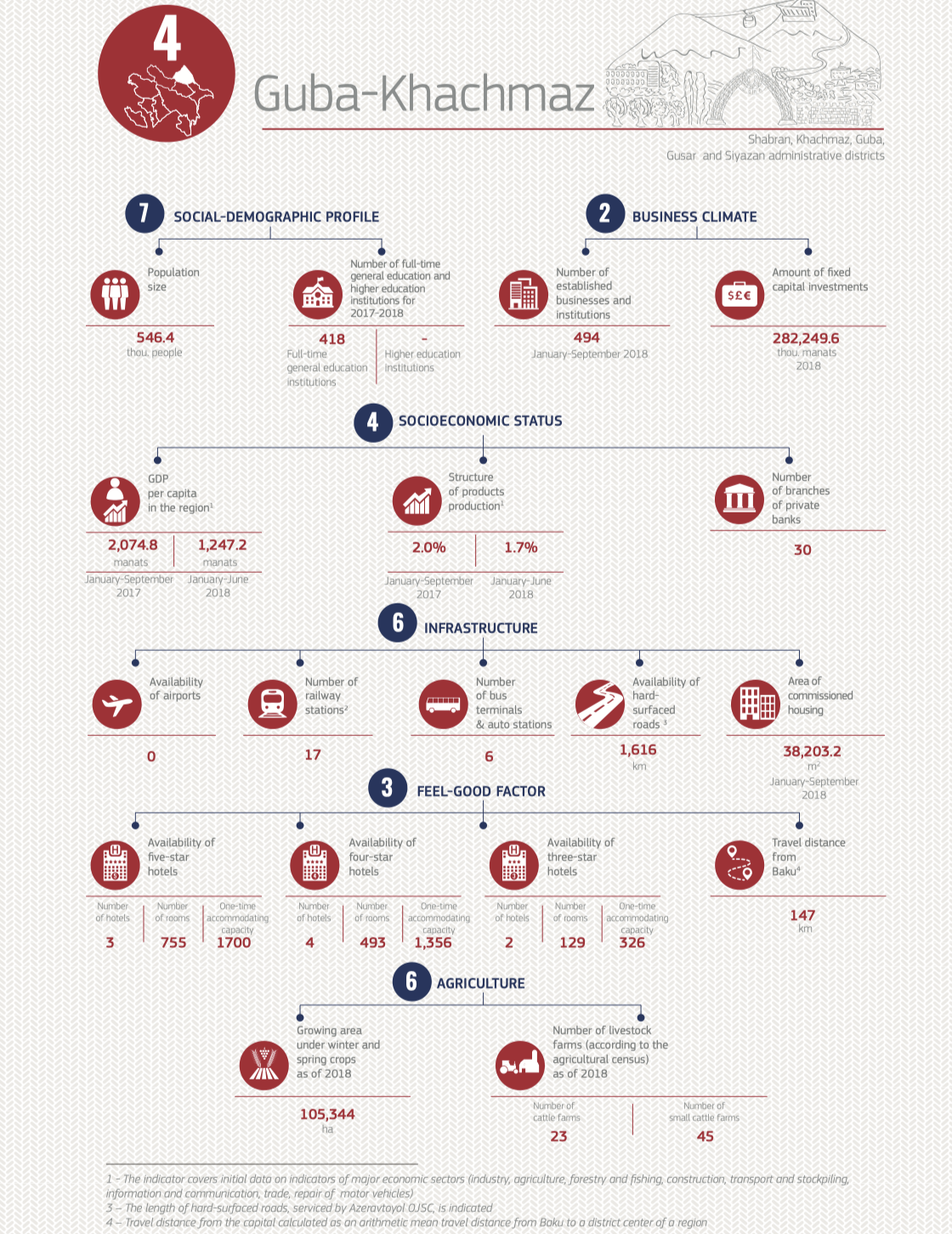
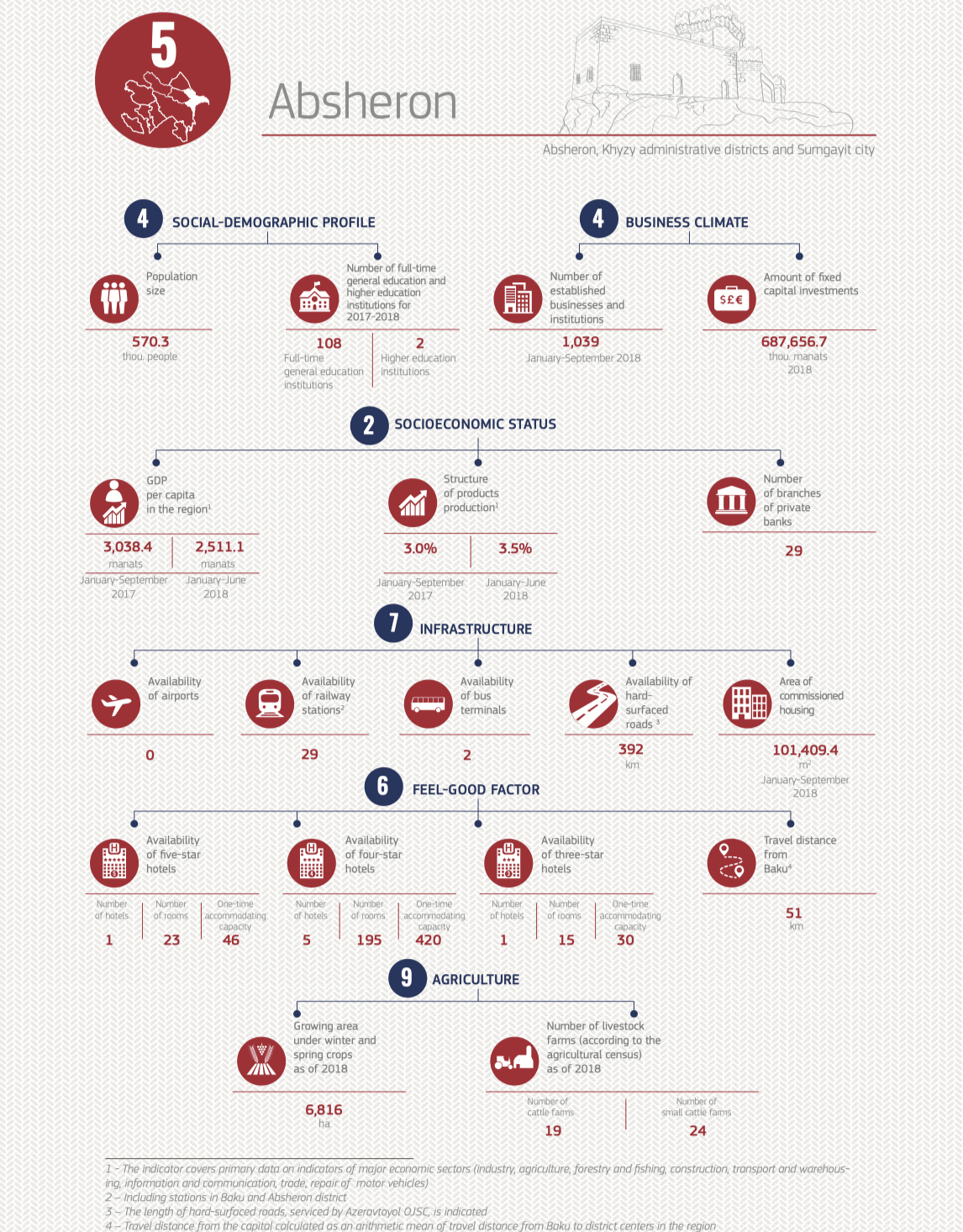
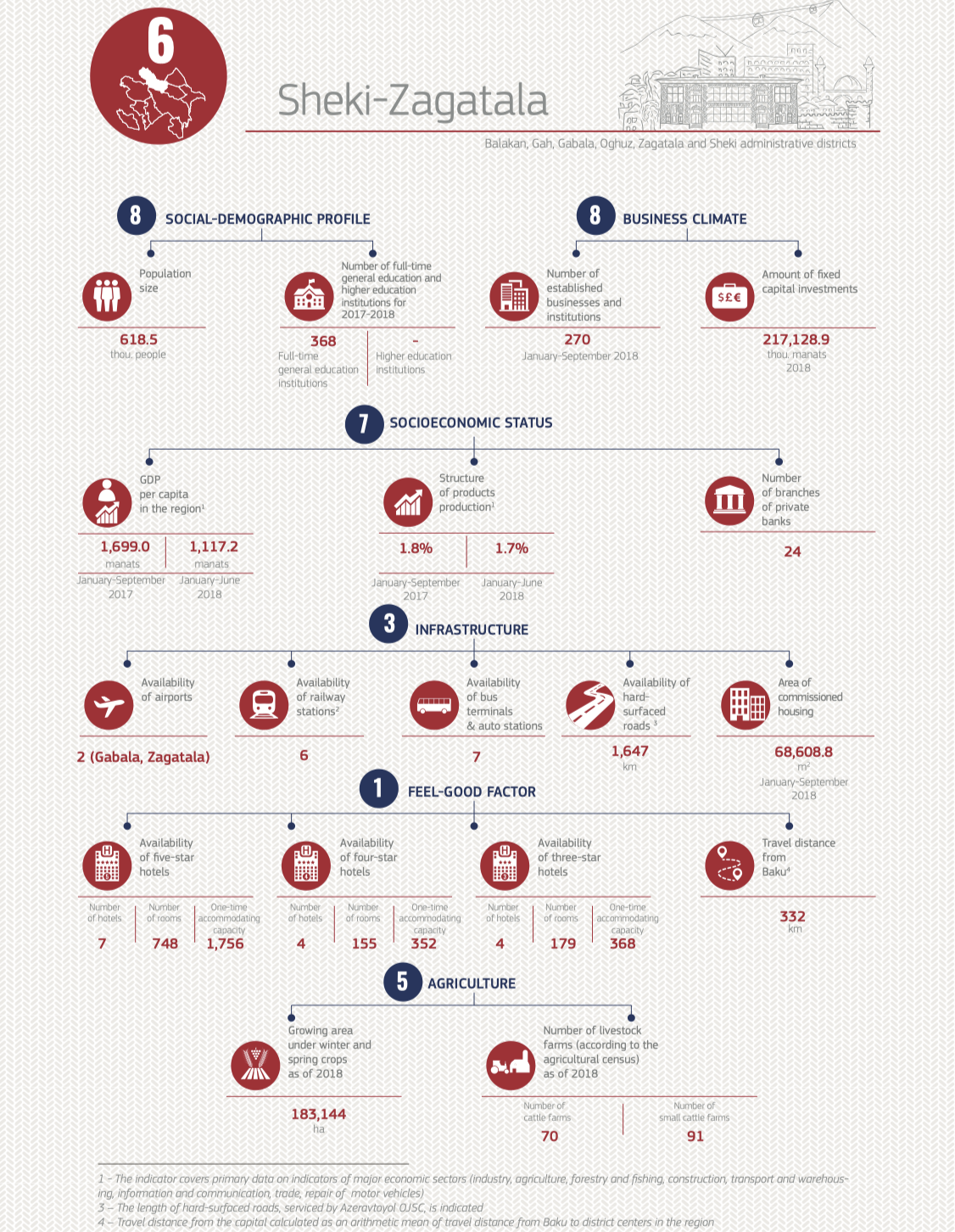
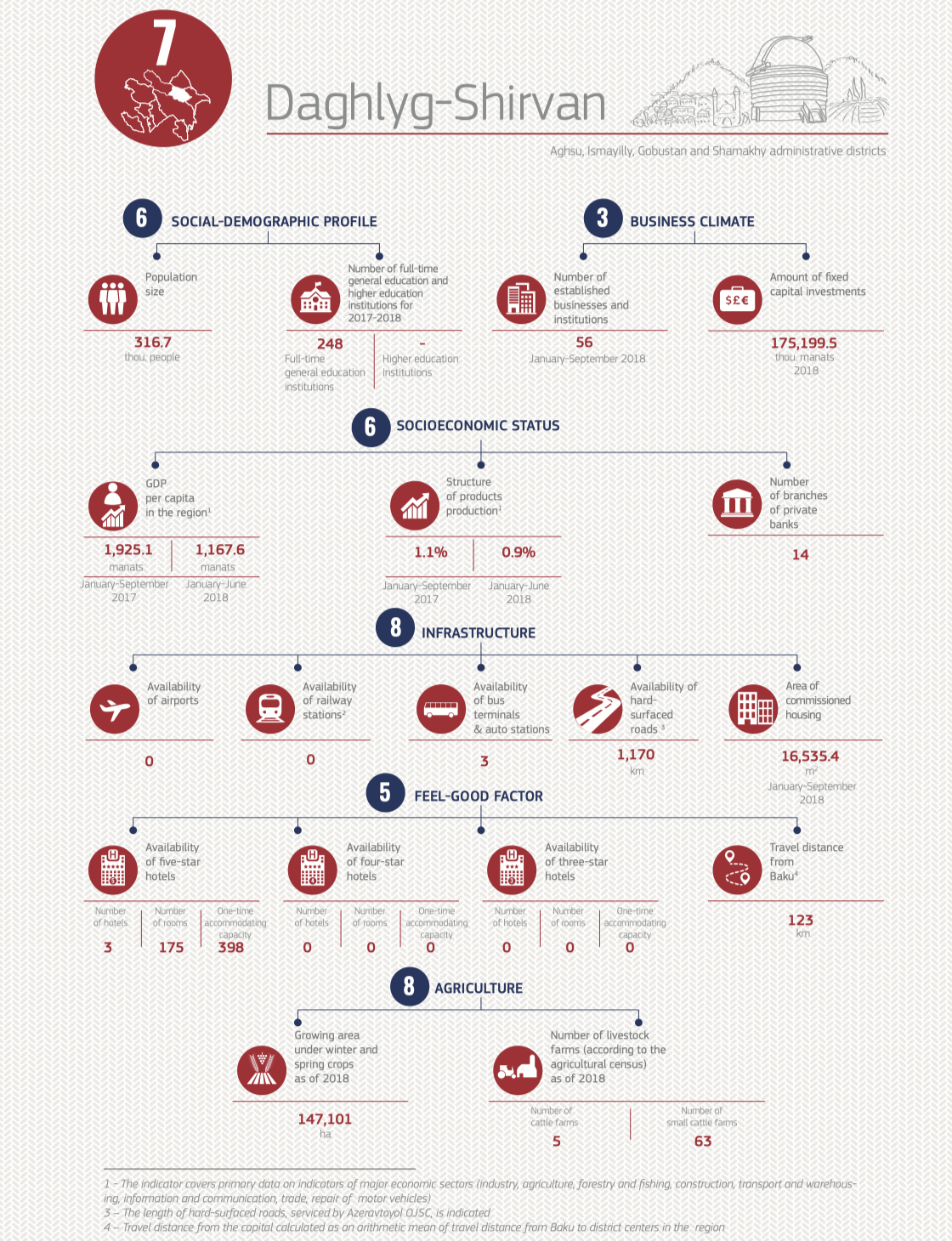
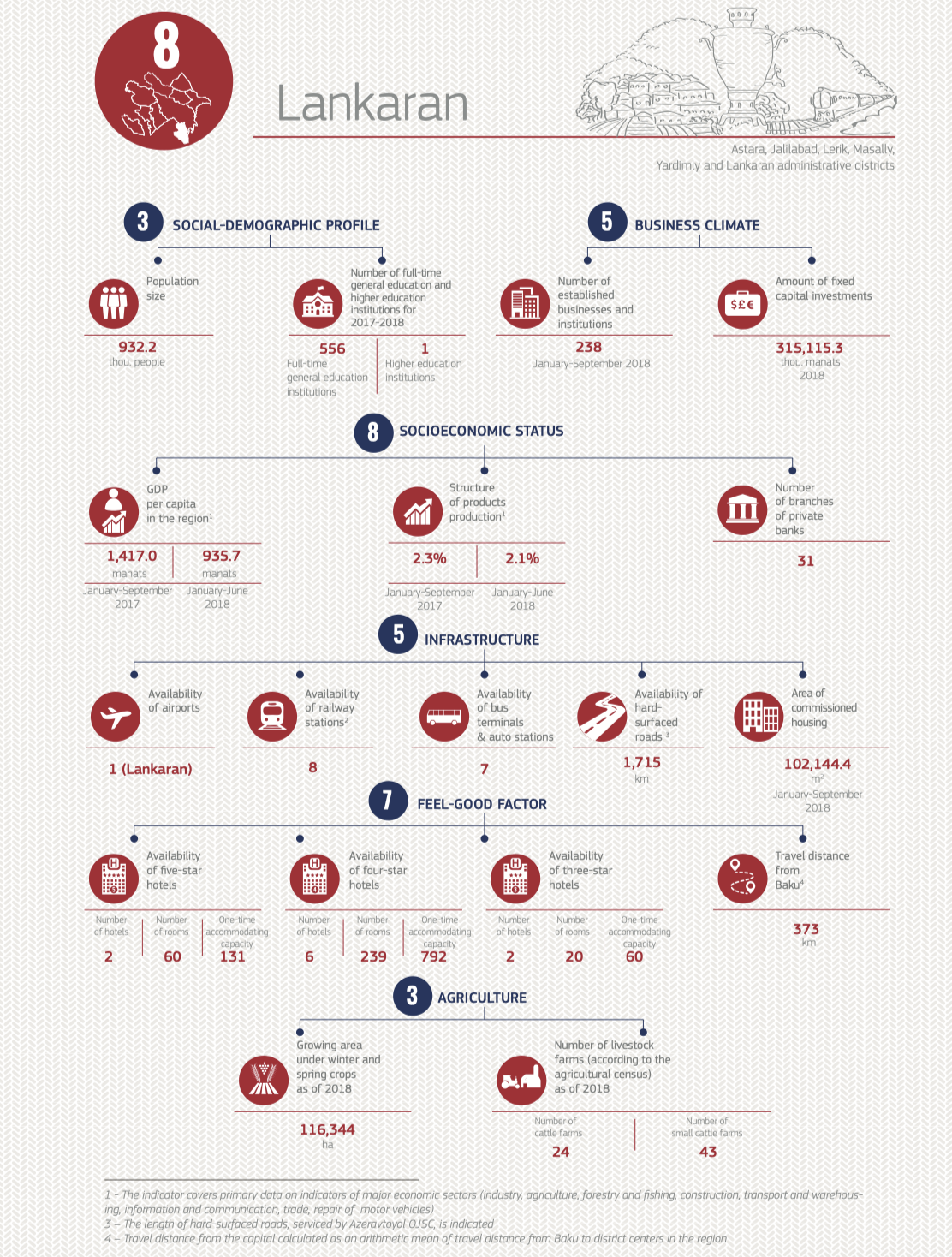
Given the stable socio-demographic indicators, as well as considering a number of higher and secondary education institutions in the country, a big difference in the number of functioning higher education institutions in Baku and regions still stands out over the past three years. Thus, there are 41 higher education institutions operating in Baku (2.26 million people), 1 in Aran (2.014 million people), 3 in Ganja-Gazakh (1.28 million people) and 1 in Lankaran (0.932 million people). The similar situation is also seen in other regions where the number of residents does not exceed 0.6 million.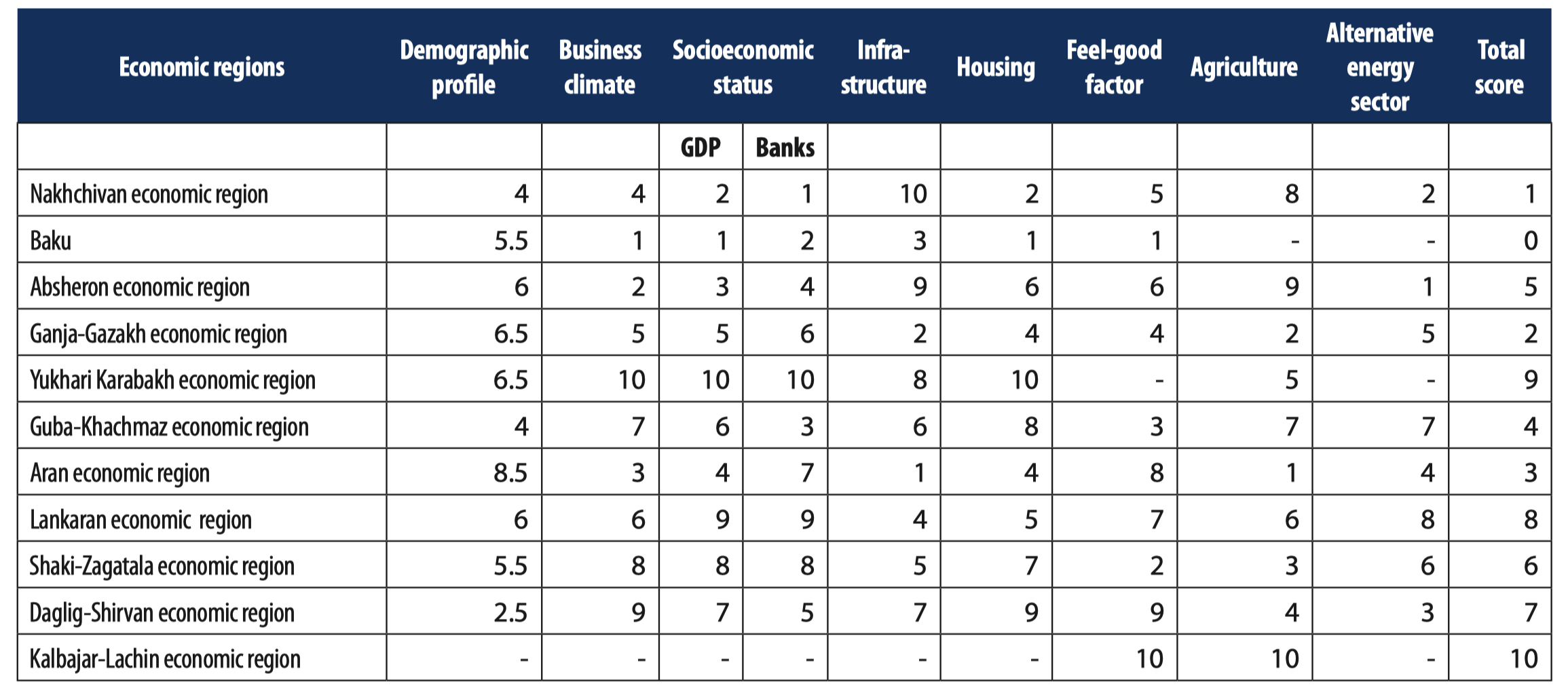
Besides, Daghlyg Shirvan region (0.316 million people) has unexpectedly become the rating leader in terms of the quantity (248) of secondary education institutions. According to the per capita data, in Baku this figure turned out 4 times lower with total of 372 secondary education institutions.
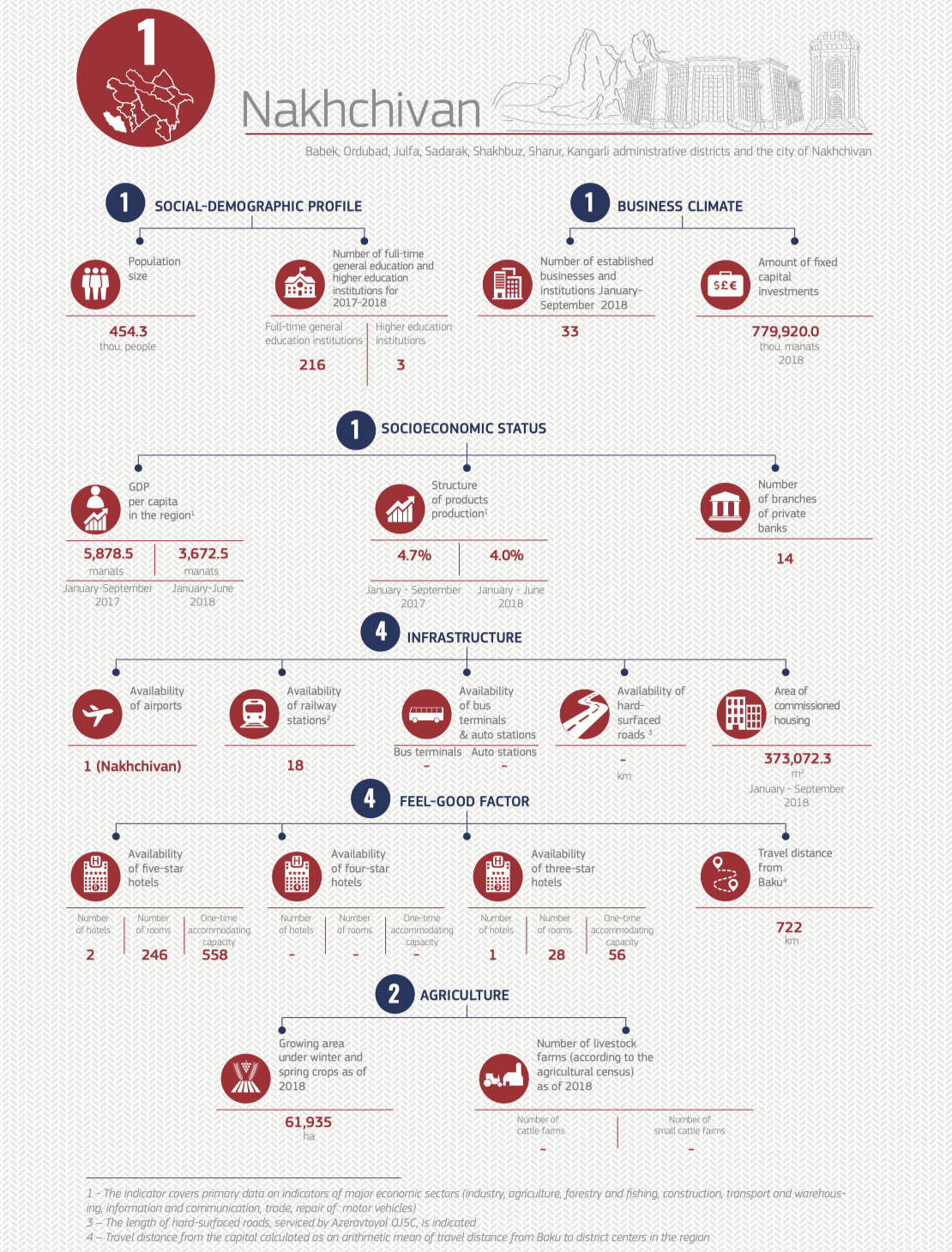
Despite the general growth of the number of small and medium sized enterprises in Baku and regions, increase of oil revenues and improvement of doing business conditions, the volume of fixed capital investment fell, compared to last year, by 20-30% in the country, and this trend is running for the second year in a row. Thus, in Baku it reduced from 11.760 billion manats fixed in 2017 down to 6.9 billion in 2018. In Guba-Khachmaz this indicator has showcased the lowest decline around the country and totaled 0.363 and 0.353 billion AZN respectively. In Ganja-Gazakh region it fell from 0.565 billion manats down to 0.487 billion, in Nakhchivan from 0.997billion down to 0.779 billion. Aran is the only region where the growth of investments from 0.808 billion up to 0.884 billion manats was fixed. It is noteworthy that in 2017 the decline of direct investments per capita all over the country totaled, compared to 2016, between 15 and 30%, depending on the region. Investments in Baku fell by 2%. Thus, according to the rating, the decrease of fixed capital investments all over the country totaled, compared to 2016, between 40 and 60% over the last two years. In the three years, the general trend for the assessed indicators of the rating has been an unequal socio-economic development and the continued decline of fixed capital investments per capita.
In 2018 the decline of per capita GDP continued the trend of the two previous years. However, the fastest decline rate was fixed in 2018. In 2015, 2016, 2017 and 2018, the per capita GDP in Baku totaled 17.8 thousand AZN, 21.16 thousand AZN, 17.87 thousand AZN and 13.38 thousand AZN respectively. In Ganja-Gazakh this figure totaled 2.2 thousand AZN, 2.37 thousand AZN, 2.073 thousand, 1.24 thousand AZN in 2015, 2016, 2017 and 2018 respectively. In Nakhchivan, this figure was 6.8 thousand AZN, 7.3 thousand AZN, 5.87 thousand AZN and 3.6 thousand AZN in 2015, 2016, 2017 and 2018. In Aran, it constituted 2.52 thousand AZN, 2.56 thousand AZN, 2.30 thousand AZN and 1.6 thousand AZN in 2015, 2016, 2017 and 2018 respectively. The similar situation is seen in the rest of the regions.
Besides, the per capita GDP in Baku is 10 times higher than that of Ganja-Gazakh and 4 times higher than that of Nakhchivan.
The number of branches of private banks in Baku is four times higher than in Ganja-Gazakh region. Last year, the number of banks in Baku exceeded that of Nakhchivan, where 13 banks operated, by 17.6 (!) times. The number of banks in Aran is approximately three times lower than in Baku, though the size of population is practically the same.
Meanwhile, the main positive factor has been the double growth, compared to the last year, of paved roads in the rating’s leader region. The similar growth of this indicator is also registered in Lankaran, Sheki-Zagatala, Aran and Guba-Khachmaz regions.
It is noteworthy that Baku, as the capital of the state, has been put into the rating as a zero point, that is to say, a natural leader on basic parameters, against which rating indicators of the regions are assessed.