


Caspian Energy (CE): Your Excellency, what difficulties is the economy of North Macedonia facing today? Which countries are the main trade and economic partners?
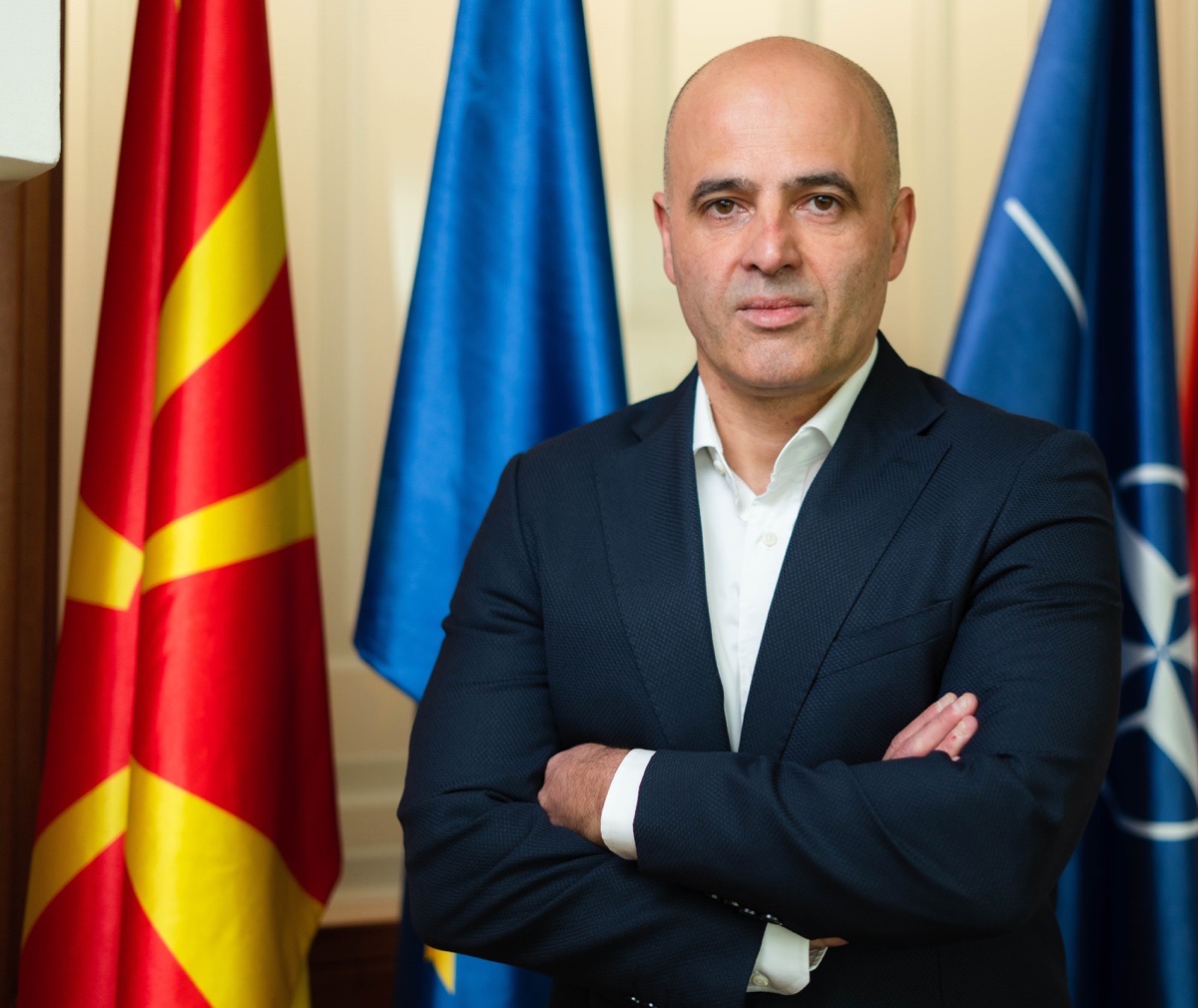
H.E. Dimitar Kovachevski, Prime Minister of the Republic of North Macedonia: As all countries on world level, North Macedonia is also focused on alleviating the consequences caused by the global energy crisis.
For the past three years the world has been facing serious economic problems. North Macedonia is a country that has trade relations in most part with the countries from the region and Europe, and of course, the consequences spill over. In that regard, the Government is undertaking a series of measures, both individually, but also in cooperation with the region and the European Union, because only united will we be able to overcome this crisis.
Globally the inflation has been the highest compared to the past few decades. In such conditions the Government had a timely reaction and we promised that no one would be left alone. We saved the economy with two large packages of anti-crisis measures in the value of 760 mil EUR, largest pursuant to the GDP in the region, confirmed by the IMF and the World Bank. We are responsibly managing the people’s money, and in times of great crisis, we succeeded in increasing the salaries, the pensions, and in offering staunch support for the vulnerable citizens and companies.
Uncertainty is also high due to the Russian invasion over Ukraine, as well as the long-term effects of the pandemic caused by Covid-19. For greater part of the economies, growth is slowing down. In 2022 it is expected that the growth of the global economy will slow down double compared to the previous year. However, what concerns us are the expectations that the crisis will continue in the following year (2023 – ed. note), and even with greater intensity, and following the October projections of the IMF the global growth in 2023 is expected to slow down reaching only 2.7%; the estimates are even more emphasized for the European economy for which it is expected that the growth for next year (2023 – ed. note) will be only 0.7%. The German economy, our most significant trading partner, is expected to experience a decline of 0.3% next year (2023 – ed. note). Our most significant trading partners are Germany, Great Britain, Greece, Bulgaria, Serbia, and Türkiye.
The expectations for the global and economic growth within EU in 2023 are lowest since 2001, except for the period of the global financial crisis and the beginning of the pandemics caused by Covid-19.
I must underline that the economic growth in our country remained stable despite challenges. In the first half of 2022 it reached 2.6%. There are positive accomplishments in the hospitality, industrial and agricultural sector, whereas, pursuant to the expenditures, domestic demand is increased i.e., consumption and gross investments have increased.
Pursuant to the basic macro-economic scenario, the economic growth in 2023 is projected at 2.9%. The growth of economic activity will be further moved by domestic demand. Inflation will reduce in the course of following year (2023 – ed. note), but prices of resources and food on international markets will remain higher, that is why the rate is projected at 7.1%. Mid-term projections are different. According to the basic scenario, the average growth of economic activity in the period 2023-2027 in our country will reach 4.6%. Starting from 2025, the growth will reach a 5% rate.
Please login or subscribe to read the full article.
Login / Subscribe