


Caspian Energy (CE): Your Excellency, what are the major objectives and tasks of the formed government?
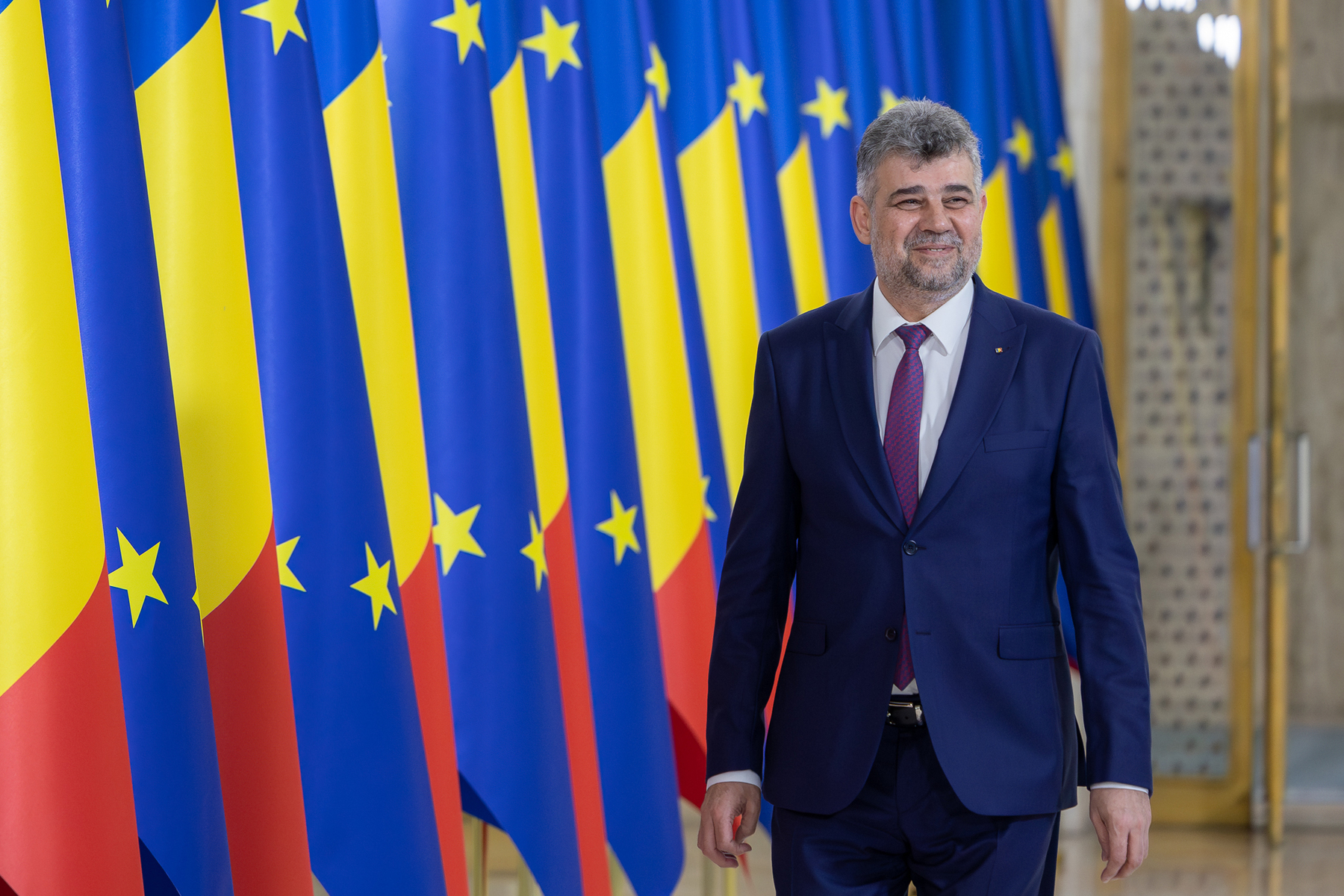
Marcel Ciolacu, Prime Minister of Romania: Our objectives are essential for the balanced and sustainable development of Romania, as we proposed through the Governance Program.
Obviously, we have in mind the reduction of the effects that are felt both socially and economically, against the backdrop of the difficult context generated, not only for us, by the conflict in the immediate proximity of the borders and which, let’s not forget, superimposed on post-pandemic crises.
However, we have focused our goals on immediate development needs and perspective projects, and they converge towards economic and social modernization. We have to make reforms and investments that the Romanian society and economy need at this moment, and our success depends on an efficient and transparent management of the financial resources at our disposal.
From this point of view, we have substantial support through the National Recovery and Resilience Plan, especially since many of the reforms we undertook to carry out with the support of this European mechanism overlap with those necessary for the preparation of Romania’s accession to the OECD.
Whether we are talking about infrastructure, education, health, digital transformation, sustainable development, social reforms or good governance, I can say without a doubt that it involves absolutely necessary measures to provide people with quality public services and infrastructure and to support the economy at the same time.
As Prime Minister, my social-democratic political orientation does not prevent me from being aware of the importance of the good running of the economy for society, on the contrary. As I said before, the mandate of the government I lead is about reforms and the economy, more concretely, about how we make the economy produce more value and jobs, and the results to be seen concretely in the standard of Romanians’ living.
And as the current geo-strategic context inevitably implies a rethinking of energy policies by ensuring independence from Russian imports, both in the case of Romania and the other European countries, it is natural that at governmental level we grant this sector the importance it deserves, through concrete projects that we support in the direction of promoting alternative sources of energy and, equally, in the direction of the development of joint regional projects in the field of energy, a topic that, moreover, we addressed in August, in Athens, at the high-level meeting of the heads of state and government of South-Eastern Europe, and in the discussions that I and members of the Government had with European officials. This line also includes the steps we have taken since the beginning of the mandate, through which we managed to bring the new REPowerEU plan, focused on programs dedicated directly to consumers for the energy efficiency of homes and households, to the analysis of Brussels officials. It is about accessing more than 1.1 billion euros, which will make approximately 60,000 households able to be equipped with solar panels and batteries for energy storage. We also have projects started in partnership at the Doicesti Energy Complex, where we will implement new technologies in the non-conventional energy sector. All this will ensure our transition to more efficient and cleaner energy sources and, thus, the achievement of the assumed objectives of decarbonisation.
Whether we are talking about the energy sector, the transport infrastructure or the potential of digitalisation, we rely on investments, and this is the signal we send every time in discussions with the business environment.
The Business Forum of the Three Seas Initiative, an event that the Government hosted on the sidelines of the Three Seas Summit, held in early September in Bucharest, enjoyed a large participation of business people from the region and beyond, which outlines Romania’s profile as an option for investors.
Please login or subscribe to read the full article.
Login / Subscribe