



Following the signing of the International Caspian Convention on the Legal Status of the Caspian Sea on August 12, 2018, cooperation among the Caspian littoral states has become more dynamic and multidimensional. It now encompasses not only projects related to the development of Caspian fields (such as Dostlug) and the transportation of gas to global markets, but also the advancement of transport corridors.
At the “Central Asia – Italy” summit held on May 30 in Astana, with the participation of all regional leaders and the Prime Minister of Italy, Turkmenistan’s President Serdar Berdimuhamedov stated that, having vast natural gas reserves, Turkmenistan is pursuing a policy of diversifying export routes to international markets. “In this regard, we attach great importance to projects aimed at delivering Turkmen gas to European markets,” the TDH news agency quoted Turkmenistan’s President Serdar Berdimuhamedov as saying. The source of natural gas supplies is the Galkynysh field, which has been in operation since 2013. Its reserves, together with those of the Yashlar and Garakel fields, are estimated at nearly 27 trillion cubic meters. Following the discovery of this massive hydrocarbon reserve, Turkmenistan confidently ranks fourth in the world in terms of natural gas reserves. The Galkynysh field serves as the main source for the Central Asia–China (CAC) gas pipeline, which exports more than 35 billion cubic meters of gas annually.
Turkmenistan is also interested in participating in new transport configurations along the Asia–Europe route, including the promising “Middle Corridor,” which passes through Central Asian and Caspian countries. On June 19, a train loaded with 100 standard containers of everyday consumer goods departed from Jinhua city in Zhejiang Province (Eastern China) towards the port of Turkmenbashi in Turkmenistan, from where the cargo was shipped by sea to Baku. This is the first train to operate along the trans-Caspian international transport route from Jinhua to Turkmenbashi and on to Baku. The transportation of goods from Jinhua to Baku involves a multimodal approach: rail–sea–rail. Using the Turkmenbashi seaport to cross the Caspian Sea, instead of the traditional route, will reduce the transportation time of goods by approximately one day. The successful launch of this route has provided businesses with a more efficient, convenient, and reliable logistics solution, and is expected to boost trade turnover between China and the five Central Asian countries, as well as between China and the countries of Central and Eastern Europe.
The 3rd United Nations Conference on Landlocked Developing Countries was held from August 5 to 8 at the Avaza National Tourist Zone in the Turkmen city of Turkmenbashi. UN Secretary-General António Guterres called on the international community to create conditions that would allow landlocked developing countries to also benefit from scientific and technological progress.
The conference participants decided to establish a Group for Landlocked Developing Countries under the auspices of the UN Framework Convention on Climate Change. They believe this will allow for more effective addressing of issues related to the vulnerability of these countries to increasingly frequent natural disasters.
The conference also endorsed a new Avaza Action Programme running through 2034, intended as a concrete roadmap for strengthening partnerships and fostering sustainable development in the Global South. There are a total of 32 landlocked countries in the world, covering approximately 12 percent of the Earth’s land surface, with a combined population of around 570 million people.
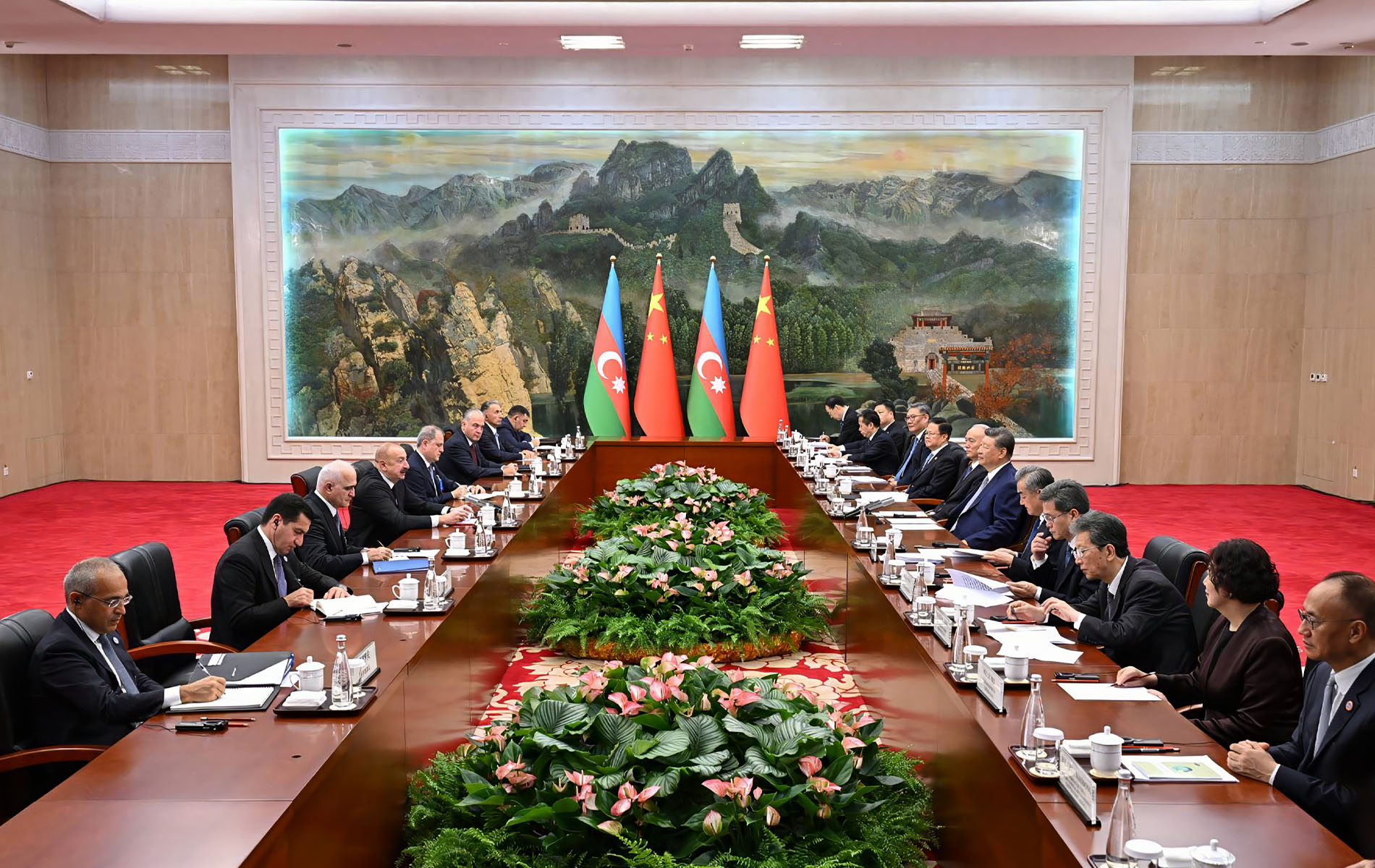
As a result of the trilateral summit between Uzbekistan, Turkmenistan, and Azerbaijan on August 22, a series of documents were signed, including memorandums on cooperation in transport and logistics. A new, highly promising and peace-oriented format of cooperation is emerging in our region. On August 31, ahead of the SCO Summit in Tianjin, China, a meeting took place between the President of the Republic of Azerbaijan, Ilham Aliyev, and the President of the People’s Republic of China, Xi Jinping. The Chinese leader noted that Azerbaijan and China have enjoyed successful cooperative relations for over 30 years and that interstate ties are currently developing at the level of a comprehensive strategic partnership. He emphasized the importance of transporting Chinese cargo through Azerbaijani territory and, in this context, highlighted the significance of the Trans-Caspian route. The President of the People’s Republic of China stated that his country supports the expansion of Azerbaijan’s relations with the Shanghai Cooperation Organization. President Ilham Aliyev, in turn, specifically emphasized the importance of the signed document on comprehensive strategic partnership. According to him, there has been a significant increase in trade relations between the two countries. Touching upon the Belt and Road Initiative, the head of state described the increase in transport volumes - particularly Chinese cargo along the Middle Corridor, which constitutes an important component of the initiative and passes through Azerbaijani territory - as an example of the corridor’s efficiency and attractiveness. During meetings with the leadership of Chinese businesses, discussions focused on the establishment in the near future of a solar panel manufacturing plant in the Alat Free Economic Zone that would meet the most advanced technological standards, the participation of Chinese companies in the second phase of the Baku International Sea Port, as well as the development of digital technologies. Chinese representatives will present conceptual proposals for the cleaning and restoration of lakes on the Absheron Peninsula. At the meeting, views were exchanged on large-scale projects aimed at further strengthening the transport and transit potential of Azerbaijan, which has become a key transportation hub.
From the beginning of 2025 until August 29, the total number of trains operating on the China–Europe (Central Asia) routes and passing through the Khorgos railway border crossing in Xinjiang Uyghur Autonomous Region (Northwestern China) exceeded 6,600, representing a 21.8% increase compared to the same period last year, according to data from the Urumqi branch of the China Railway Corporation (CRC).
To date, more than 48,000 China–Europe (via Central Asia) freight trains have passed through the Khorgos railway border crossing, running along 90 designated routes that cover 46 cities and districts in 18 countries.
