



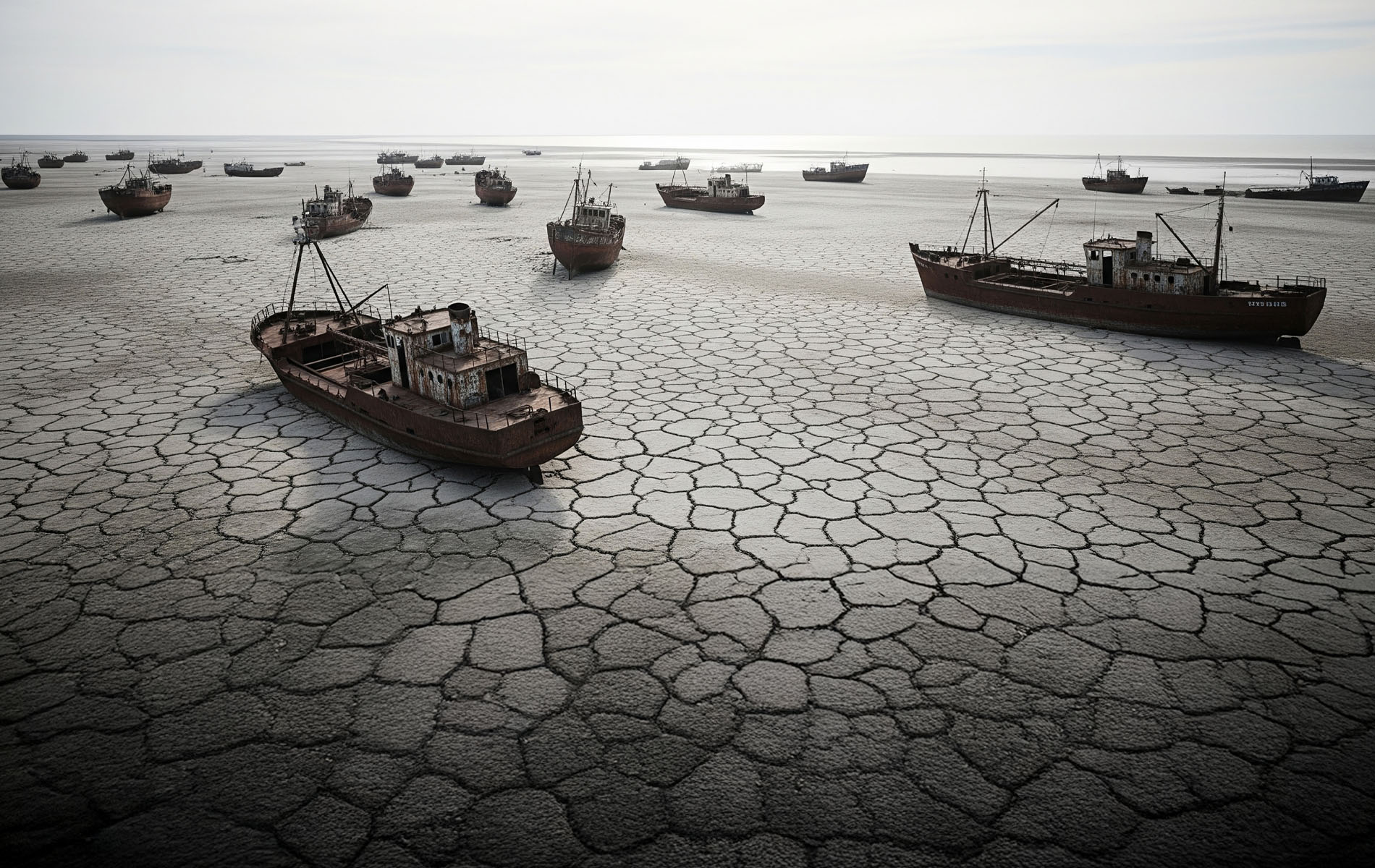
The continued decline of the Caspian Sea—an extraordinary inland water body with its own endemic flora and fauna shaped over millions of years—could increase the number of landlocked countries from 32 to 35 if the drying trend does not stop, mirroring what has already occurred with the Aral Sea in Kazakhstan and Lake Urmia in Iran. The forecasts are far from reassuring: “The water level in the Caspian Sea will continue to decline over the next three to five years,” stated Igor Shumakov, Head of Roshydromet, during a meeting of the Caspian Coordination Committee on Hydrometeorology (CASPCOM) in Saint Petersburg.
According to him, over the past decade, the water level in the Caspian Sea has dropped by two meters, a development considered critical for the region, reports AZERTAC citing TASS. At the same time, it remains unclear whether water levels will rise again in the coming years, as they have in the past. Scientists and experts from this organization, along with specialists from other Caspian littoral countries, are developing climate models to determine the duration of the desiccation process and to prepare recommendations for sustainable economic development in the region.
I. Shumakov emphasized that the declining water level in the Caspian Sea reflects broader global climate change and is accompanied by an increase in hazardous hydrometeorological events, which inflict damage on economies as well as on the lives and health of citizens across the Northern Hemisphere. The CASPCOM session was held on September 4–5, with participation of representatives from the national hydrometeorological services of Azerbaijan, Iran, Kazakhstan, Russia, and Turkmenistan.
Please login or subscribe to read the full article.
Login / Subscribe