



Public programs and laws are adopted in order to ensure a sustainable development in the agrarian sector of the Nakhchivan economy. Measures aimed at developing an agrarian sector are taken. “We have concrete plans and a program of measures aimed at ensuring food supply security. We should aim at having all food products, consumed in Azerbaijan, to be produced in Azerbaijan”, said the President of the Republic of Azerbaijan Mr. Ilham Aliyev who keeps the development of the agro-industrial sector. in the focus of attention. Besides, concrete measures are taken to ensure food supply security.
30% of the total land area of the Nakhchivan Autonomous Republic is suitable for the agricultural use.
Soil-climate conditions of the autonomous republic and the fact that the majority of the population is involved in the agriculture make conditions for farming development here. The country’s first agrarian reforms, implemented in the 90s of the past century in the Nakhchivan Autonomous Republic, were further continued in the entire territory of Azerbaijan. The agricultural development ran in accordance with the new model which implied creation of private farms. The first stage of this process, which continued thereafter, was completed in 2000. 72,758 families or 241,046 individuals were given lands as a result of the land reforms which covered 205 villages, 132 collective farms, state farms and associations in the autonomous republic.
At present, 30% of the total land area of the Nakhchivan Autonomous Republic, that is to say 164,262 hectares of land, is suitable for the agricultural use. 62,000 hectares of these lands, that is to say 38% of lands, have been seeded. The start of operation of new production and processing enterprises in the autonomous republic, which cover this sector, farming and animal husbandry development, as well as provision of preferential loans, led to the increase of production and ensured food supply security in the end.
The reforms, implemented in the agrarian sector, have created reliable prerequisites to develop the agricultural crop growing, animal husbandry, and the processing industry. The state kept the development of agriculture in the focus of its attention, a number of programs and decisions aimed at increasing production volume and productivity through the impact of intensive factors were adopted. “State program on the potato growing development in the Nakhchivan Autonomous Republic for 2005-2010”, “State program on reliable supply of food products to the population of the Nakhchivan Autonomous Republic for 2008-2015”, “State program on development of gardening and market gardening in the Nakhchivan Autonomous Republic for 2012-2015”, have determined the concrete courses of development. The implementation of the state programs increased the volume of production of wheat, corn, potatoes, vegetables, fodder corn, fruits and grape year by year, the republic’s demand was met through the local production. Granting of subsidies to farms engaged in seed and seedling growing, increasing of allowances up to 50 ANZ per each hectare of land, given for the purchase of fuel products, free distribution of 70% of used fertilizers, application of a 40% discount for a price of sold equipment, have become a strong incentive for entrepreneurs to develop this sector.
The science-based development of farming is important for efficient use of the sown areas in the autonomous republic. The “Sowing Atlases” played a significant role in the development of the agrarian sector. Compiled for each city and region , the “Sowing Atlases” have displaying zonation of sorts and specialization of areas, considering the soil-climatic features, the degree of supply of soil with nutrients and the botanical features of the crop growing. Deepening of specialization in the agricultural farming sector is already giving its positive results as exemplified in the growth of planted areas and production volume.
Supply of land plots with irrigation water is one of the main factors in the development of farming. Therefore, irrigation systems are constantly modernized in the autonomous republic, land improvement operations are performed. This, in its turn, helps to improve the water supply of lands and carry out sowing operations on new lands. As a result of consecutive measures taken in the recent years in order to improve the irrigation systems in the autonomous republic, built were closed irrigation networks at Julfa, Babek and Kengerli districts. The overall area of the irrigation network in the mentioned three districts totaled 3,000 hectares.
Since 2016, Nakhchivan, the capital of the Autonomous Republic, has been hosting “Goycha” festivals in order to stimulate the development of the fruit growing due to the implementation of the second state program adopted for the development of fruit and vegetable growing in the Nakhchivan Autonomous Republic for 2016-2020. Such activities promote a further increase of interest in the fruit growing and growth of the fruits production volume. The state program also requires performance of the research work to regenerate and use aboriginal fruit-vegetable sorts which have a high crop yield and comply with the climate conditions of the Nakhchivan Autonomous Republic. Therefore, a genetic fund of 372 fruit sorts was collected by means of the research work held at the Ordubad base of the “Araz” Scientific-Production Association. The work in this direction is currently ongoing.
Supply of entrepreneurs with modern agricultural equipment played a big role in gaining success in the crop growing sector of the agriculture. Over the past period of time, a total of 2,054 different purpose agricultural machines were brought to the republic via Nakhchivan Agrolizing JSC. Of them, 1,743 machines were given to entrepreneurs through the leasing. The available equipment makes it possible to qualitatively carry out most of the agrotechnical activities in the field of agriculture.
Performance of sowing operations by using qualitative seeds has been one of the strongest factors promoting the yield growth in farming and especially in growing of grain-wheat crops. There are 5 seed-growing farms operating in the autonomous republic at present. Solid work aimed at strengthening the material-technical base of the seed-growing farms was carried out in order to stimulate production of productive and qualitative types of seeds in the Autonomous Republic. A new facility was built in the city of Nakhchivan for a seed growing farm “Barakat” supplied with 80 pieces of the modern, different purpose agricultural machinery and technological equipment against the 33 nomenclature items. In addition to production and sale of wheat seeds, this facility, as the main seed growing base of the Autonomous Republic, is also producing and selling seeds of other plants.
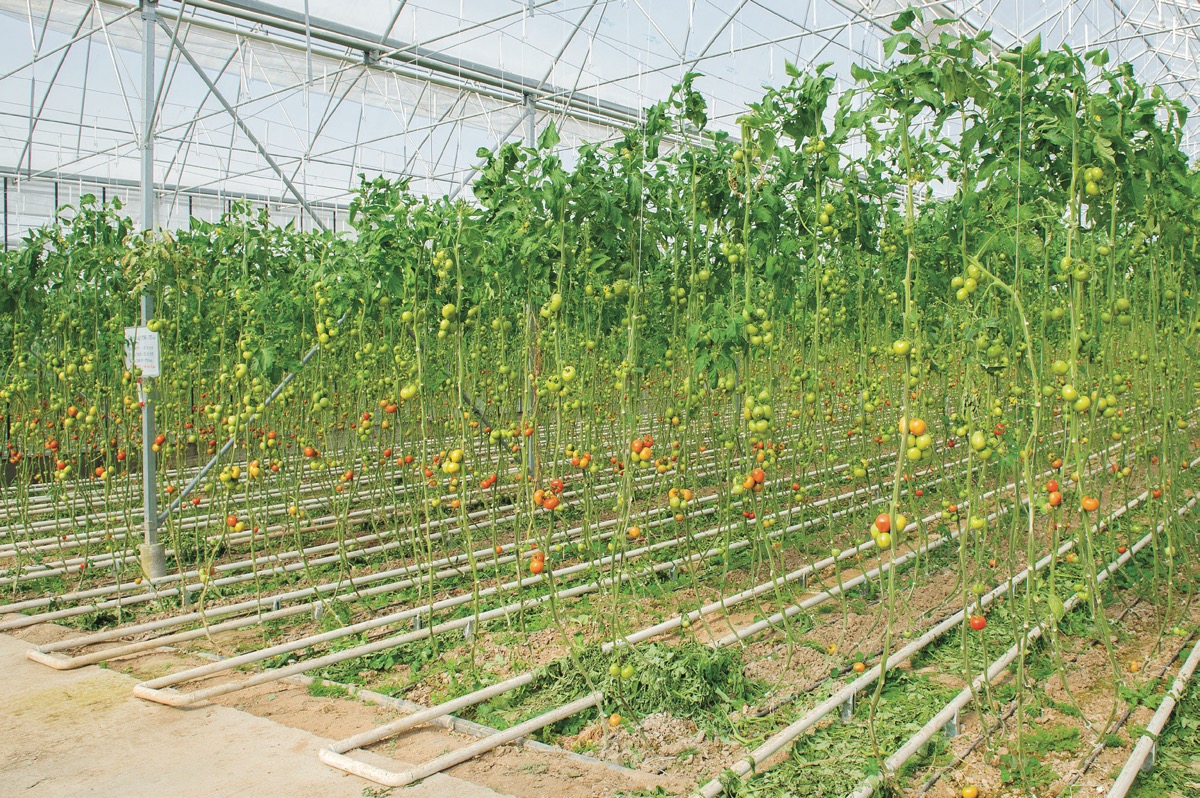
Additional measures are taken to reliably meet the autonomous republic’s population need in food products. All conditions are created to sell produced products. The construction of high capacity cooling facilities and creation of hothouses for supplying the population with fruit and vegetable products throughout the whole year makes it possible to meet the market demand in any season of the year. Agricultural fairs have been organized for several years to sell products produced domestically. All of it plays a decisive role in reliable supply of the population with food products.
Livestock raising is one of the main sectors of the agriculture. A considerable amount of work on developing animal husbandry and improving pedigree cattle was carried out in the autonomous republic in order to ensure an intensive growth of production of livestock products. Modern livestock farms are being built. Entrepreneurs are given breeding high-fecund animals under privileged terms through leasing. In 2009-2015, 1,937 heads of breeding heifers of such breeds as Holstein-friz, Schwyz and Simmental were brought to the autonomous republic and given to farmers and entrepreneurs on preferential terms. The Tribal heifers were leased for a 3-year period with a 50% discount on their value by agricultural product producers engaged in livestock production.
Particular importance is given to the work in the field of artificial fecundation in order to improve the breed of animals. There are 23 artificial fecundation stations operating in the Autonomous Republic in order to increase the heads of animals which have a genetic potential of high fertility, prevent the diseases spread through natural pairing and fight against infecundity of animals. These stations are constantly supplied at the public expense with high fecundity seeds, transport facilities, equipment designed for artificial fecundation, liquid nitrogen and other accessories in order to increase operations on artificial fecundation performed among animals.
Owing to the support lent by the state, at present, there are 3 meat, 13 dairy enterprises, 1 skin-hide processing enterprise, 1 enterprise for tinned fish production, 1 enterprise for feed production and 3 feeding workshops operating in the Autonomous Republic.
Availability of sufficient water reserves in the autonomous republic makes it possible to develop fish-breeding and breed valuable types of fish. It helped to supply the domestic market with ecologically clean and qualitative products, as well as provide abundant food supply.
Creation of the food supply base and supply of the cattle with high-caloric food have been one of the important factors promoting the development of livestock raising, increase of varieties and improvement of the quality of the stock-breeding products. As a result of measures taken in this area, an enterprise, bearing an exceptional importance and producing balanced mixed feeding-stuffs with the annual production capacity exceeding 70,000 tonnes, has started operating since 2012. This enterprise is producing mixed feedstuff for animals and poultries which are grown for production of meat, milk and eggs. It fully meets the annual demand for mixed feedstuff in the stockbreeding and poultry fields.
A special attention in the autonomous republic is also given to high quality of meat and dairy products, as well as to the measures taken to prevent animal diseases. The State Veterinary Service is regularly performing prophylactic vaccination and disinfection work against different diseases among the cattle and poultries. Free medications are given to beekeepers to prevent epizooty and maintain a biological safety.
As a result of performed purposeful operations, as of 1 January 2018, the poultry stock in the autonomous republic totaled 1,277,741 species while the number of bee-families increased up to 71,066 families.
Increase of the cattle and poultry heads in the autonomous republic has also promoted the growth of production of livestock products. The live weight of meat produced in the autonomous republic in 2017 totaled 26,331.7 tonnes. Besides, a total of 82,857.3 tonnes of milk, 86,236,000 eggs, 1,033.5 tonnes of wool and 1,424 tonnes of honey were produced in the same year.
Adoption of the “State program on bee-farming development in the Nakhchivan Autonomous Republic for 2017-2022”, gave an additional incentive to the development of this field. Development of the bee-farming in the areas with a mountainous relief and limited land resources created conditions for improving the employment of the population and providing additional income sources.
The dynamic development of the agricultural field had a positive impact on the export growth. As a result, export of the agricultural products from the entire territory of the Autonomous Republic exceeded $101,478,000 last year.
Large-scale and purpose measures are taken in the autonomous republic to ensure a food supply security. As a result, the population is supplied with food products at the expense of domestic resources.
Ministry of Agriculture of the Nakhchivan Autonomous Republic
