


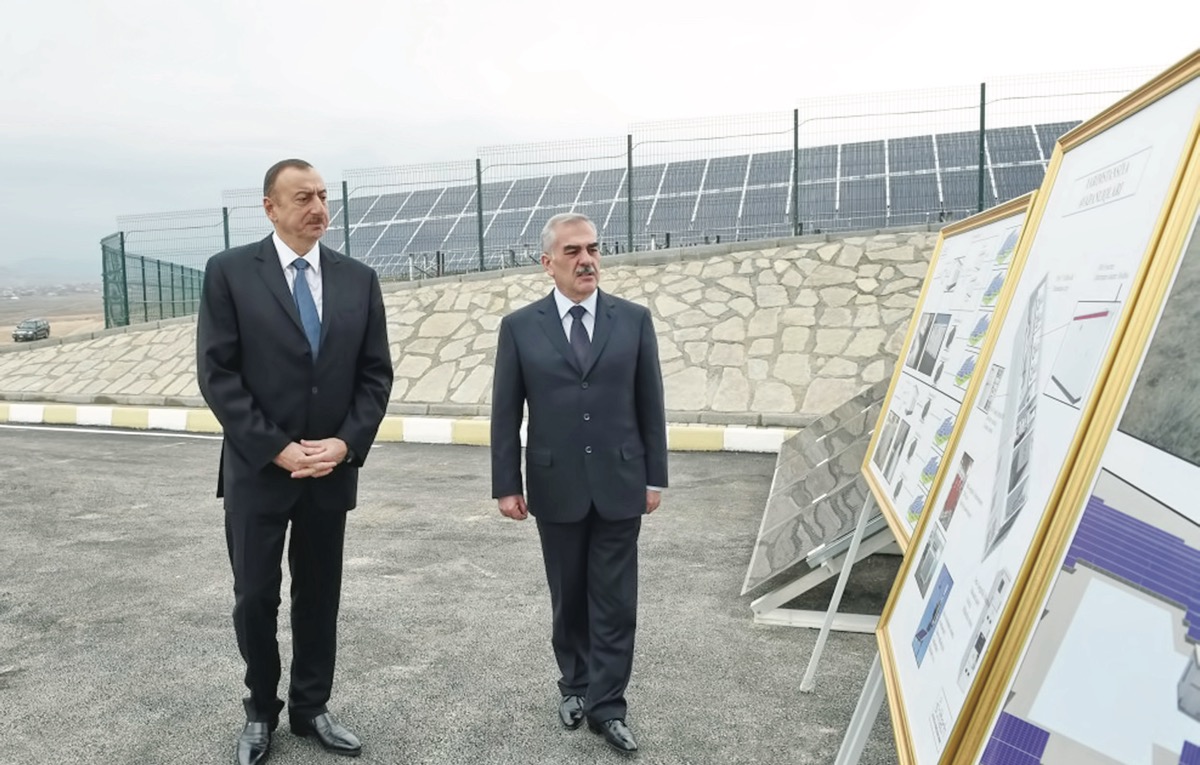
Possessing an ancient and rich history, Nakhchivan is one of the trade, scientific and cultural centers of the East. The Nakhchivan Autonomous Republic is an autonomous state within the Azerbaijan Republic.
The Nakhchivan Autonomous Republic is located in the south-west part of the Minor Caucasus. Nakhchivan borders on the Armenian Republic in the north and north-east (246km), Islamic Republic of Iran (204km) and the Turkish Republic (15km) in the south and south-west.
The size of the territory of the autonomous republic totals 5,500km2 while its population size exceeds 452,000 people (based on the data as of 01.12.2017). The autonomous republic includes the city of Nakhchivan and 7 districts: Sharur, Babek, Ordubad, Julfa, Shahbuz, Kangarli and Sadarak districts. The city of Nakhchivan is the capital of the republic. There are 5 cities, 8 settlements and 205 villages in the autonomous republic.
The Nakhchivan Autonomous Republic is a strategically important region for our country. Consecutive measures were taken to develop this area. This factor was also one of the priorities of the farseeing policy of the All-National Leader Heydar Aliyev, founder of independent Azerbaijan. This region received an exceptional attention and care in the years of his political activity in order to develop and strengthen.
According to the development strategy set by All-National Leader Heydar Aliyev, consecutive steps are taken in our country to build a modern economy and develop a social sphere. Approved by the country’s President and aimed at an overall development of economic and social spheres, the “State program on social-economic development of the regions of the Azerbaijan Republic for 2004-2008”, the “State program on social-economic development of the regions of the Azerbaijan Republic for 2009-2013” and the “State program on social-economic development of the regions of the Azerbaijan Republic for 2014-2018” promoted the opening of new working places and enterprises, increase of the range and quality of public services and social infrastructure, as well as further improvement of the entrepreneurial activity.
The “Program of the regional development of the Nakhchivan Autonomous Republic for 2005-2008”, the “State program on social-economic development of the Nakhchivan Autonomous Republic for 2009-2013” and the “State program on social-economic development of the Nakhchivan Autonomous Republic for 2014-2018” were adopted in the Autonomous Republic in order to ensure implementation of the relevant state programs.
As a result of complex measures taken in the economic and social areas over the past period, the Nakhchivan Autonomous Republic has entered into a new stage of development and achieved modernity.
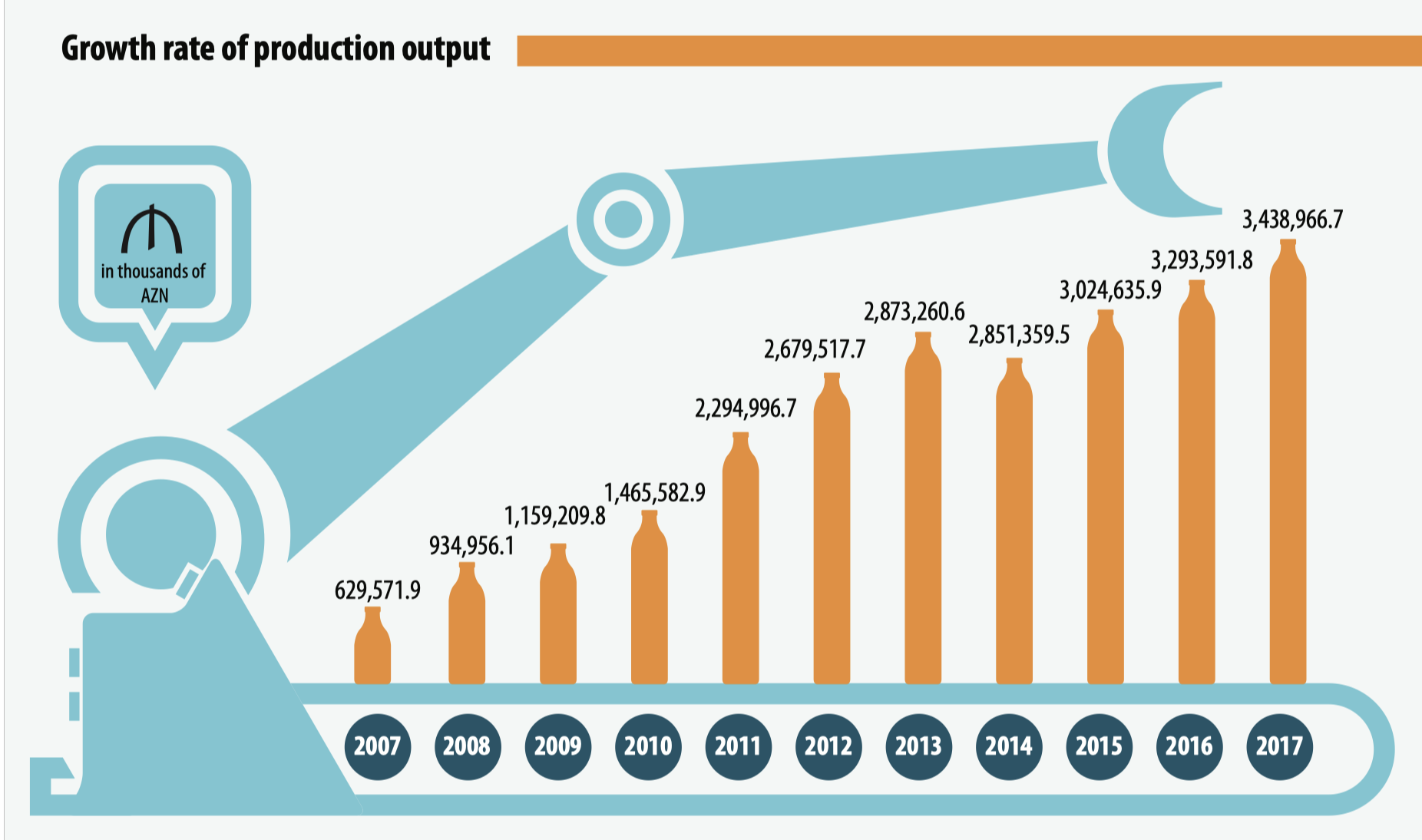
Total production output
Production output worth 3 bln 439mln AZN was registered in the Autonomous Republic in 2017. Production output worth 271mln AZN fell to the share of the public sector while the non-public sector accounted for 3 bln 168mln AZN.
Over the last ten years the share of the public sector in the total production output increased from 85.9% up to 92.1%. In 2017, the share of the material production in the structure of production output made 68.6%. Of this, 28.1%, 27.1%, 13.4% fell to the share of industry, construction and agriculture respectively.
The share of the production output per one person has totaled 7,625.2 AZN during that period.
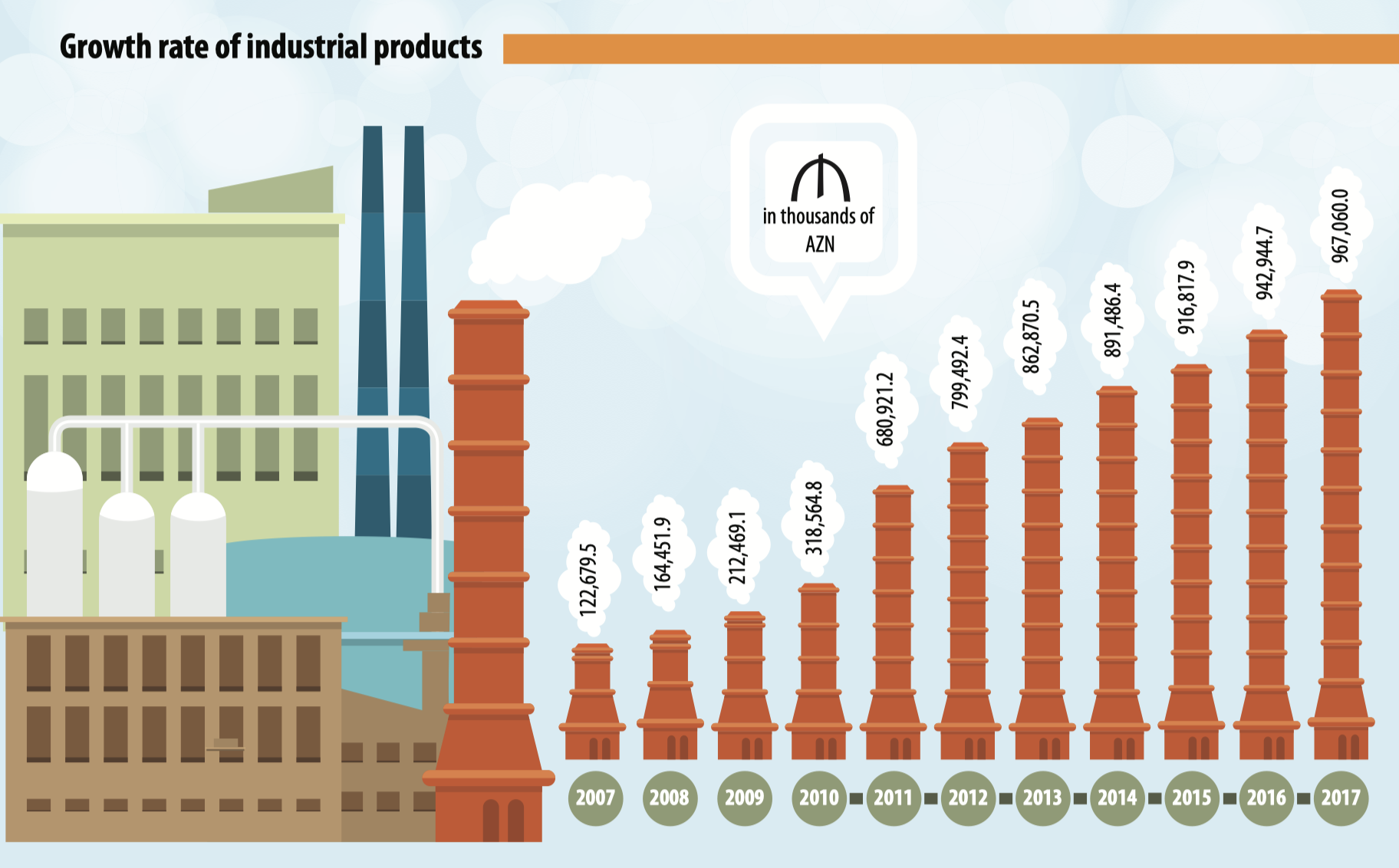
Industrial products
The experience of the developed countries shows that the development of industry is the main tool to create a strong economy. Therefore, new enterprises have been launched in the Autonomous Republic since the gaining of the state independence. The operation of the existing enterprises was restored and reorganized.
The industrial reforms had a positive impact on the growth of output. The volume of the industrial production exceeding 967mln AZN was registered in 2017. Over the last 10 years the share of the non-public sector in the industrial output increased from 69% up to 95%.
At present, 95% of industrial output in the Autonomous Republic falls to the share of the processing industry. It is noteworthy that the processing industry is a sector processing agricultural and mining industry products, and is the core of the economy.
As a result of taken targeted measures, production of construction materials has been established in the Autonomous Republic. Besides, tens of other production sectors were created. The Nakhchivan Cement Plant has started operating at that stage as one of the biggest projects in terms of the investments.
Along with other industrial sectors, important measures were taken in the field of electricity, gas, steam and conditioned air supply. New capacities were created. 6 new power plants with the capacity of 157.4 MW have been commissioned since 2006 in the field of power supply which plays a significant role in the social-economic development. The operation of the power plant with the capacity of 60MW was switched to natural gas consumption after the reconstruction. There is one thermal, one solar and 4 hydroelectric power plants among newly commissioned facilities. The capacity of the solar plant makes 22 MW. The built new stations not only met domestic needs but also created opportunities for energy export.
All dwelling settlements in the Autonomous Republic are supplied with natural gas.
Fixed capital investment
(investment expenditures)
In 2017, funds at the amount of over 1 bln AZN were spent on dynamic development of the Autonomous Republic, creation of new sectors of production and services, development of social sphere in accordance with the demands of the growing population. Besides, 92.8% of the total sum of investments fell to the share of construction and assembling operations.
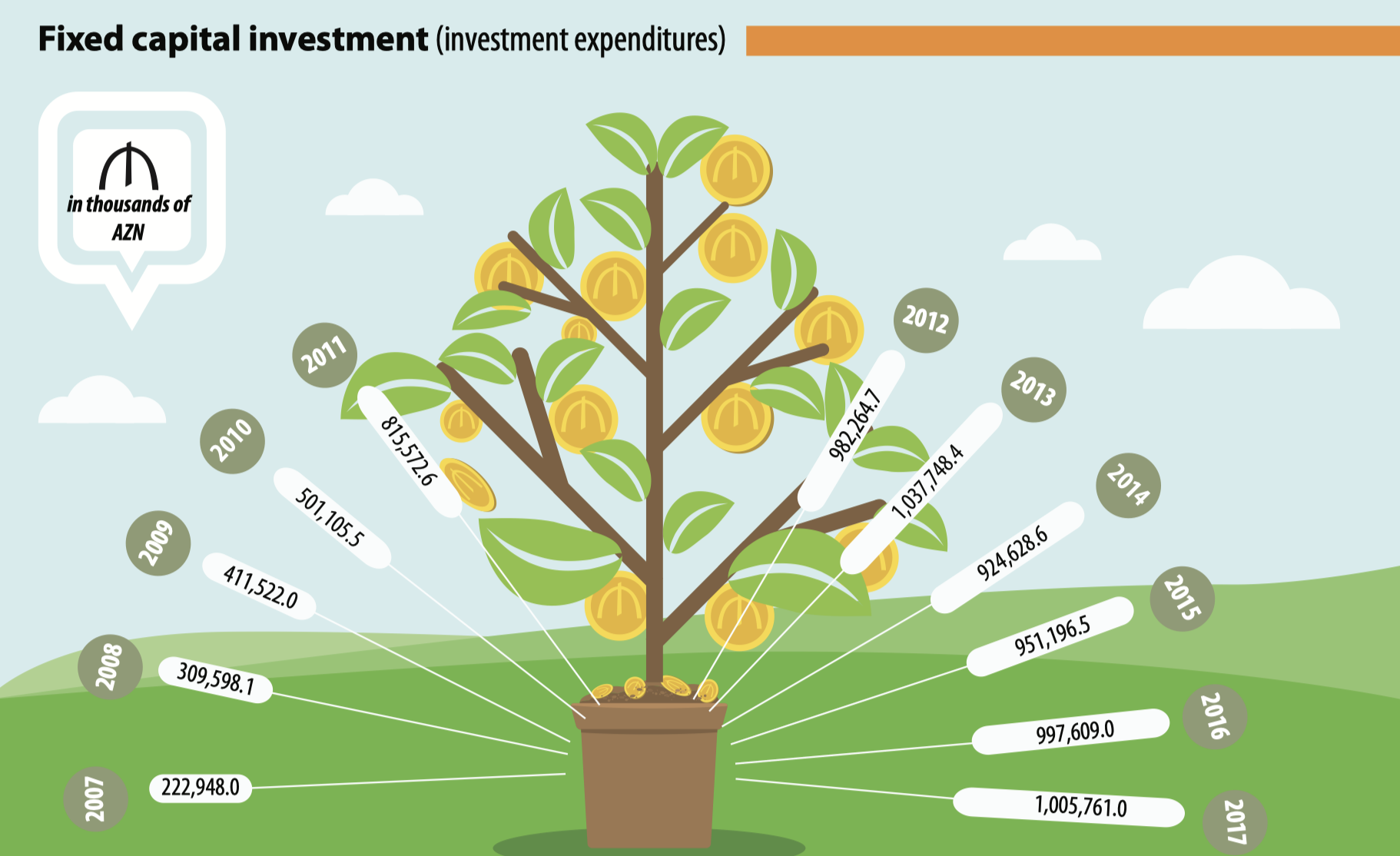
Within the framework of investments, 236 facilities were constructed or reconstructed in 2017, including 1 university campus, 10 general education schools designed for 3,890 pupils, 1 kindergarten designed for 224 children, 1 children’s music school, 10 healthcare facilities, 11 residential buildings, 15 administrative buildings, 20 culture facilities, 1 sports facility, 60 production enterprises and service facilities, 12 bridges, 2 subartesian wells, 14 underground water lines and 79 other infrastructure facilities. Construction or reconstruction of 98 facilities is ongoing. Over the last 10 years 68 general education schools designed for 21,736 pupils were built and 79 schools designed for 38,418 pupils were reconstructed in the Autonomous Republic where the education sector holds a special place in terms of fixed capital investments.
In general, 147 general education schools were built or reconstructed over the past 19 years, which makes 68.4% of all schools operating in the Autonomous Republic.
Agriculture
Important measures, taken to supply the population with qualitative local food products, ensured the growth of variety and volume of products, and made them abundant in the local market.
61.531 hectares of land were sowed in the Autonomous Republic for the harvest of 2017. 22,268, 9,364, 2,137, 1,667, 285, 9, 3,183, 6,170, 2,772, 13,676 hectares of land were sowed with wheat, barley, bean cultures, fodder corn, fodder sunflower, tobacco, potato plant, vegetables, garden plants, feeding plants respectively. Over the last ten years the sown areas increased by over 12,000 hectares.
In addition to the crop production, the animal husbandry development also got a support over the past period. At present, there are 158 large stock-raising farms on cattle breeding and 151 farms on small cattle breeding in the Autonomous Republic.
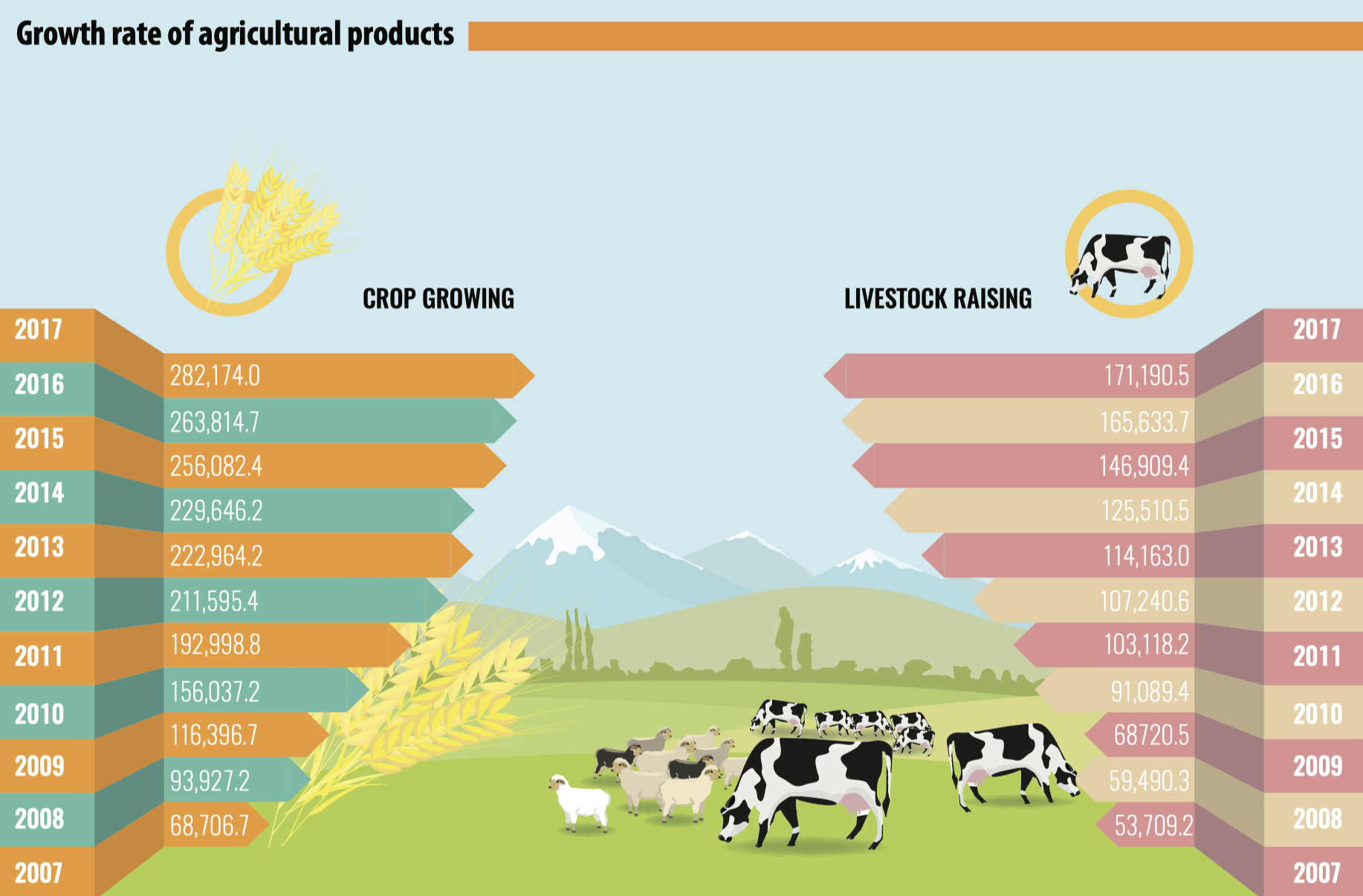
The measures taken to develop the agriculture promoted a dynamic growth of output. In 2017, the Autonomous Republic produced agricultural products worth over 453 mln AZN. Of the total value of products, 282mln AZN fell to the share of the crop growing while 171 mln accounted for the livestock farming.
Provision of allowances to the agricultural products producers for acquisition of fuel and engine oil they consumed, timely supply of necessary equipment and mineral fertilizers on preferential terms, granting of subsidies for each calf delivered through an artificial fecundation, also served as big incentive for the output growth.
President Ilham Aliyev who highly assessed the work done in the field of supply of the population with qualitative and, most importantly domestic products, said: “Food supply issues in Nakhchivan have found their full solution. It is a big achievement and success”.
Information and communications
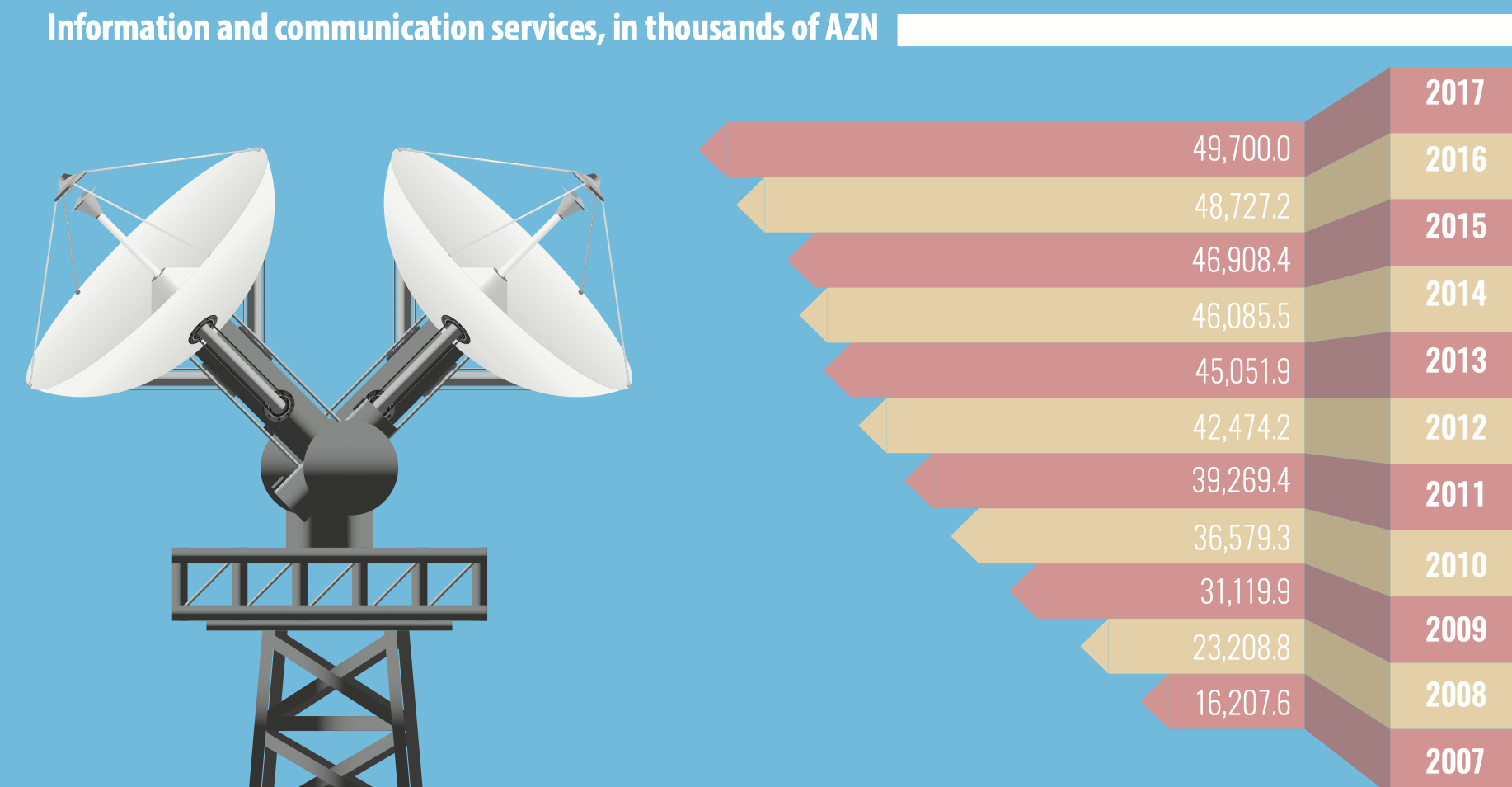
Important steps were taken in the Autonomous Republic for broad use of information-communication technologies penetrated into the economic and social life of the community. Fiber optic cables were laid, automatic telephone systems were installed. Arrangement of modern 4G service which is provided via the latest mobile communication technologies, broadcasting of the Nakhchivan State Television and Radio via internet and other important activities gave a momentum to the development of this sector, and the Autonomous Republic got out of the information blockade.
As a result of the targeted measures taken in the field of communication, broadband internet services and wireless internet connection were arranged in 98% and 99% of dwelling areas of the Autonomous Republic respectively.
Transport
Modern traffic infrastructure is one of the main indicators of the economic development. A harmonic operation of the transport was established in the Autonomous Republic according to the development strategy passed by the All-National Leader Heydar Aliyev who said that the “Economy, culture, in short, life arises from the road infrastructure”. Alone in 2017, new asphalt roads with the length of 70km were laid in this sector. 12 bridges which underwent construction or reconstruction were commissioned. A cargo terminal in the Nakhchivan International Airport was reconstructed. Construction of the infrastructure facilities in the railway transportation sector was continued.
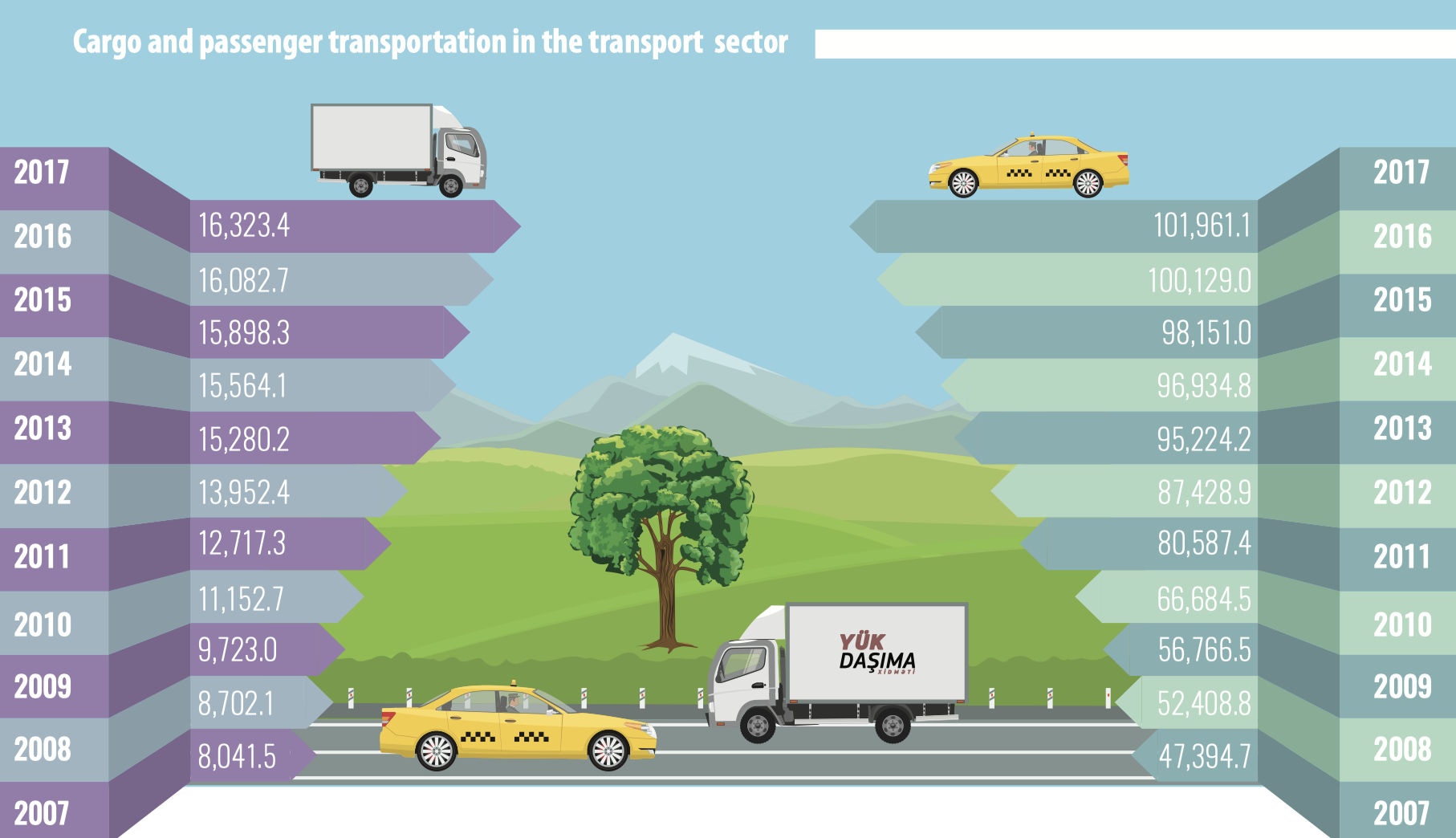
The length of public roads in the Autonomous Republic totals 1,473km. There is one international airport operating. 5 bus and 17 railroad passenger terminals are providing exemplary services to the population.
All taken measures ensured a dynamic growth of cargo and passenger transportation, which is a main indicator of the transport sector.
Entrepreneurial activity and employment issues
Consecutive measures are being taken in the field of entrepreneurial activity. In 2017, entrepreneurs of the Autonomous Republic received credits worth over 10mln AZN. 43 legal and 2,171 private individuals were registered during that period.
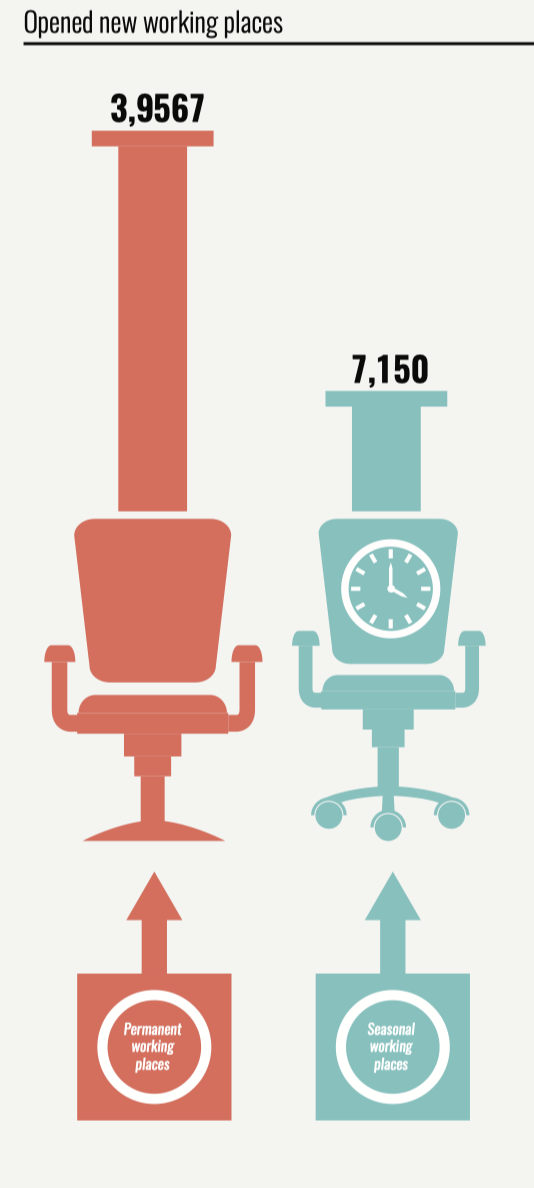
Measures taken to develop entrepreneurship yielded its results. Thousands of new working places were created to ensure efficient employment of the population. 46,717 new working places were opened in the Autonomous Republic over the last ten years alone. 68% of these working places fell to the share of the private sector. 39,567 or 84.7% of the total amount of created working places are permanent.
Operation of banks
The proper operation of banks, which are considered to be the important element of the financial system, has been put in place in the Autonomous Republic. New banks and their branch banks were established, and their physical infrastructure was strengthened. There are 17 banks operating in the Autonomous Republic, of which 14 are privately owned.
By the end of 2017 the number of banking accounts opened in the banks of the Autonomous Republic reached 64,484. Of these, 55,743 or 86.4 percent were performing accounts. The total number of installed POS-terminals reached 1,260 by the end of 2017. Decrease of cash payments continued, and the share of emissions in the total amount of expenses comprised 35.1 percent, down from 70.2 percent registered in 2007.
Tourism
Consistent measures are being taken in the sector of tourism, which ensures the employment of the general population and the dynamic development of the economy. Construction of modern highways in the Autonomous Republic, restoration of ancient architectural monuments reflecting historical memory, construction of new hotels and recreation centers and other activities have created ample opportunities for the dynamic development of tourism. Currently there are 21 hotels in the Autonomous Republic, 1 of which is 3-star, and 2 are 5-star ones. The 3-star and 5-star hotels are able to host simultaneously 614 guests.
Demography
Successes achieved in the economic and social spheres, securing efficient employment, increasing salaries have raised the standard of living of people, had a positive impact on further improvment of the demographic situation. In total, from 2007 to 1 December 2017 88,957 children were born in the Autonomous Republic, on average 22 children were born each day. The increase in the population and, most importantly, the increase in household incomes, also speeded up housing construction in the Autonomous Republic. In 2017, 385,991 square meters of housing area was built. Over the past 10 years the scope of housing construction has increased 5.5 times.
The analysis of the summarized results of the obtained indicators gives grounds to assert that the successes achieved in the economic and social spheres and the undertaken targeted activities create preconditions for a further growth of the potential of the Nakhchivan Autonomous Republic, which is currently living through a development period.
State Statistical Committee of the
Nakhchivan Autonomous Republic
